
Livraison le jour même ou le lendemain

Qualité garantie

Débloquez vos offres de bienvenue: Livraison GRATUITE | Jusqu'à -80 % | 30 jours d'essai gratuits à JoyPlus
Téléchargez l'application
Whether you're a professional mechanic, a workshop technician, or an advanced DIY enthusiast, you know better than anyone: modern vehicles are true computers on wheels. A simple fault code reader no longer cuts it. To perform precision repairs, code ECUs, or run active tests, a professional multi-brand car diagnostic scan tool is now an indispensable tool.
But with an overwhelming number of options and often opaque technical sheets, how do you find the right one? This guide is here to break down the essential criteria and present our selection of the best tools for 2026, with a keen eye on the feature-to-price ratio.
Before diving into our selection, let's review the key points to check to make the right choice.
A professional tool worthy of the name must cover a wide range of European, Asian, and American brands. But compatibility doesn't stop at the logos on the bodywork. Recent vehicles incorporate new communication protocols to handle an ever-increasing volume of data. Ensure your future professional OBD2 scanner is compatible with the CAN FD (for recent GM, Ford models...) and DoIP (Diagnostics over Internet Protocol) protocols, which have become essential for the new generations of BMW, Volvo, Land Rover, or Jaguar. A tool that overlooks these protocols will be obsolete before it even pays for itself.
A true OBD2 diagnostic tool for workshops must go far beyond a simple full-system diagnosis. It's the advanced features that make all the difference between a hobbyist's gadget and a pro's equipment:
This is the financial crux of the matter. Some manufacturers, like those in our selection, offer free lifetime updates. In short: a single purchase guarantees you permanent access to new vehicle coverage and future functions. Others, conversely, operate on an annual or multi-year subscription model. Although paid subscriptions can sometimes come with more extensive support, the no-subscription model represents a colossal long-term saving. A compelling argument for independent workshops and technicians who monitor their profitability.
Here are three tools that tick all the boxes for professionals and expert enthusiasts.
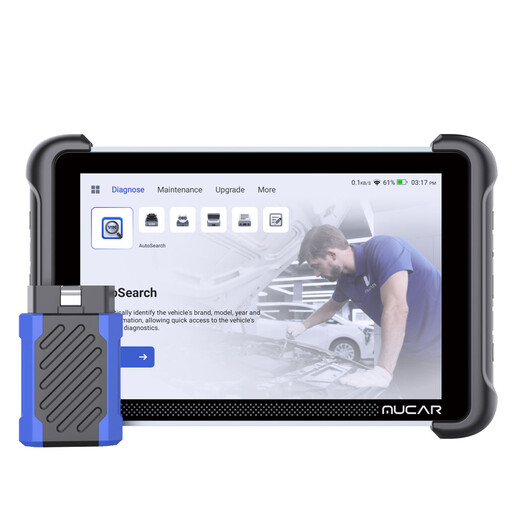
The MUCAR 892BT positions itself as a complete and cost-effective solution, tailored for modern workshops. Its 8-inch tablet and magnetic VCI (dongle) offer a very appreciable level of user comfort in the workshop.
Its key advantage is its business model: updates are free for life. This feature, combined with broad compatibility including CAN FD & DoIP protocols, makes it a future-proof investment. The added perk? AI-assisted intelligent diagnostics to interpret fault codes faster.
Ideal for independent garages, mobile technicians, and mechanics experts looking for a powerful scan tool with all the key functions, without the constraint of a subscription.
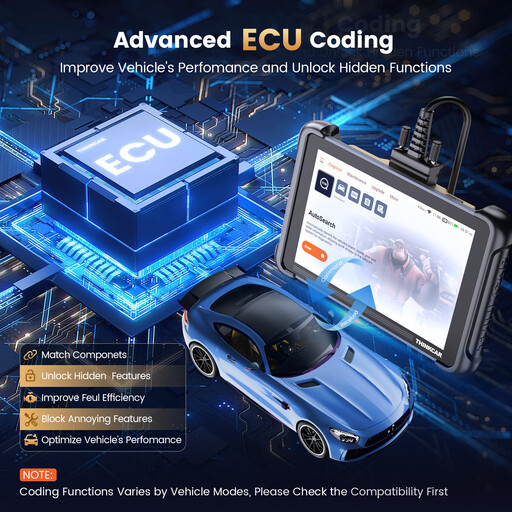
The ThinkScan 689 from THINKCAR is another excellent alternative that focuses on performance and cost-effectiveness. Powered by Android 10 on an 8-inch tablet, it offers a smooth user experience, perfect for quickly processing diagnostic data.
Like its MUCAR competitor, the ThinkScan 689 adopts the winning policy of free lifetime updates, making it a very smart long-term choice. It stands out for its clear interface and high responsiveness, which make even the most complex diagnostics much more accessible.
This tool is aimed at technicians and workshops that prioritise simplicity and a quick return on investment. It's an excellent workshop scan tool that makes no compromises on essential functions.
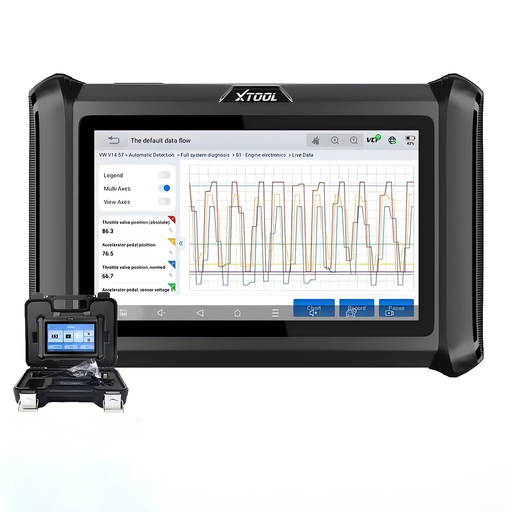
The XTOOL D7S is a diagnostic tool that steps up its game with highly advanced features, often sought after by specialists. It operates on a model that includes 3 years of free updates, which is a good initial compromise.
The D7S goes further on certain niche functions. For example, it includes Programmable Module Installation (PMI) for Ford/Lincoln/Mazda and guided functions for the VAG group (VW, Audi, Skoda), which radically simplify the most complex procedures.
Recommended for specialised workshops, particularly those that handle a lot of VAG group or Ford vehicles and require module programming functions. The model with 3 years of updates is relevant for those who renew their equipment in the medium term.
Our selection represents the top three for intensive professional use. As each workshop has its own specific needs, if you are looking for tools with different features or suited to a tighter budget, feel free to explore our full catalogue.
Discover our full range of vehicle diagnostic tools
A basic OBD2 reader merely reads and clears generic fault codes (DTCs) related to the engine and transmission. A professional multi-brand car diagnostic scan tool, on the other hand, scans all vehicle systems (ABS, airbag, climate control...), displays real-time data, and, most importantly, integrates advanced functions like bi-directional control, ECU coding, and dozens of manufacturer-specific service functions.
ECU coding is a powerful function that, if used incorrectly, can indeed cause malfunctions. However, modern professional tools are designed to minimise these risks. They rely on manufacturer databases and often offer guided procedures to secure the operation. It is therefore recommended to use this function only when you know exactly what you are doing. For operations like pairing a new module, it is an essential step anyway.
These protocols are quite simply the new communication standards in the automotive industry. CAN FD (Flexible Data-Rate) allows for much faster data transfer than classic CAN, a speed that is essential for diagnosing the complex electronic systems of modern vehicles. DoIP (Diagnostics over Internet Protocol) uses an Ethernet-type connection for diagnostics. This is crucial for programming and querying ECUs on the latest models from brands like BMW, Volvo, or Jaguar. Buying a tool without these protocols today means investing in already outdated technology.