
Livraison le jour même ou le lendemain

Qualité garantie

Débloquez vos offres de bienvenue: Livraison GRATUITE | Jusqu'à -80 % | 30 jours d'essai gratuits à JoyPlus
Téléchargez l'application
Ammonia-free blonde hair colour can make colouring your hair at home easier, but not every formula suits the same needs. Permanent blonde hair colour, semi-permanent colour or a formula enriched with oils: the right choice depends mainly on your natural base colour, the coverage you want and how much time you’re willing to spend on upkeep.
Before buying a home hair colour kit, take a moment to avoid three common pitfalls.
Not containing ammonia doesn’t mean a product is free from colouring or oxidising agents. The kits featured here may contain hydrogen peroxide, ethanolamine or colourant precursors, for example. Manufacturers recommend carrying out an allergy alert test 48 hours before each application, even if you’ve used the same range before.
Also check the ingredient list on the packaging you receive, as formulas can change. If you experience a reaction or have any concerns, stop using the product immediately and seek advice from a healthcare professional.
The picture on the box doesn’t guarantee the same result on every head of hair. Light blonde hair colour applied to a dark brown base won’t necessarily look the same as it would on a dark blonde base. Previously coloured hair can also react differently from natural regrowth.
To avoid unwelcome surprises, compare your current colour with the shade chart provided and, ideally, choose a shade close to your base colour. Golden blonde adds warm tones, while ash blonde gives a cooler-looking result.
One kit is generally suitable for mid-length hair, depending on the product instructions. For long, thick or very full hair, you may need two boxes to apply enough colour evenly. Using too little could lead to colour differences between your roots and lengths.
Permanent blonde hair colour makes a lasting change to the coloured hair fibre, although its tones gradually lose intensity with each wash. It’s better suited to people looking for consistent grey coverage or a colour that doesn’t fade quickly.
Semi-permanent colour, such as L’Oréal Paris Casting Crème Gloss, fades gradually. It can be a good option for refreshing a shade or covering your first greys without creating a stark regrowth line. However, it won’t provide the same level of long-lasting, full coverage.
The numbers on the boxes help distinguish colour families, but their meaning can vary from one range to another. Here’s a guide:
A shade such as Garnier Olia 7.0 Dark Blonde is for anyone looking for a neutral dark blonde, while shades 7.3 and 6.3 have warmer, more golden tones.
If grey coverage is your priority, look for a clear claim on the packaging, such as “up to 100%” or “100%”, according to the manufacturer’s information. You’ll still need to follow the recommended development time and application method carefully.
Oil-enriched hair colour formulas can contain a high proportion of oils in the colouring cream. Garnier Olia states that its formula is made up of 60% oils and uses ODS technology. This describes the formula and its claimed delivery method, but doesn’t guarantee the same result on every head of hair.
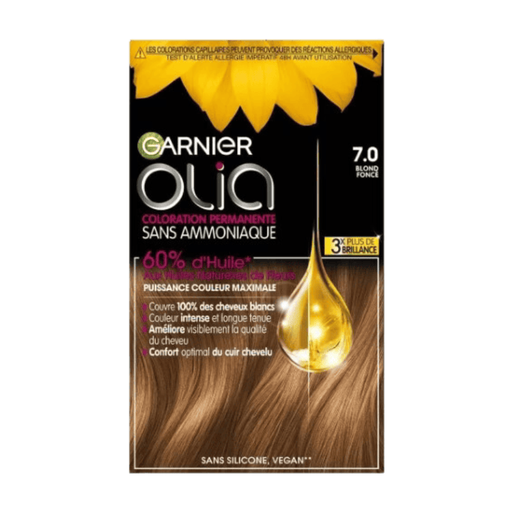
Why it suits this profile : This ammonia-free permanent hair colour is a good choice for a first at-home application, with a dark blonde shade and clear step-by-step instructions.
The 7.0 shade reduces the risk of choosing a very light blonde without taking your starting base into account. The kit has a 30-minute development time and includes a post-colour conditioner.
A formula described as ammonia-free, activated by 60% oils, with grey coverage claimed by the manufacturer.
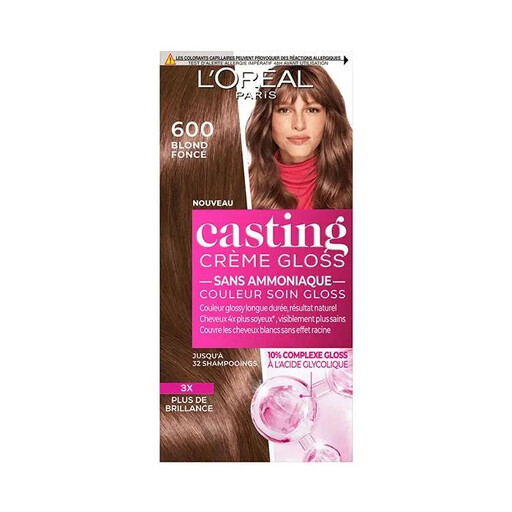
Why it suits this profile : Its ammonia-free cream texture and included conditioner may appeal if you want a comfortable application and a result that fades gradually.
This isn’t a permanent hair colour: the product details state that it can last for up to 32 shampoos and covers the first greys.
A complete kit with colouring cream, developer, shine conditioner and gloves. The formula is described as non-drip.
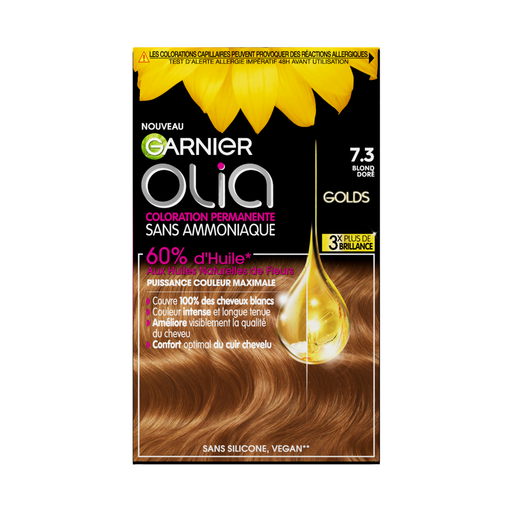
Why it suits this profile : This permanent hair colour is for anyone who wants to maintain a warm golden blonde shade, with grey coverage claimed by the manufacturer.
The shade number clearly identifies it as golden blonde rather than ash blonde, so you don’t have to rely on how light the picture looks.
A formula described as ammonia-free, ODS technology, 60% oils in the colouring cream and a kit designed for one application.
We’ve put together a comprehensive, real-time updated selection of products that meet these exacting criteria and European safety regulations.
Before you begin, get a towel and gloves ready, and set yourself up in a well-ventilated room. Follow the kit instructions, especially those covering mixing, development time and rinsing. Apply the product only to the areas specified in the instructions, and avoid contact with your eyebrows and eyelashes.
Don’t use the product on an irritated or damaged scalp. Manufacturers also specify how long to wait after a perm, straightening treatment or other chemical process. Henna or progressive hair colour may also be incompatible with some kits.
Some products claim to cover up to 100% of grey hair, including several Garnier Olia kits. However, the result depends on your base colour, the proportion of grey hair, following the development time and how evenly you apply the product.
Permanent hair colour remains in the coloured hair fibre, although its tones may lose intensity with each wash. A semi-permanent formula, such as Casting Crème Gloss, fades gradually, and its product details state that it can last for up to 32 shampoos.
It all depends on your natural base colour or the colour already on your hair. A light shade alone may not be enough to lighten dark or previously coloured hair evenly. Check the shade chart, instructions and usage restrictions before you buy : for a major colour change, an appointment at a salon can help you avoid disappointment.