
Livraison le jour même ou le lendemain

Qualité garantie

Débloquez vos offres de bienvenue: Livraison GRATUITE | Jusqu'à -80 % | 30 jours d'essai gratuits à JoyPlus
Téléchargez l'application
Probiotics appeal to many consumers in France, whether they’re looking to support digestive comfort, adjust to a change in diet or find a supplement suitable for a child or a pet. But choosing the right product involves more than comparing the number on the bottle.
A suitable formula should be assessed against several factors: the strain, the quantity actually stated, the format, storage requirements and the needs of the person — or animal — it’s intended for. Here’s what to check before buying a probiotic supplement, along with a selection of products available at Joybuy.
A high CFU count — CFU stands for colony-forming units — isn’t enough to determine whether a product is right for you. A formula containing 60 billion CFU won’t necessarily serve the same purpose as a supplement containing a single targeted strain.
Always check:
Some products contain heat-treated or inactivated lactic acid bacteria. These aren’t the same as a formula made with live micro-organisms. For example, the ORIHIRO supplement states that each serving contains 1.5 billion heat-treated lactic acid bacteria of plant origin, along with calcium, vitamin D and magnesium.
That isn’t necessarily a drawback. This information simply helps you understand what you’re buying and avoid comparing two products based only on the number shown on the packaging.
Heat, moisture and light can affect the stability of some cultures. A formula that needs to be refrigerated after opening may not be practical if you travel often or simply want to keep the bottle in a cupboard.
Read the instructions before placing your order and follow the manufacturer’s recommendations. Probiotic gummies, in particular, can be sensitive to heat and moisture.
Formulas combining Lactobacillus and Bifidobacterium are common for digestive comfort. However, probiotics for the gut microbiome shouldn’t be chosen solely on the basis of their bacterial family. The specific strain, dosage and recommended duration are all important when comparing products.
If you have a particular need, look for a formula with a clearly stated purpose:
Health claims aren’t a guarantee that a product will have the same effect for everyone. If you’re taking medication, are pregnant or breastfeeding, have a medical condition or have a weakened immune system, ask a healthcare professional for advice.
Probiotic capsules make it easy to take a precise dose. Gummies are easier for some children to chew, but they may contain sugar or glucose syrup. Powders and sachets can be mixed straight into food, which may be convenient for pets.
Check how many doses you need to take each day and how many days the bottle will last. A bottle of 60 capsules won’t necessarily last 60 days: some formulas recommend taking two capsules a day.
Prebiotics such as inulin, FOS or acacia fibre provide a food source for certain bacteria. However, some people may temporarily experience bloating or tummy rumbling. Follow the label instructions and stop taking the product if discomfort persists.
Also check the list of allergens, sweeteners and any milk, soya or gluten, as well as whether the product is suitable for a vegetarian or vegan diet.

Why this suits this profile: This chewable format may suit families looking for an easy option for a child aged 4 or over, under adult supervision. The recommended serving is 2 gummies a day.
The label states the minimum age, the amount per serving and that the gummies must be chewed under supervision. It also specifies a pectin-based formula with no gelatine.
1 billion CFU of Bacillus coagulans per daily serving, 90 gummies and storage below 25 °C, according to the product information.

Why this suits this profile: This formula is aimed at adults who want to compare a targeted blend, a gastro-resistant capsule and added magnesium.
The product information details the strains, the dose of 4 billion CFU per 2 capsules and that it’s for adults only. Any claims about stress should be treated as information from the manufacturer, not as a medical guarantee.
60 capsules, a blend of strains listed on the label, a gastro-resistant vegetarian capsule and made in France, according to the manufacturer.

Why this suits this profile: If you’re looking for a multi-strain formula, this product lets you compare 20 bacterial cultures, prebiotics and a bottle containing 120 capsules.
The ingredients list distinguishes the 60 billion CFU from the 100 mg of inulin and 100 mg of FOS. It also states that the product needs to be refrigerated after opening.
20 strains, a delayed-release vegetarian capsule and prebiotic fibre. The manufacturer does note that mild digestive discomfort may occur when you first start taking it.
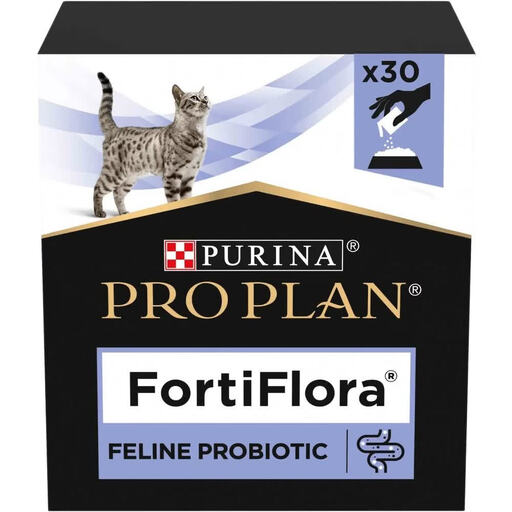
Why this suits this profile: The individual sachets are easy to mix into food for a kitten or adult cat. The recommended amount is one sachet a day.
This product is for cats only. It lists the strain Enterococcus faecium SF68 and the amount per sachet. If your pet has symptoms, consult a vet before using it.
30 sachets of 1 g, easy to add to your pet’s food and store in a cool, dry place.
We’ve put together a comprehensive, regularly updated list of products that meet these exacting selection criteria and European safety requirements.
It depends on the formula and the recommendations on the label. Some products are intended to be taken for one to three months, while others are designed for daily use. Don’t extend a course without a specific reason, and ask for advice if your symptoms persist.
Several manufacturers recommend leaving two to three hours between doses. This guidance may vary by product, so check the instructions and ask your pharmacist or doctor for advice.
Not necessarily. Some capsules can be stored at room temperature, while others — including some multi-strain formulas — need to be refrigerated after opening. Always follow the instructions and product label.