
Livraison le jour même ou le lendemain

Qualité garantie

Débloquez vos offres de bienvenue: Livraison GRATUITE | Jusqu'à -80 % | 30 jours d'essai gratuits à JoyPlus
Téléchargez l'application
In the competitive scene, every millisecond is crucial. For FPS and esports pros, zero latency, surgical precision, and total freedom of movement aren't options—they're prerequisites. Choosing your pro wireless gaming mouse is therefore a strategic decision. But how do you navigate the jungle of spec sheets and marketing promises to find the one that will truly make a difference in-game?
This guide is here to decode the technical jargon and give you the keys to making the right choice. We'll break down the features that truly matter and present our selection of the best mice built for high performance.
Before diving into our selection, let's review the three cornerstones of a mouse built for competition.
The race to be lightweight is on! An ultra-lightweight gaming mouse, ideally under 65 grams, is a game-changer: movements are quicker, and fatigue is reduced after hours of play. For FPS players who rely on flick shots (quick, wide sweeps), a feather-light weight means less inertia and massively increased responsiveness. Of course, weight isn't everything: the shape must perfectly fit your grip style (palm, claw, or fingertip grip) for flawless comfort and control.
Forget the old stereotypes: wireless is no longer synonymous with latency. Modern 2.4 GHz technologies deliver a low-latency wireless mouse experience with 1 ms response times, effortlessly rivalling wired models. The other key figure is the polling rate, measured in Hertz (Hz). While 1000 Hz is the standard today, the most cutting-edge esports mice go up to 8000 Hz, sending the cursor's position to the PC 8000 times per second. The result? Absolute smoothness.
The sensor is the engine of your precision. Its performance is measured by several key factors:
Let's get down to business: here is our selection of competition-grade mice that tick all the boxes for performance.
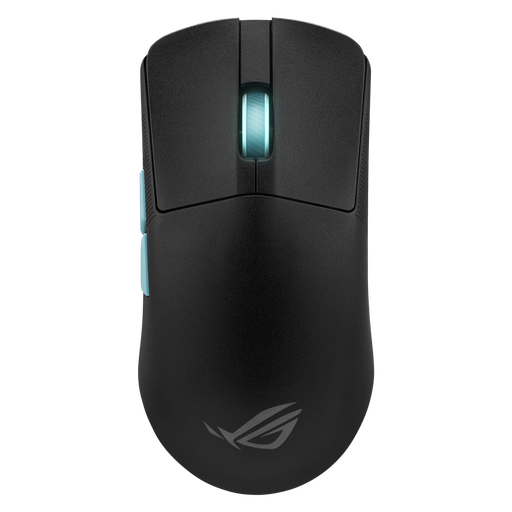
Why it stands out: Weighing in at just 54 grams and developed in partnership with Aim Lab, the Harpe Ace is all-in on performance. Its software, Armoury Crate, even analyses your playstyle to suggest tailored settings (sensitivity, DPI, polling rate). It's an almost scientific approach for those who love to fine-tune their setup to perfection.
Key features:
Who is it for?: FPS competitors who want a lightweight wireless gaming mouse and enjoy using concrete data to find their perfect configuration.
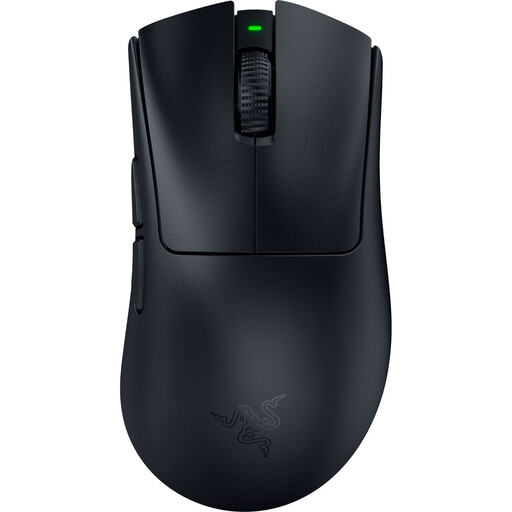
Why it stands out: The DeathAdder V4 Pro is the heir to a legendary lineage. It retains its famous ergonomic shape for right-handers while packing the best of Razer's technology. Its 56-gram weight and compatibility with an 8000 Hz polling rate via HyperSpeed Wireless technology make it a formidable precision tool.
Key features:
Who is it for?: Right-handed gamers who swear by the comfort of an ergonomic shape (ideal for palm or claw grip) and are looking for the maximum responsiveness offered by a very high polling rate.
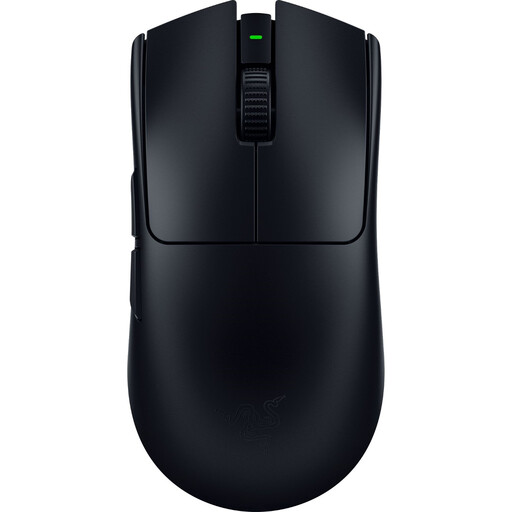
Why it stands out: The Viper V3 Pro is the very definition of an esports mouse: minimalist, ultra-high-performance, and honed for competition. Developed with pros, this 54-gram symmetrical mouse gets straight to the point. It features Razer's HyperPolling technology, enabling a wireless polling rate of 8000 Hz for tracking with surgical precision and smoothness.
Key features:
Who is it for?: Gamers, both left- and right-handed, in search of an ultra-lightweight, symmetrical gaming mouse optimised for speed and precision with cutting-edge wireless technology.
Our three champions are optimised for FPS, hence their streamlined designs and low button counts. For MMOs or MOBAs, where every macro and ability needs to be within thumb's reach, an arsenal of side buttons is often essential.
If that's you, take a look at our selection of gaming mice with 7 side buttons.
Absolutely. The modern 2.4 GHz wireless technologies in high-end mice ensure a 1 ms response time, which is identical performance to wired models. For competitive play, latency is no longer an issue: wireless is on par with wired.
The standards have changed significantly! Today, a lightweight wireless gaming mouse is a model that weighs less than 70 grams. The most competitive options for esports even target the 50-65 gram range.
No, that's a common misconception. While a high maximum DPI is a sign of a good sensor, it's not the number one criterion. Tracking quality (with no hardware acceleration or smoothing), maximum speed (IPS), connection latency, weight, and the mouse's shape are far more decisive factors for in-game performance. In fact, most professional players set their DPI to a moderate value (between 800 and 1600) and adjust sensitivity directly in the game.