
Livraison le jour même ou le lendemain

Qualité garantie

Débloquez vos offres de bienvenue: Livraison GRATUITE | Jusqu'à -80 % | 30 jours d'essai gratuits à JoyPlus
Téléchargez l'application
Regaining some privacy on your balcony, shielding your garden from prying eyes, or simply protecting your patio from the wind are common desires. To achieve this, a privacy screen is a simple and effective solution for defining your space and creating a peaceful retreat. But with a jungle of options, from artificial hedges to blackout panels, it can be hard to know where to start.
This guide is here to help you see things more clearly, reviewing the essential criteria to check and a selection of products for every need, whether you're looking for total garden privacy or a more discreet patio screen.
To make the right choice, it's best to focus on a few technical aspects that will make all the difference in the effectiveness and lifespan of your installation.
This is the starting point: what degree of privacy are you aiming for? Not all privacy screens are created equal on this front.
A privacy screen is designed to last for several years. The choice of material is therefore crucial for its longevity.
Whether you're all thumbs or a DIY enthusiast at heart, ease of installation is a significant convenience. Most models are designed to be attached to an existing garden fence, a balcony railing, or wire mesh. Check for eyelets, buttonholes, or an integrated fastening system, which will make your life much easier when installing with ties or wire. The expandable trellis is particularly practical as it adjusts to variable dimensions.
To move from theory to practice, here is a selection of products that have caught our eye for their quality and versatility.
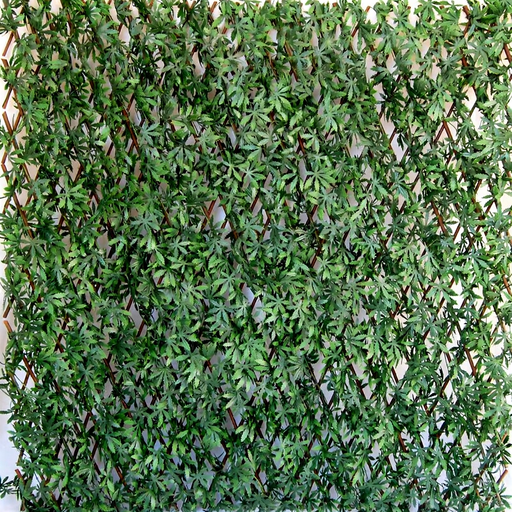
What sets it apart
This artificial hedge stands out for its realism and highly decorative finish. Mounted on an expandable trellis made of natural willow, it mimics the stunning foliage of a Japanese maple with lush 3D leaves. Its expandable structure allows for easy adjustment, both horizontally and vertically, to perfectly fit the available space.
Key Features
Who is it for?
The perfect choice for those seeking a stylish and decorative privacy screen that combines privacy with a touch of green, all with zero maintenance. Ideal for enhancing a dull wall, a pergola, or a balcony railing.
What sets it apart
Here, we move to a more robust solution: this Tenax privacy screen is a woven fabric made of flat monofilament that guarantees total privacy. Its ultra-compact weave and high weight give it foolproof tear resistance, far superior to classic shade nets. Its anthracite grey colour adds a modern touch to any outdoor space.
Key Features
Who is it for?
The perfect solution for those who make no compromises on privacy. Sturdy and functional, it is ideal for a garden fence, a patio, or a balcony that is particularly exposed to view.
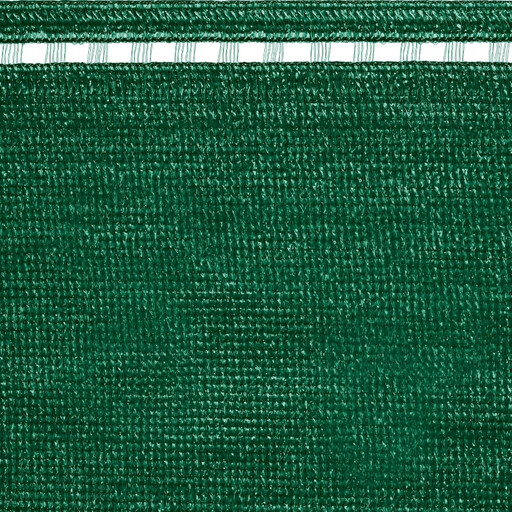
What sets it apart
Here we find the same manufacturing quality of the Coimbra range, but in an XXL size (50 metres long) and a classic green colour that blends into a garden setting. Its 1.50m height is perfectly suited for most standard fences.
Key Features
Who is it for?
The smart choice for owners of large properties or those who need to secure the perimeter of a long garden fence. It is the most pragmatic and economical solution for large-scale projects.
Our selection is just a glimpse of the possibilities, and every project is unique. If you want to explore other materials, such as PVC reed screening, rigid panels, or other styles of artificial hedges, take a look at our full catalogue.
Discover our full range of outdoor privacy screens and panels
It's all a matter of aesthetics and material. A reed screen is made of slats (PVC, bamboo, wicker, etc.) connected by wire, offering partial privacy and a more traditional look. An artificial hedge, on the other hand, is made of synthetic foliage (often HDPE) attached to a support (mesh or trellis) and aims to perfectly mimic the appearance of a real hedge, usually with denser coverage.
For a balcony privacy screen, the simplest and most secure method is to use plastic zip ties or galvanised wire. Pass them through the screen's eyelets and fasten them tightly to the railing. Be sure to pull the fabric taut to prevent it from flapping in the wind. Most importantly, check your building's regulations before you start!
Its wind resistance depends on two things: the material and the quality of the installation. Woven fabrics or slatted reed screens allow some air to pass through, which reduces wind load. Conversely, total block-out solutions logically exert more pressure on their support. In any case, the secret is a proper installation: closely spaced attachment points and a perfectly taut screen are the key to withstanding gusts without worry.