
Livraison le jour même ou le lendemain

Qualité garantie

Débloquez vos offres de bienvenue: Livraison GRATUITE | Jusqu'à -80 % | 30 jours d'essai gratuits à JoyPlus
Téléchargez l'application
Enjoying your garden, terrace, or balcony in complete peace is a simple pleasure. However, being overlooked can quickly spoil these moments. Choosing a privacy screen might seem like the obvious solution, but the market is flooded with products making tempting promises that often fall short. The result of a poor choice: discolouration in a single season, a screen torn apart by the first gust of wind, or privacy that's far from guaranteed.
Before you invest, it's essential to know how to avoid the most common traps so you don't regret your purchase.
To make an informed decision, it's better to focus on objective technical specifications rather than marketing claims. Here are the three essential checkpoints.
The weight, expressed in grams per square metre (g/m?), measures the density and thickness of the material. It's an excellent indicator of a privacy screen's durability and opacity.
The material determines not only the look of your terrace screening but also its long-term durability.
The manufacturing details make all the difference. A screening fabric with eyelets should be inspected closely. Check that the eyelets are made of aluminium or brass, materials that do not rust. Their spacing is also crucial: an interval of 30 to 50 cm ensures even tension distribution and reduces the risk of tearing. Edges reinforced with a hem or a reinforcing band are a real plus for strength.
To help you make a clearer choice, we have analysed several products for different use cases, based solely on their technical specifications.
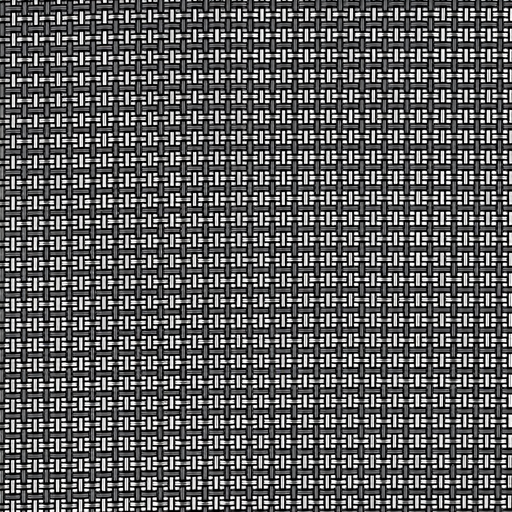
Why we chose it: Ideal for those seeking a solution for their balcony privacy screen or terrace that combines contemporary design with performance. The two-tone weave integrates perfectly with modern architecture.
Its Textilene material (70% PVC, 30% PET), with a very high weight of 700 g/m?, is extremely resistant to tearing and UV rays, which prevents discolouration and weakening. The stainless metal eyelets are placed every 30 cm for a rock-solid installation.
The combination of refined aesthetics and exceptional robustness. It does not fray when cut.
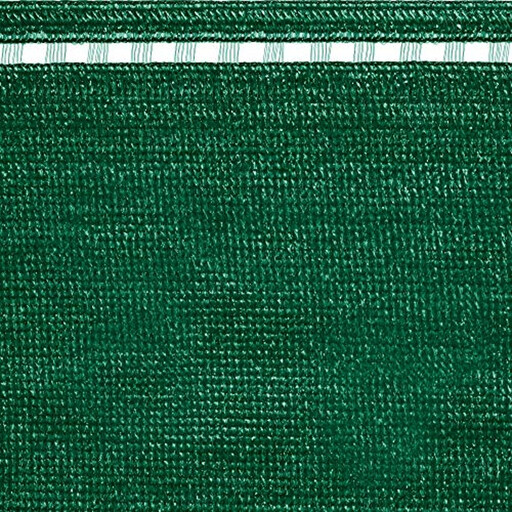
Why we chose it: Perfect for a garden privacy screen or a fence where privacy is the number one priority. Its 2-metre height and opacity make it a true visual barrier.
This model counters the trap of false blackout promises. Its dense Rachel-weave knit of 230 g/m? ensures a nearly foolproof visual barrier. Its robust structure is designed to resist deformation and discolouration.
100% blackout and great installation versatility (vertically or horizontally as a shade sail).
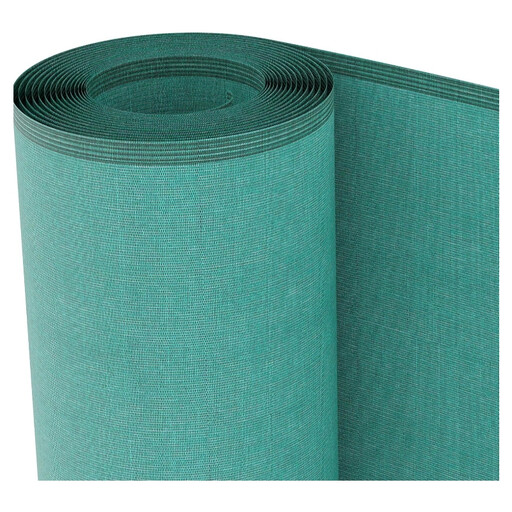
Why we chose it: An effective and budget-friendly solution for those who want to protect the privacy of their balcony or a small part of their garden without breaking the bank. The 10-metre roll offers an excellent length-to-price ratio.
It advertises a realistic blackout rate of 90%, avoiding the disappointment of unwanted transparency. Made from UV-treated polyethylene with reinforced edges, it is designed to last much longer than entry-level models, thus preventing premature wear.
Excellent blackout-to-price ratio, with 90% opacity and reinforced edges for better durability.
We have compiled a comprehensive list of products that meet our strict selection criteria.
The longevity of a privacy screen depends heavily on its material, weight, and the quality of its UV treatment. An entry-level model will barely last one or two seasons. Conversely, a high-density HDPE (over 200 g/m?) or Textilene screening fabric, with a high-performance UV treatment, can easily last between 5 and 10 years if installed correctly.
For a successful and durable installation, attach the screen to a solid support (rigid fence, balcony railing, etc.). Use quality fasteners, such as UV-treated cable ties or plastic-coated wire, passing them through each eyelet. Stretch the screen evenly, without over-stretching, to distribute the load and prevent wind from catching in it.
Yes, provided you choose the right model and install it carefully. A reinforced privacy screen with a high weight, strong seams, and closely spaced eyelets will be much more resistant. Materials like Textilene, which allow some air to pass through, have less wind load and are an excellent option for windy areas. The key lies in the strength of the support structure and the quality of the fixings.