
Livraison le jour même ou le lendemain

Qualité garantie

Débloquez vos offres de bienvenue: Livraison GRATUITE | Jusqu'à -80 % | 30 jours d'essai gratuits à JoyPlus
Téléchargez l'application
Regaining a little privacy on your balcony, terrace, or in your garden is a luxury many of us seek. Whether you're dealing with being overlooked or simply want to create a peaceful haven, a privacy screen is the perfect solution. But be warned: the market is flooded with products making tempting promises that often lead to disappointment. To avoid buyer's remorse, it's crucial to know the most common pitfalls.
Here are the 3 mistakes you should never make:
To ensure you're investing in a durable and effective solution, forget the marketing slogans and focus on these key technical points.
The choice of material has a direct impact on the longevity and appearance of your installation.
Grammage, expressed in grams per square metre (g/m?), indicates the material's density. But be careful, this number alone is not enough. A high grammage must be paired with a compact and tight weave.
For example, a knitted privacy net will show a high grammage, but its very structure will still be see-through. Conversely, an HDPE fabric with a flat, very tight weave can offer almost total visual blockage with a more moderate grammage. For flawless privacy, look for terms like "compact weave" or "monofilament".
The finishing touches are often what separate a quality product from a short-lived gadget.
To help you see how these criteria apply in practice, here are a few options tailored to specific needs.
Why we chose it: Ideal for those who refuse to compromise on opacity and longevity. Perfect for enclosing a large garden or providing lasting privacy for a long, overlooked terrace.
Its exclusive manufacturing process creates an ultra-compact monofilament net, ensuring total visual coverage that goes far beyond the usual market promises. Its tear resistance and high grammage are guarantees of robustness against wind and UV rays.
Ultra-dense weave for near-total opacity and excellent wind protection. Pre-installed eyelets for easy installation.
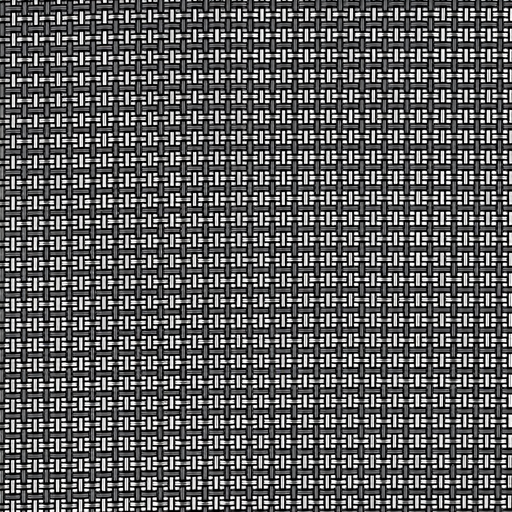
Why we chose it: For those who see a privacy screen as a true decorative element. It dresses up a balcony or terrace with a contemporary touch, filtering the view without creating a solid, opaque wall.
It doesn't promise 100% opacity, but rather a controlled "low transparency." Its strength lies in its non-fraying Textilene material and its rustproof eyelets every 30 cm, thus sidestepping the classic pitfalls of durability and installation.
Sophisticated design thanks to a weave blending grey, black, and silver threads. Robust Textilene material that is easy to cut to size.
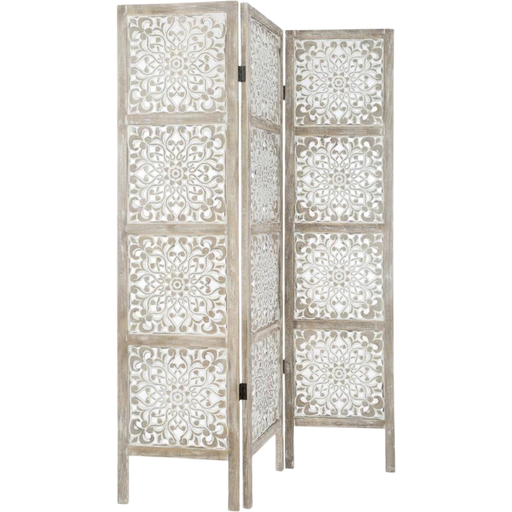
Why we chose it: The perfect solution for structuring a large living room, sectioning off a bedroom corner, or concealing a home office space. This indoor folding screen is a decorative object in its own right.
The main pitfall of a folding screen is instability. This one is designed with 3 hinged panels that can be positioned in a Z or U shape to ensure excellent stability—a crucial point for safety, especially in a high-traffic area.
Ethnic-inspired floral patterns, finely carved to let light filter through. It divides the space without darkening the room. Folds for optimised storage.
We have selected a full range of products that meet our strict selection criteria and current standards.
A privacy screen's lifespan depends primarily on its material and its exposure to the elements. An entry-level model made of simple PE without UV treatment will hardly last more than one or two seasons. In contrast, a quality privacy fabric made of HDPE or Textilene, properly treated against UV rays, can maintain its appearance and properties for 5 to 10 years, and sometimes even longer.
For a heavy-duty installation, especially at height, the golden rule is to use every single eyelet available. Opt for high-quality fasteners, such as UV-treated cable ties or plastic-coated wire. Make sure your support structure (the balcony railing) is sturdy enough. Most importantly, do not stretch the fabric to its absolute limit: leave a very slight amount of slack so it can absorb wind gusts without straining the seams and attachment points.
It all depends on the material and the type of weave. Textilene fabrics, for example, are designed to be cut without fraying, which is a real plus for a custom fit. Woven HDPE fabrics can be cut, but the edge will tend to fray. In this case, it's recommended to create a small hem or to carefully seal the edge with heat (using a lighter, for instance) to stop the fraying completely. In any case, always consult the manufacturer's instructions.