
Livraison le jour même ou le lendemain

Qualité garantie

Débloquez vos offres de bienvenue: Livraison GRATUITE | Jusqu'à -80 % | 30 jours d'essai gratuits à JoyPlus
Téléchargez l'application
Regaining a bit of privacy in your garden, on your terrace, or balcony is a perfectly natural desire. A privacy screen is often the first solution that comes to mind. However, the market is flooded with models making tempting promises that often don't hold up once installed. To avoid buyer's remorse, it's crucial to know how to spot the common pitfalls and make a choice that is both smart and durable.
As a Product Expert at Joybuy, my mission is to guide you. Let's break down the mistakes to avoid and the criteria that truly matter for a successful setup.
An attractive price often hides flaws that can render your installation useless in just a few months. Here are the red flags to keep in mind.
To ensure you don't make a mistake, focus on these key technical specifications. They make all the difference between a purchase you'll regret and an investment that lasts.
The choice of material is critical for the longevity of your fence screening. The two main options are:
The grammage, expressed in g/m? (GSM), is the key indicator. A grammage below 200 g/m? is often a sign of poor durability. For good wind resistance and long-term strength, aim for a grammage of 230 g/m? or more. The most robust models can even reach 600 to 700 g/m?.
The privacy rating should match your actual needs. A 100% blackout panel will completely shield you from view, but it will also block light and present a greater wind load.
The manufacturing details are crucial. Check that the product has:
To put theory into practice, here are a few models that perfectly illustrate these criteria, adapted for different needs.
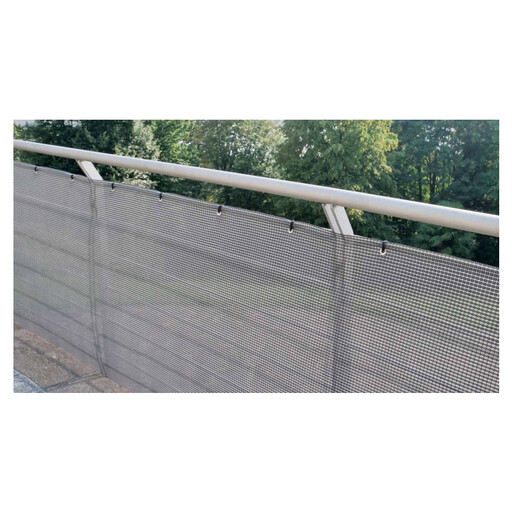
Why we chose it: Perfect for those who see their privacy screen as a true decorative element. Its fine, two-tone weave integrates beautifully with contemporary architecture and stylishly designed terraces.
Its high-quality Textilene construction and tight weave guarantee excellent colour fastness and UV resistance, preventing premature degradation.
The refined aesthetic of its two-tone texture provides elegant privacy without the bulky look of a solid panel.
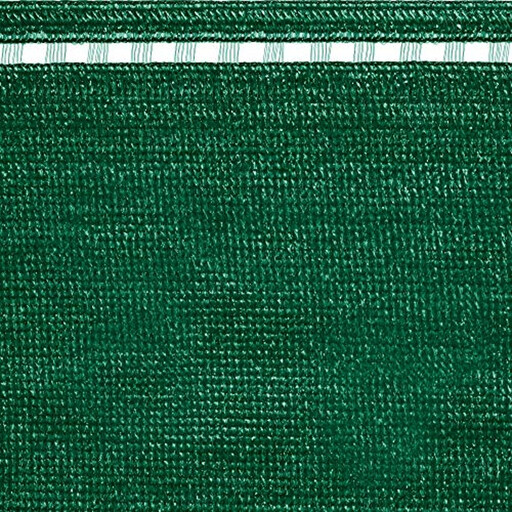
Why we chose it: For those whose top priority is to block out prying eyes. Its design is engineered for maximum privacy and rock-solid durability, ideal for exposed garden fences.
With a dense grammage of 230 g/m? and a Raschel-knitted mesh, it offers 100% manufacturer-stated coverage and far superior tear resistance compared to standard nets.
Its non-fraying structure allows for custom cuts without risk of unravelling, and its eyelets facilitate both vertical and horizontal installation.
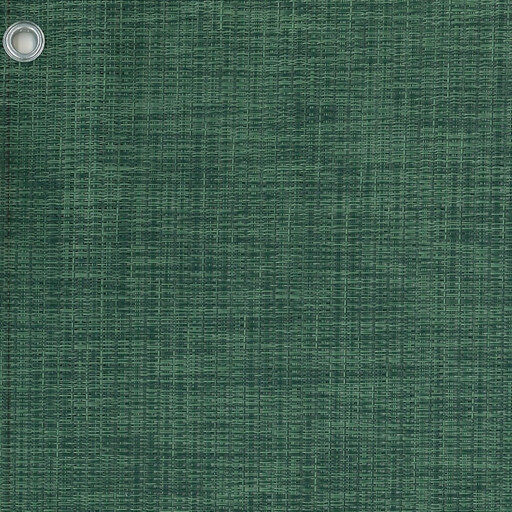
Why we chose it: This is the balanced solution for a balcony or a small fence. It combines pleasing aesthetics, high privacy, and easy customisation for hassle-free daily use.
Its top and bottom edges are reinforced and fitted with rustproof aluminum eyelets. The very high grammage of 650 g/m? ensures outstanding resistance to wind and tearing.
The Textilene fabric can be cut with simple scissors to the desired size without any risk of fraying, offering maximum flexibility during installation.
Explore our full selection of products that meet our demanding standards for quality and durability.
The longevity of a privacy screen depends mainly on its material and exposure to the elements. An entry-level HDPE model will last 2 to 3 years. In contrast, a Textilene or high-grammage HDPE screen with an effective UV treatment can maintain its appearance and properties for 5 to 10 years, and sometimes much longer.
For a sturdy installation, use fasteners like UV-resistant plastic zip ties or coated wire, threaded through each eyelet. Make sure to pull the screen taut without applying excessive tension. On a balcony highly exposed to wind, it is advisable to choose a model with a slightly lower privacy rating (around 90%) to reduce wind load.
This depends on the weaving technology. Textilene screens and models with a "non-fraying" or "ladder-proof" mesh can be cut to the desired dimensions without unravelling. This is a significant advantage for achieving a perfect fit. For simpler woven HDPE models, cutting can weaken the structure, so it is better to choose a size as close as possible to your needs.