
Livraison le jour même ou le lendemain

Qualité garantie

Débloquez vos offres de bienvenue: Livraison GRATUITE | Jusqu'à -80 % | 30 jours d'essai gratuits à JoyPlus
Téléchargez l'application
Whether you want to enjoy your balcony in private, create a cosy nook in the garden, or even partition a large living space, a privacy screen often stands out as the simplest and most effective solution. But here's the catch: the market is flooded with products that make flattering promises… which don't always hold up once installed. To avoid buyer's remorse, it's crucial to know how to sidestep the most common pitfalls and make a truly informed choice.
As the Head of Product Recommendations at Joybuy, my mission is to help you see things more clearly. Let's forget the marketing jargon and focus on what really matters. Here are the key points to watch out for before any purchase.
The excitement of a new project can quickly turn to disappointment if the chosen product deteriorates in just a few months. Here are the most common defects we encounter.
To avoid falling into these traps, you just need to check a few key technical specifications. These are the true arbiters of the quality and durability of your future privacy screen.
The choice of material is decisive. For screening fabrics, you'll mainly find polyethylene (PE) or textilene (a blend of PVC and polyester). The key indicator to look for is the grammage, expressed in grams per square metre (g/m?).
For an artificial hedge or a rigid screening panel, the base material is also often polyethylene (PE). Here, quality is judged by the density of the foliage and the suppleness of the leaves, which should be able to rustle and move naturally.
This is the non-negotiable criterion for any product intended for outdoor use. A quality UV-resistant treatment, which is solution-dyed (not just sprayed on the surface), is the only guarantee that the colours of your privacy screen—whether green, anthracite grey, or another shade—will remain stable for several years. Without this protection, even the most stylish designer privacy screen will turn dull in just one or two seasons.
The best fabric in the world is useless if it's poorly secured. For flexible privacy screens, check for metal eyelets, ideally rustproof (brass, aluminium). Their spacing is just as crucial: eyelets every 30 to 50 cm ensure an even distribution of tension and an impeccable hold against the wind. For modular panels, make sure the attachment system is simple, solid, and compatible with your support structure (fence, low wall, balcony railing).
Every project is unique. To help you envision the possibilities, here are a few solutions tailored to specific needs.
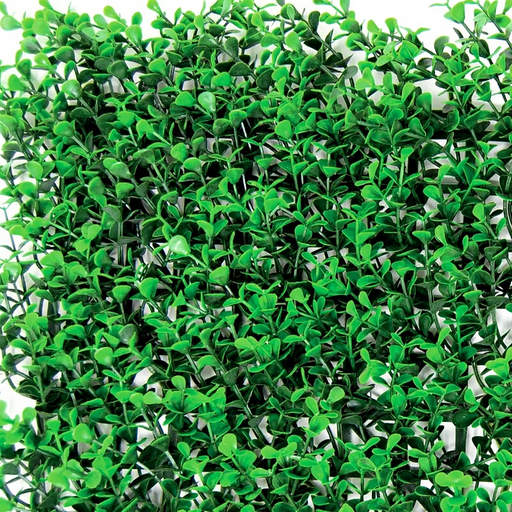
Why this choice? Ideal for those who dream of a lush green wall on a balcony or want to hide a drab wall, without the hassle of watering and pruning. Its modular format allows you to cover any surface, down to the centimetre.
Its very dense 3D foliage made of high-quality polyethylene and its UV-resistant treatment avoid the "plastic look" and fading pitfalls. The realism is stunning from any angle.
Ultra-simple installation thanks to panels that clip together. The visual effect is immediate and maintenance is virtually non-existent: a quick rinse with water now and then is all it takes.
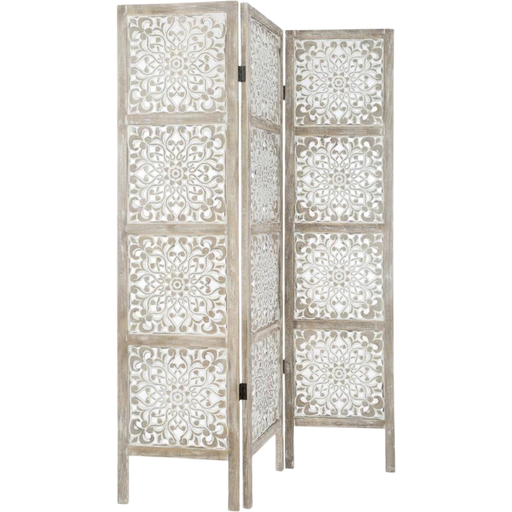
Why this choice? Perfect for those in a studio or loft looking for a room divider that is as functional as it is beautiful. It allows you to create a bubble of privacy without blocking light or weighing down the space.
As an indoor screen, it bypasses weather-related constraints. Its added value is its openwork design and bleached finish, which bring a unique decorative touch, a world away from massive, impersonal partitions.
Completely mobile and foldable, it adapts to your needs and can be stored in a flash. It's the ultimate nomadic partitioning solution, with zero installation constraints.
Why this choice? For those seeking a balcony or fence screening solution that combines modern aesthetics with ultimate durability. Its understated steel grey colour integrates perfectly with contemporary architecture.
With its record-breaking density of 580 g/m?, this textilene screen is virtually tear-proof and ultra-resistant to wind. Its UV-resistant treatment and stainless steel eyelets every 30 cm ensure exceptional longevity.
Its composition (70% PVC, 30% PET) makes it non-fraying: you can cut it to size without it unravelling. A major asset for a perfect fit.
Discover our full selection of products that meet our strictest criteria for quality and durability.
Most building regulations prohibit drilling into railings. The simplest and safest solution is to use plastic zip ties or coated wire. Simply pass them through the screen's eyelets and wrap them firmly around the bars of the guardrail. Remember to pull the fabric taut and use multiple attachment points for optimal wind resistance.
The choice primarily depends on the desired aesthetic and the level of privacy needed.
Absolutely, provided you don't sacrifice function at the altar of form. A quality designer privacy screen must combine an original colour or texture with impeccable technical specifications: high grammage (for fabrics), high-performance UV-resistant treatment, and a robust fastening system. It is this combination that guarantees its long-term performance against sun, rain, and wind.