
Livraison le jour même ou le lendemain

Qualité garantie

Débloquez vos offres de bienvenue: Livraison GRATUITE | Jusqu'à -80 % | 30 jours d'essai gratuits à JoyPlus
Téléchargez l'application
Reclaiming your privacy in your garden, on your terrace, or on your balcony is a perfectly legitimate desire. A privacy screen is the simplest and most effective solution to shield yourself from prying eyes and define your space. The problem? The market is flooded with models, and there's a high risk of ending up with a product that tears at the first gust of wind or fades after a single summer. To ensure your purchase doesn't turn into a disappointment, here are the three pitfalls to absolutely avoid.
As you've gathered, choosing the right model goes far beyond colour or price. To make a lasting investment, you need to take a closer look at a few key technical specifications.
To find the perfect privacy screen—one that combines privacy, durability, and style—three technical points must be scrutinized.
Grammage, expressed in grams per square meter (g/m? or GSM), refers to the density of the fabric. It's the first and most reliable indicator for judging the quality and resistance of a privacy screen fabric.
The choice of material determines the aesthetics, durability, and maintenance of your privacy screen.
A good privacy screen is, above all, a well-secured privacy screen. Never underestimate this point: the quality of the fastenings is as crucial as that of the fabric. Insist on metal grommets, preferably aluminum or brass to say goodbye to rust. The spacing is just as critical: closely spaced grommets (every 30 to 50 cm) distribute tension more evenly and drastically limit the risk of tearing in high winds.
No endless catalogue here. We've selected three products that meet specific needs, strictly applying our quality criteria.
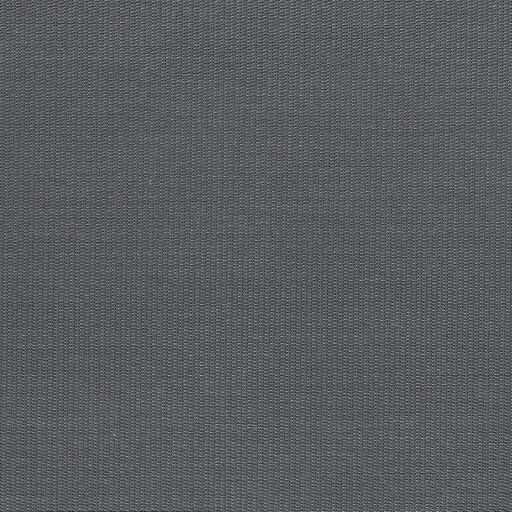
Why this one? Perfect as a balcony privacy screen, this model combines a modern aesthetic (glossy steel grey finish) with unbeatable durability. Its dimensions (1.5 x 5 m) are sized for most balconies and small terraces.
Its heavyweight grammage of 580 g/m? and its Textilene (PVC/PET) composition make it virtually tear-proof. Add to that stainless steel grommets every 30 cm and a serious UV treatment, and you have a product that's built to last.
It combines a distinct designer privacy screen look, effective privacy, and durability designed for the demands of city living.
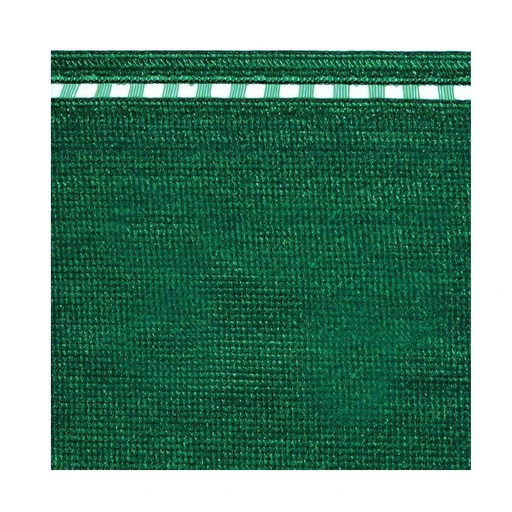
Why this one? This 50-meter roll is the most rational and high-performance solution for fence screening over a long distance. At 2 meters high, it's perfectly suited for standard garden fences to ensure total privacy.
Designed for professionals, its reinforced HDPE weave handles tension over long distances without flinching. Its high-end UV treatment ensures the green won't fade and the fabric will remain flexible, season after season.
Its 50m roll format ensures a uniform installation and optimizes the cost per meter. Cleverly, its weave allows air to circulate, which reduces wind load (the notorious "sail effect").
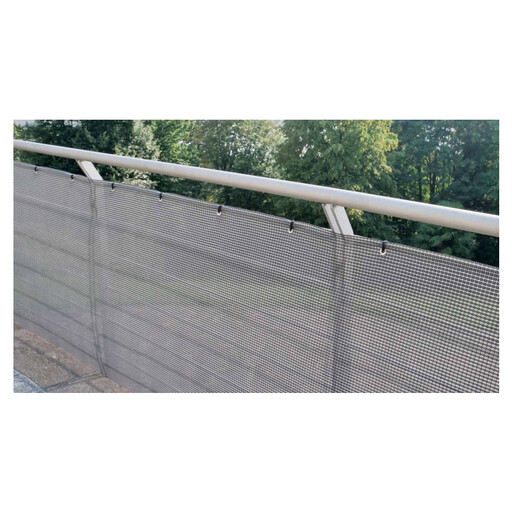
Why this one? For anyone who sees a privacy screen as a true design object. Its subtle weave, which blends black, grey, and silver threads, creates a very chic visual effect, perfect for contemporary terraces and balconies.
Here, the manufacturing quality is flawless. With a record-breaking grammage of 700 g/m?, this is one of the most durable models on the market. Textilene has the advantage of not fraying when cut, and its grommets are made to stand the test of time.
Its look. The visual impact is immediate thanks to its unique texture and colours. It offers moderate privacy, which shields from view without plunging the space into darkness.
Discover our complete selection of products that meet our quality charter and current standards.
It all depends on the quality of the product and the installation. A good model in UV-treated HDPE or Textilene, correctly installed, can easily last between 5 and 10 years. Obviously, heavy exposure to wind and sun will reduce its longevity.
The golden rule: use all the grommets! Stretch the fabric evenly, but without overstretching it. Opt for quality fastenings (UV-treated zip ties, coated wire). Finally, and this is crucial, make sure your support structure (fence, railing) is sturdy enough to handle the force of the wind on the screen.
Not necessarily, and it's often a bad idea. A 100% opaque screen guarantees total privacy but turns your screen into a literal boat sail. The pressure on the support structure becomes enormous. A screen with 85% or 95% opacity is a much better compromise: it preserves privacy while allowing some air to pass through, which significantly reduces stress, especially in windy regions.