
Livraison le jour même ou le lendemain

Qualité garantie

Débloquez vos offres de bienvenue: Livraison GRATUITE | Jusqu'à -80 % | 30 jours d'essai gratuits à JoyPlus
Téléchargez l'application
Enjoying your garden, terrace, or balcony shielded from prying eyes—who doesn't dream of that? To maintain your privacy, protect yourself from the wind, or even create a welcome shady spot, installing a privacy screen is often the simplest and most effective solution. But with an overwhelming number of options available, it can be hard to know where to start.
Don't worry! This guide is here to help you see things more clearly. We'll break down the essential criteria for making the right choice before presenting our selection of the best current models to help you peacefully set up your outdoor space.
Before you take the plunge, a few technical points deserve your attention. These will guarantee the effectiveness and longevity of your installation.
This is the number one criterion: what level of privacy do you want? The opacity level, expressed as a percentage, measures the screen's ability to block the view.
The material and its density (the well-known grammage in g/m?) are crucial for assessing the robustness and lifespan of your privacy screen.
A reinforced privacy screen with eyelets is also a real plus. The eyelets, preferably made of a stainless metal like aluminium, facilitate a solid and durable attachment, preventing tears caused by the wind.
Good news: most fabric or net privacy screens are designed for easy installation. Check for eyelets on the top and bottom edges, as well as their spacing. Regular spacing (every 30 to 50 cm) allows for even tension and a secure attachment using ties, clips, or wire to a wire mesh, balcony railing, or existing fence.
To guide you, we have scoured the market and selected three models that stand out, each meeting specific needs while combining performance and quality.
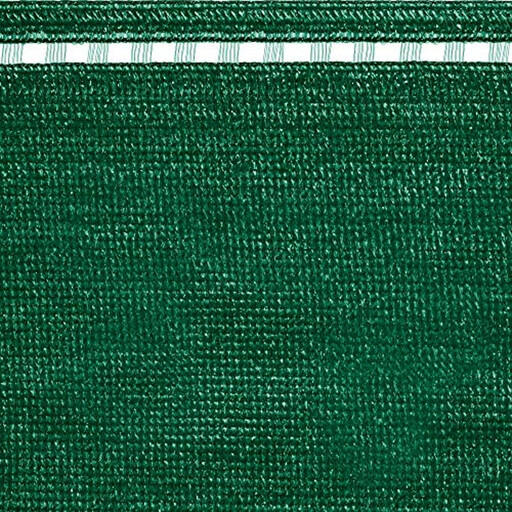
Why it stands out The Coimbra model is designed for those seeking maximum screening. With its 230 g/m? density and woven design, it provides a 100% blackout effect, creating a highly effective visual barrier and windbreak.
Benefits
Who is it for? For those who want to create a completely private space that is protected from the wind, whether in a garden or on an exposed balcony.
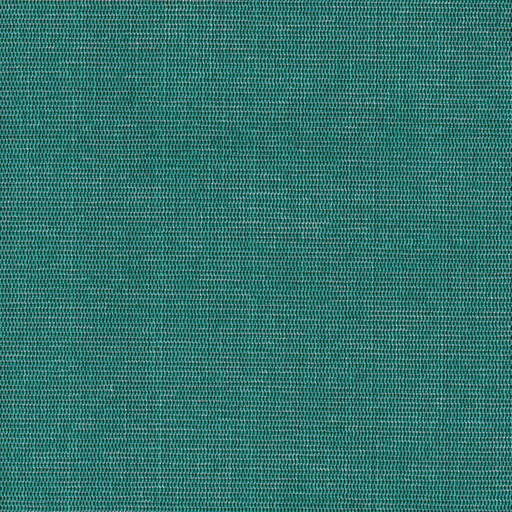
Why it stands out The Tenax Bahia offers an excellent compromise between aesthetics and functionality. Its flat weave gives it a textile-like appearance, while its 180 g/m? density ensures good screening and reliable resistance.
Benefits
Who is it for? For those looking for a solution that is both functional for preserving their privacy and decorative for enhancing their outdoor space.
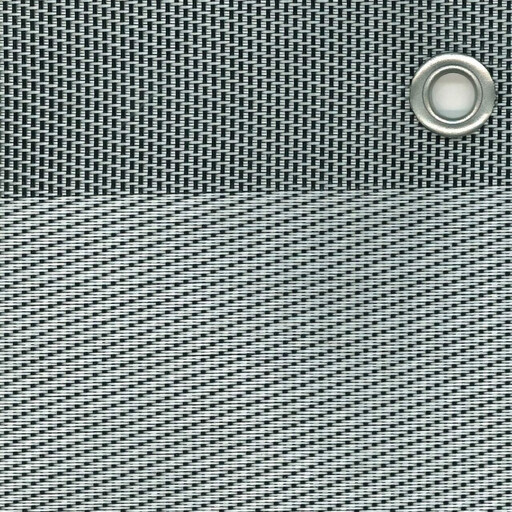
Why it stands out The Texstyle Double positions itself as a high-end screening solution, focusing on modern design and remarkable robustness. Its very high grammage of 580 g/m? and its PVC and polyester composition make it a particularly resistant and elegant product.
Benefits
Who is it for? For discerning users who prioritise contemporary aesthetics and maximum durability for their gates, fences, or terraces.
Our selection focuses on versatile fabrics, but the world of privacy screens is much broader. Composite wood panels, natural reed screening, decorative trellises... there is no shortage of alternatives if you are looking for a different style.
To find inspiration and explore a wider range, take a look at our complete catalogue.
? Discover our full range of Patio Privacy Lattice Panels
The ideal height depends on your needs and the location. For a balcony, a height of 1 m to 1.20 m is often sufficient to maintain privacy when seated. For a garden fence, standard heights range from 1.50 m to 2 m for effective screening. Remember to consult your local planning regulations: they may impose specific rules on fence heights.
For a heavy-duty attachment, use high-quality fasteners (UV-treated cable ties, staples, or galvanised wire) passed through each eyelet of the screen. Make sure to pull the fabric taut during installation. A crucial point: ensure that your support structure (wire fence, railing) is itself robust and securely anchored to the ground to withstand the wind load.
Absolutely. Most modern HDPE or Textilene privacy screens are designed with a "non-fraying" or "ladder-proof" mesh. This means you can cut them with standard scissors without them unravelling, as is the case with the products in our selection. As a precaution, however, always check for this feature in the product description before purchasing.