
Livraison le jour même ou le lendemain

Qualité garantie

Débloquez vos offres de bienvenue: Livraison GRATUITE | Jusqu'à -80 % | 30 jours d'essai gratuits à JoyPlus
Téléchargez l'application
Whether you're a parent or a grandparent, finding the perfect gift that entertains, educates, and stands the test of time can be a real challenge. The pretend play toy has become a reliable choice, and for good reason: it allows children to mimic everyday activities, develop their imagination, and refine their motor skills.
But with an overwhelming number of options available, it's easy to feel lost. This guide is here to provide clear benchmarks and practical advice to help you find the perfect toy that meets your child's needs and interests, based on quality, safety, and play potential.
Before we get to our selection, here are the key points to check to make the right choice.
Safety is the absolute starting point. Always check for the CE mark, which certifies that the product complies with European standards. The manufacturer's recommended age is also a crucial indicator, especially for a realistic toy for ages 3 and up, to eliminate any risks associated with small parts.
The choice of materials is also critical for durability and the play experience. A wooden toy, often sourced from sustainably managed forests (look for the FSC label), combines sturdiness with a timeless aesthetic. High-quality plastic, on the other hand, allows for the integration of interactive features (sounds, lights) and is generally lighter.
The more realistic a toy is, the more it fuels a child's role-playing. Meticulous details, accessories that are faithful to adult objects, and interactive functions (a blender that spins, a hob that lights up) ground the play in reality. This helps children better understand the world around them and build complex scenarios, whether playing alone or with others.
The key is to observe your child's interests. Are they fascinated by meal preparation? A well-equipped play kitchen will become an endless source of creativity. Do they love watching Mum or Dad do DIY projects? A toy workbench will let them screw, saw, and build in complete safety. And for those who love to pamper and care for others, a kid's hairdressing case with its accessories will quickly become an essential.
To help you see more clearly, our editorial team has selected three products that stand out for their design quality and play potential.
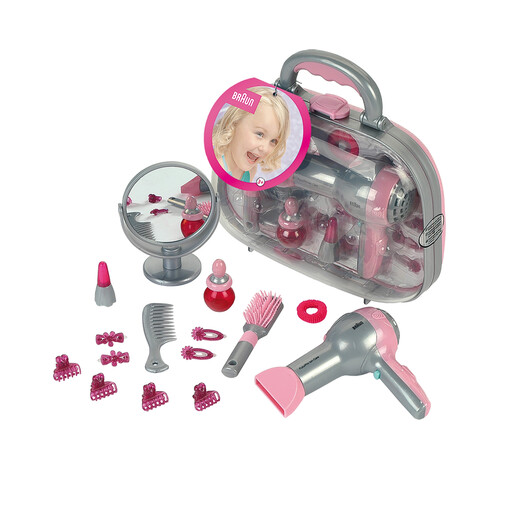
Why we love it: This transparent case, officially licensed by Braun, offers a complete and portable hairdressing experience. Its real standout feature is the battery-powered hairdryer, which blows a gentle stream of cool air (safely!) and mimics the sound of a real one for stunning realism.
Key features:
Who is it for? Ideal for children aged 3 and up who love to imitate beauty routines, style hair, or play hairdresser. Its portability makes it the perfect play companion to take anywhere.
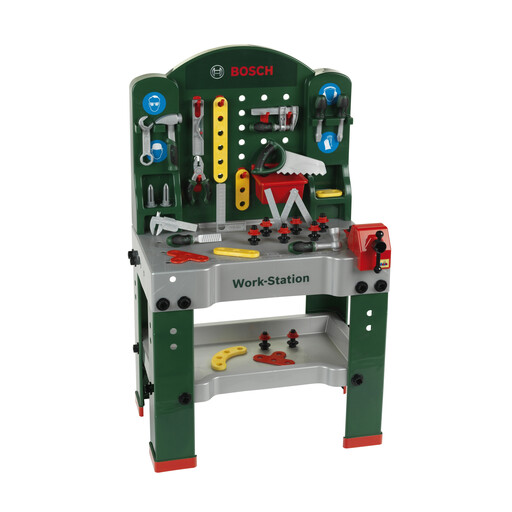
Why we love it: This Bosch-licensed workbench is a true workstation for budding DIY enthusiasts. With its impressive height (101 cm), sturdiness, and wide array of tools, it provides an immersive and evolving play space.
Key features:
Who is it for? Perfect for children from 3 years old who are fascinated by tools and construction. It encourages fine motor skills, logic, and creativity through role-playing as a mechanic or carpenter.
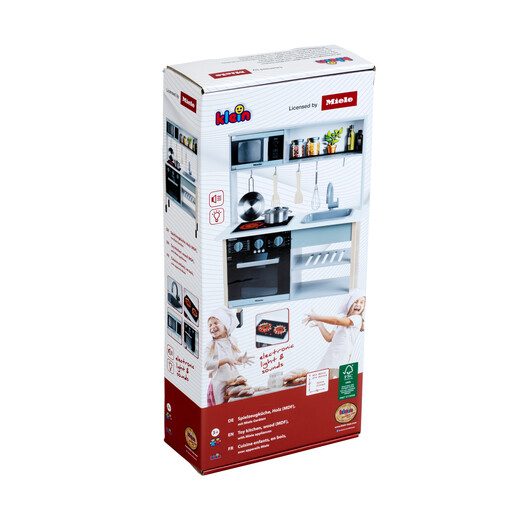
Why we love it: This Miele-licensed kitchen successfully combines the elegance of wood with modern features. Made from FSC-certified MDF wood, it includes a hob with sound and light effects for a highly realistic culinary experience.
Key features:
Who is it for? Recommended for children aged 3 and up who love to play kitchen. It's an excellent tool for developing imagination, social skills by cooking for others, and understanding daily routines.
Every child is unique, and our selection is, of course, just a glimpse of the possibilities. If you're looking for a different theme or other models, feel free to explore a wider range of games and toys.
? Discover our complete collection of accessories for children
Children typically start to show interest in pretend play around 2 or 3 years old. This is the period when they carefully observe adults and try to mimic their actions. A realistic toy for ages 3 and up is often well-suited, as it corresponds to this key developmental phase where children refine their coordination and enrich their symbolic play.
Role-playing is fundamental to a child's development. It allows them to:
It all depends on your priorities and preferences. A wooden toy is often seen as more durable, eco-friendly, and aesthetically pleasing. It offers a different sensory experience. A plastic toy, on the other hand, is generally lighter, easier to clean, and can incorporate electronic features (sounds, lights) that can enhance the realism of the game. In either case, the most important thing is to choose a quality product that complies with current safety standards.