
Livraison le jour même ou le lendemain

Qualité garantie

Débloquez vos offres de bienvenue: Livraison GRATUITE | Jusqu'à -80 % | 30 jours d'essai gratuits à JoyPlus
Téléchargez l'application
A pressure washer can quickly remove mud, plant deposits and ingrained dirt from a patio. Yet some purchases prove disappointing after just a few uses. The problem is not necessarily the advertised power. It often comes down to choosing the wrong machine, impractical accessories or an unsuitable setup.
Before comparing an electric pressure washer, a cordless model or a machine displaying 180 bar, here are the criteria to consider to avoid wasting money.
High pressure always looks impressive on a specification sheet, but it is not enough to assess a machine’s performance. Measured in bar, pressure indicates the force of the jet. The flow rate in litres per hour, meanwhile, determines how much water is available to loosen dirt and rinse it away quickly.
A 2000 W machine rated at 150 bar and 450 l/h can be perfectly suitable for a car, patio or balcony. A 2200 W model rated at 180 bar and 480 l/h will be better equipped to tackle heavily soiled surfaces, provided you use the right nozzle.
With a hose that is too short, you have to keep moving the machine around. On a driveway, fence or large patio, this quickly becomes frustrating. Also check for a hose reel, carrying handle and wheels. These features do not increase the pressure, but they make a real difference to ease of use and storage.
A conventional electric pressure washer generally connects to a tap. However, some portable cordless models can draw water from a bucket or clean tank. This is useful for washing a car outdoors or working away from a power socket and tap. It will not, however, replace a regular water supply for longer jobs.
For everyday domestic use, consider these three figures together:
When washing a car, choose an adjustable nozzle or lance that allows you to maintain a sufficient distance from the bodywork. For a patio or driveway, a patio cleaner can speed up the job while reducing spray.
A pressure washer with a foam cannon applies detergent more evenly. For a car, the foam bottle and soft brush are particularly useful. However, follow the detergent manufacturer’s recommendations and rinse thoroughly after application.
A rotary nozzle is effective against stubborn dirt on hard-wearing surfaces. Use it carefully on wood, grouting, paint and delicate materials. An impurity filter is also a welcome feature if the water may contain particles.
A cordless pressure washer offers welcome freedom of movement. In return, battery life varies depending on the battery, operating mode and how often you stop. Always check whether the battery and charger are included: some machines are sold as bare tools, without these accessories.
A corded electric model is better suited to long cleaning sessions near a power socket and tap. For occasional cleaning in the garden, on a balcony or while travelling, a portable machine will generally be easier to carry.
Before each use, read the instructions and inspect the cable, connections and hose. Never point the jet at a person, animal, power socket or fragile part of a vehicle. Also check that the required regulatory information, instructions in French and guarantee terms applicable in the European Union are provided.
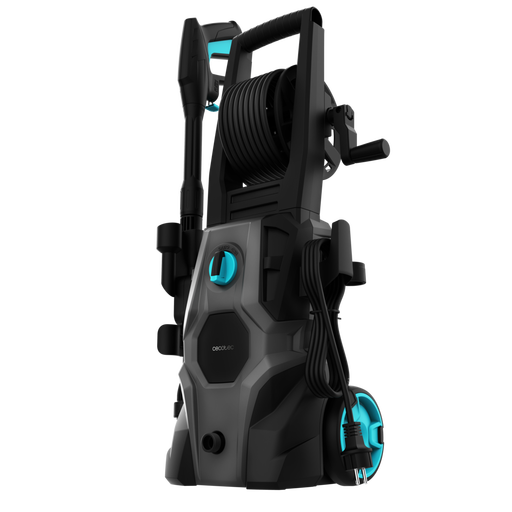
Why this choice suits this profile: With 2000 W, 150 bar and a flow rate of 450 l/h, this electric model is suitable for first-time cleaning jobs involving a car, patio, balcony or outdoor furniture. Its handle and wheels make it easier to move around.
Its stated flow rate and operating capacity allow you to clean a domestic area rather than simply rinsing it. The impurity filter helps protect the water circuit.
Aluminium pump, trigger-operated stop/start system, adjustable soap bottle and accessories for floors, wheel rims and corners.
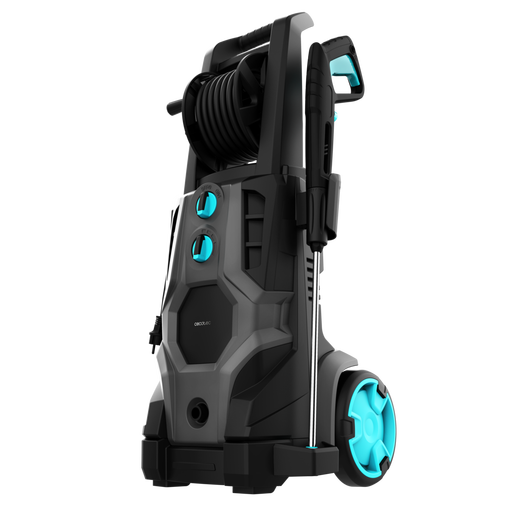
Why this choice suits this profile: Users who regularly clean large areas get 3200 W, 225 bar and 540 l/h, along with an aluminium pump and a stated working range of 14 m.
Pressure and flow rate are listed separately, so you can compare performance without relying solely on the highlighted bar rating.
Adjustable foam bottle, wheels, carrying handle and automatic trigger stop.
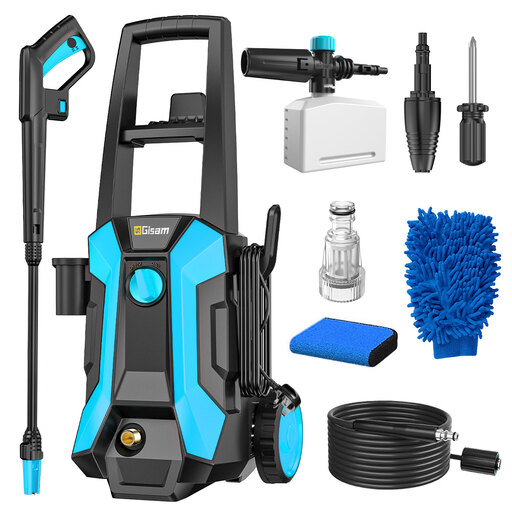
Why this choice suits this profile: With 2200 W, 180 bar and a flow rate of 480 l/h, this model is designed for fences, driveways, patios and vehicles requiring regular cleaning.
Its integrated hose reel and 8 m hose make storage easier and reduce the need to move back and forth around the area being cleaned.
Foam nozzle, high-pressure lance, rotary nozzle and spray gun included for a range of tasks.
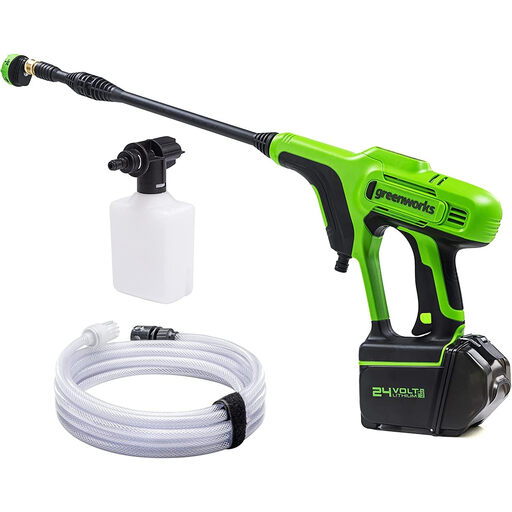
Why this choice suits this profile: Weighing 4,84 kg, this model can draw water from a bucket or clean tank. With 24 bar, it is suitable for bicycles, garden furniture, balconies and smaller car-cleaning jobs.
The product information states that the battery and charger may not be included, depending on the version. Check this before buying to avoid an unpleasant surprise and extra expense.
300 W motor, stated flow rate of 180 l/h, 6 m suction hose and five-position adjustable nozzle.
We have brought together a complete, real-time updated selection of products that meet these demanding criteria and European safety requirements.
For a car, balcony or outdoor furniture, moderate power may be sufficient. For a patio, fence or heavily soiled driveway, compare the power, pressure and flow rate as a whole. A machine advertised at 2000 W will not necessarily be the most suitable if its accessories do not meet your needs.
The cost mainly depends on electricity consumption, water flow rate and operating time. The trigger-operated automatic stop system prevents the motor from running when you release the control. To keep consumption down, prepare the area, choose the right nozzle and do not leave the machine running without purpose.
After each session, switch off the power, turn off the water supply and release any residual pressure. Rinse the nozzles, check the connections and clean the filter. With a cordless model, remove the battery before maintenance and store it away from damp and frost. Finally, follow the maintenance intervals specified in the instructions.