
Livraison le jour même ou le lendemain

Qualité garantie

Débloquez vos offres de bienvenue: Livraison GRATUITE | Jusqu'à -80 % | 30 jours d'essai gratuits à JoyPlus
Téléchargez l'application
Washing a car, stripping a patio or removing mud around a swimming pool is not simply a matter of choosing the machine with the highest bar rating. For domestic use in France, you should focus above all on the pressure actually delivered, water flow rate, pump design, included accessories and storage requirements.
A pressure washer for cars, gardens and homes can quickly become a highly versatile piece of equipment—provided you avoid a few common mistakes.
The figures highlighted by manufacturers often refer to maximum or permissible pressure rather than power maintained continuously at the lance. A pressure washer advertised at 225 bar may be useful for heavily soiled surfaces, but this figure alone is not enough to assess its effectiveness on a car or balcony.
When comparing two models, also look at the flow rate in litres per hour. A high flow rate helps flush dirt away, while substantial pressure helps lift deeply embedded residue.
A composite pump can be perfectly suitable for occasional use. However, if you regularly clean a patio, garden furniture and a car, its construction deserves closer attention. The models featured here use an aluminium pump, advertised as more resistant to fatigue than certain composite pumps. This remains a manufacturing characteristic and does not guarantee the same service life under all usage conditions.
A kit packed with nozzles is not necessarily more practical for everyday use. When washing a car, an adjustable nozzle, detergent tank and soft brush are often more useful than a collection of accessories that will remain at the bottom of the box. For a patio and terrace cleaner, a floor attachment or dedicated brush can, however, help reduce splashback.
Before placing your order, check connector compatibility, hose length and whether wear parts can be replaced.
A 2,000 W electric pressure washer is a common configuration for household maintenance. The Cecotec HydroBoost 2000 Car&Garden offers 2,000 W, 150 bar and 450 l/h. This performance level is suitable for washing a car, maintaining balconies and driveways, and cleaning moderately dirty patios.
With 225 bar and 540 l/h, the Cecotec HydroBoost 3200 TotalClean provides additional reserve for larger surfaces and stubborn dirt. However, this level of power should be used carefully on paintwork, seals, wood and delicate materials.
The aluminium pump deserves particular attention if you plan to use the machine repeatedly. An impurity filter is also useful when the water comes from an outdoor tap or a hose that may contain particles.
Automatic shut-off when the trigger is released prevents the pump from running unnecessarily. It also reduces noise between passes and can help limit water consumption. This feature does not eliminate the need to turn off the water supply and disconnect the power after each use.
A sufficiently long hose means you do not have to move the motor unit every time you change areas. Cecotec product listings state a 14 m operating radius in their titles, while the description mentions 9 m. This discrepancy should be checked on the sales page before ordering.
In France, connect the machine to a protected outdoor socket, keep electrical connections away from splashes and follow the manufacturer’s instructions. When washing a car, begin by rinsing off abrasive particles, keep the lance at a safe distance and do not direct the jet towards seals, sensors or connectors.
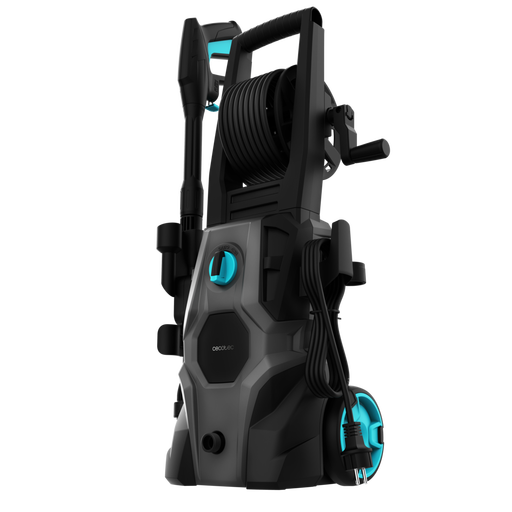
Why this model suits this profile: With 2,000 W, an advertised flow rate of 450 l/h and wheels, it is well suited to the regular maintenance of a car, balcony or patio.
The specifications clearly state the 150 bar pressure, flow rate, aluminium pump and impurity filter instead of making a vague claim about power.
Adjustable soap tank, quick-connect system, automatic shut-off and accessories for floors, wheel rims and corners.
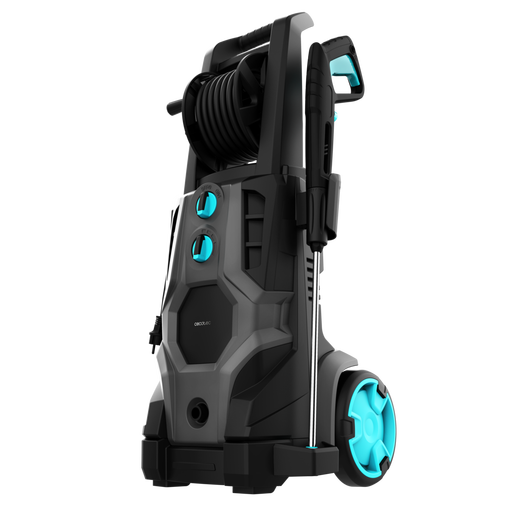
Why this model suits this profile: Its advertised specifications—3,200 W, 225 bar and 540 l/h—are aimed at homeowners with a large patio, driveway or heavily used outdoor area.
The flow rate is listed alongside pressure and power, making it easier to estimate performance across a large surface.
Aluminium pump, adjustable foam bottle, impurity filter, handles and wheels for easier manoeuvrability.
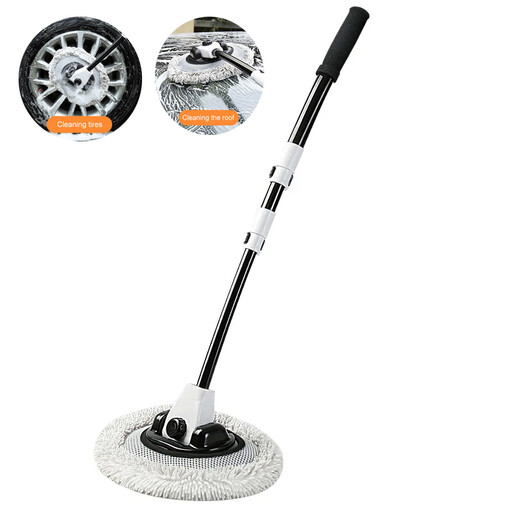
Why this accessory suits this profile: It complements a pressure washer by making it possible to reach the roof, windows and curved areas without applying a powerful jet everywhere.
The chenille fibres are designed for gentle contact, but rinse the brush before each pass to remove sand and grit.
Aluminium telescopic handle, 90-degree pivoting head and removable head for rinsing and drying.
When washing a car, keep suitable shampoo, a soft brush and clean cloths on hand in addition to the pressure washer. A rotary nozzle can be useful on paving slabs and joints, but using one on car bodywork may leave marks if you do not maintain a sufficient distance.
The stainless steel rice and vegetable draining basket is, of course, not part of an outdoor cleaning setup, but it may complement an order intended for the home. The PURECOOK model, made from 304 stainless steel, features evenly spaced drainage holes, polished edges and is dishwasher-safe. It is suitable for rinsing rice, fruit and vegetables, as well as draining washed dishes. Avoid abrasive products and dry it after washing.
Explore our updated selection of products and accessories to compare formats, materials and intended uses before placing your order.
A pressure of 150 bar can be suitable for car washing, provided you use an appropriate nozzle and maintain a sufficient distance from the bodywork. During the initial rinse, avoid lingering over seals, badges and delicate components.
Consumption depends on the flow rate, usage time and washing method. In theory, a model rated at 450 l/h may use more water per hour than a machine with a lower flow rate. Automatic shut-off, shorter sessions and a systematic cleaning method can help limit the volume used. Also remember to check local restrictions during periods of drought, particularly when washing vehicles.
After each session, turn off the water supply, briefly squeeze the trigger to release residual pressure, then unplug the machine. Rinse the accessories, clean the filter and store the pressure washer somewhere protected from frost. Water left in the pump or hose can cause damage during winter storage.