
Livraison le jour même ou le lendemain

Qualité garantie

Débloquez vos offres de bienvenue: Livraison GRATUITE | Jusqu'à -80 % | 30 jours d'essai gratuits à JoyPlus
Téléchargez l'application
A pressure washer can transform the way you clean a car, patio or fence. However, buying one can quickly lead to disappointment if you rely solely on the number displayed on the packaging. Higher pressure does not necessarily guarantee more effective cleaning, and accessories marketed as versatile are not always suitable for every surface.
Before making your choice, compare the pressure, flow rate, power supply, hose length and accessories actually included. Here are the key criteria to consider to avoid unnecessary expense and choose a machine suited to your home, car and outdoor jobs.
Values of 150 bar, 180 bar or 225 bar generally refer to the maximum pressure stated by the manufacturer. They do not necessarily reflect the pressure maintained throughout the cleaning session. Flow rate, measured in litres per hour, also plays a crucial role: with a flow rate of 450 to 540 l/h, a machine may clean a surface faster than a model displaying a higher pressure but delivering less water.
A 2000 W or 2200 W machine may be perfectly suitable for regular outdoor jobs. However, a jet that is too concentrated could damage delicate paintwork, a seal, softwood or an older coating. For a car pressure washer, it is better to prioritise an adjustable nozzle, a foam lance and a suitable working distance, increasing the pressure gradually.
A hose that is too short, a battery with limited endurance or a difficult-to-handle connector can turn an occasional chore into a real struggle. Check the working range, hose storage system, weight, wheels and availability of accessories. For a cordless model, the battery capacity and charging time deserve just as much attention as the stated pressure.
For the most common tasks, the following guidelines provide a useful starting point:
These figures alone do not guarantee perfect results. The choice of nozzle, working distance, detergent and type of dirt also have a direct impact on cleaning performance.
An electric pressure washer provides a constant power supply. It is particularly suitable for users with an outdoor socket or a suitable extension lead. This format is generally more practical for longer sessions and for maintaining patios, façades or paths.
A cordless pressure washer is primarily designed to give you freedom of movement. Depending on the model, it may draw water from a bucket or connect to a tap. It is a convenient solution for washing a car in a courtyard, cleaning equipment occasionally or working in a location without an electrical socket. The trade-off is that battery life varies according to battery capacity, the selected pressure and frequency of use.
A foam lance makes pre-washing a car easier by distributing the product over the bodywork. A rotary nozzle tackles hard-wearing surfaces more quickly, while an adjustable nozzle makes it easy to switch from a wide spray to a more concentrated jet.
In all cases:
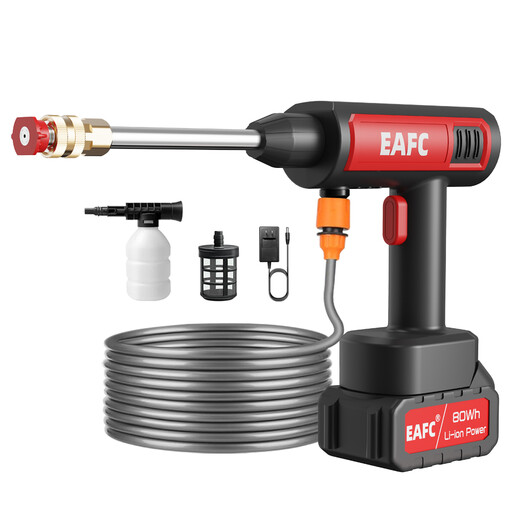
Why this choice suits this profile : Its cordless, battery-powered design is ideal for small mobile jobs: washing a car, cleaning a bicycle or occasionally maintaining a balcony.
It does not require a nearby socket and can work with a bucket or self-priming, depending on the configuration. However, you will need to keep an eye on battery life and charging time.
Lithium battery, portable design, suitable for cars, plants and household cleaning, with a high-pressure gun and foam sprayer.
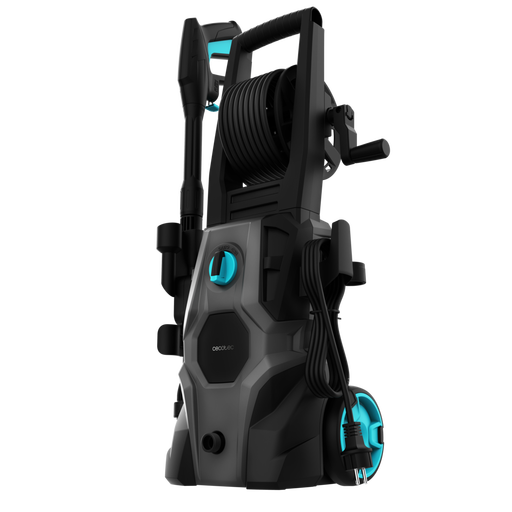
Why this choice suits this profile : With its 2000 W motor, this electric model meets the regular needs of a household that switches between cleaning the car, patio, balcony and garden furniture.
Its dirt filter, automatic stop system and 8 m high-pressure hose minimise unnecessary handling.
Stated pressure of 150 bar, flow rate of 450 l/h, aluminium pump, adjustable detergent bottle and accessories for floors and wheels.
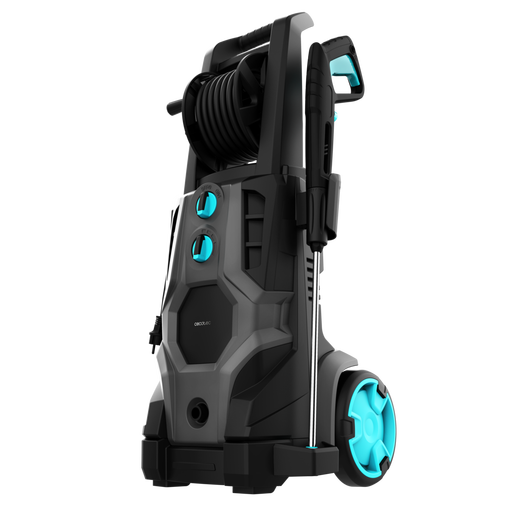
Why this choice suits this profile : With a stated power output of 3200 W and a flow rate of 540 l/h, it is designed for users who regularly maintain large outdoor areas.
Its aluminium pump, wheel-mounted storage and quick-connect system make repeated use easier.
Stated pressure of 225 bar, flow rate of 540 l/h, aluminium pump, foam lance, 8 m hose and accessories for floors and corners.
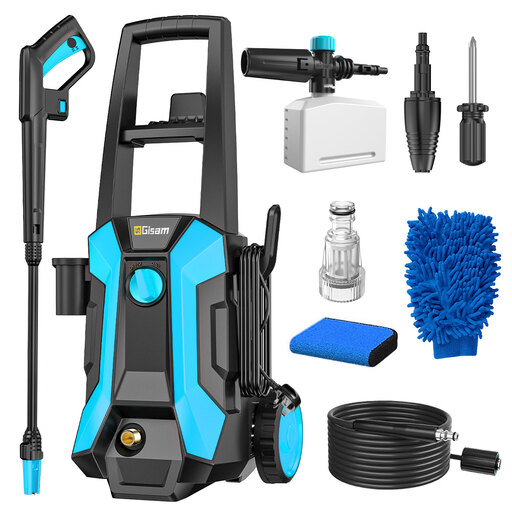
Why this choice suits this profile : It is suitable for regularly cleaning fences, paths, gardens, patios and vehicles, particularly when you need to move around the area being cleaned.
Its 8 m hose and integrated reel reduce the risk of tangling and mean you do not have to keep moving the machine.
Stated 2200 W motor, 180 bar pressure, 480 l/h flow rate, rotary nozzle, foam nozzle and high-pressure gun.
The Bestway Waterflash children's water pistol is 35 cm long, approximately 7 cm in diameter and weighs around 250 g. Its product details recommend it for children aged 3 and over and mention a non-slip handle and rounded edges. To fill it, simply immerse the nozzle and pull back the plunger.
The stated range is between 6 and 9 m, but this depends on how much force is applied. For family use, a few precautions are essential: use clean tap water, ensure adult supervision, never aim at the face or eyes, rinse the pistol after use in a swimming pool or the sea, then allow it to dry completely before storing it. See the Bestway Waterflash.
We have put together a complete, real-time updated selection of products that meet these demanding criteria while complying with European safety regulations.
For occasional car washing, a model offering around 150 bar, equipped with an adjustable nozzle and foam lance, should be more than sufficient. Keep a reasonable distance, start with a wide spray and avoid damaged seals or areas where the paint is already flaking.
This depends on how often it is used, maintenance and storage conditions. After each session, rinse the circuit, clean the filter, drain any remaining water and protect the machine from frost. Storing the hose without kinks and maintaining the connectors properly will also help reduce wear.
Electricity consumption mainly relates to recharging the battery, but the total cost should also take into account its possible replacement. However, this format can eliminate the need to buy an extension lead and make it easier to work away from a power socket.