Households that alternate between fresh meals and frozen portions
You cook for the days ahead while using your fridge every day. For your choice, the litres available for fresh and frozen food matter more than the total capacity alone.


If you store fresh meals every day as well as a few frozen portions, first check whether your fridge compartment or fridge-freezer has enough room. A dedicated freezer is worth considering when that space is regularly full: a chest freezer is suited to larger stocks, while an upright model makes it easier to sort and access your portions. Compare the fresh and frozen storage capacities separately, then check the installation dimensions and annual energy consumption of the model you’re considering.
You cook for the days ahead while using your fridge every day. For your choice, the litres available for fresh and frozen food matter more than the total capacity alone.
You regularly freeze lots of containers or ingredients. A dedicated appliance is worth considering if your current freezer is often overflowing, provided you have a suitable place for it.
You want to separate different types of meals and often reach for individual portions. Drawers and front access may make an upright freezer a better choice, as long as it fits in your room.
Start by identifying what you’re short of today: space for fresh meals, more room for frozen food or easier access to your portions. Then measure the space before choosing an appliance style.
Consider it if: you freeze only a few portions and limited space rules out a larger appliance.
Bear in mind: you’ll need to check the available freezer space carefully before a big cooking session.
Consider it if: you regularly need to store both fresh meals and frozen portions in a single appliance.
Bear in mind: the freezer compartment may still be too small if you start cooking in larger batches, even when the total capacity looks generous.
Consider it if: your current freezer is often overflowing and you have enough floor space, with room to open the lid.
Bear in mind: with top access, you’ll need to organise how you reach portions stored further down.
Consider it if: you often freeze individual portions and want to organise them in drawers that are easy to reach from the front.
Bear in mind: check that the drawers fit your containers and that the door can open fully in the room.
| Criterion | What to check before buying | Who is this for? |
|---|---|---|
| Balance of fresh and frozen storage | Compare the litre capacity of the fresh and frozen compartments separately, rather than looking only at the total capacity shown on the energy label. | When I prepare meals for several days, I want to keep enough room in the fridge without reducing my supply of frozen portions. Around 36% of consumers in this group would prioritise this balance. |
| Room for large batches | Compare the freezer capacity with the space you regularly run short of, then check the dimensions and annual energy consumption in kWh. | My large batches often fill my current freezer; extra storage would be useful if I have room for another appliance. Around 29% of consumers in this group would put capacity first. |
| Sorting and accessing portions | Check the drawers or baskets, whether they leave enough room for your containers, and how much clearance you need to open the appliance. | If I often take out just one portion, I’d rather find it without moving other food. Access and organisation would be the priority for around 21% of consumers in this group. |
| Space and installation | Measure the space and delivery route, then compare them with the ventilation clearances and ambient temperatures specified in the manual. | In a home where space is limited, I need to be able to get the appliance in, open it and install it properly. Around 14% of consumers in this group would put this constraint first. |
A large appliance doesn’t necessarily have a freezer compartment big enough for your portions. As the European Commission explains, the energy label shows the capacities of the fresh and frozen compartments separately.
First compare the freezer capacity you need for your meals, while making sure there’s enough room for food you want to keep fresh.
The permitted ambient temperature depends on the model. A claim that certain Beko freezers are suitable for cold rooms doesn’t automatically apply to other appliances.
Check the climate class and operating temperature range for the model you plan to use in that room.
Electrolux advises leaving enough room for air to circulate around the appliance. A chest freezer also needs space for its lid to open, while an upright model needs clearance in front of its door.
Measure the space, the route into the room and the opening clearance. Then check the model’s installation diagram before ordering.
The French Environment and Energy Management Agency (ADEME) points out that fridges and freezers run continuously. A dedicated freezer will therefore add to the electricity consumption of the appliance you already use.
Check that your freezer space is regularly full, then compare the kWh/year of models with enough capacity for your needs.
The brand offers fridge-freezers as well as compact freezers, upright models and chest freezers.
The brand’s chest freezers are designed in particular for storing larger quantities.
The range of freestanding upright freezers includes models with different layouts and installation requirements.
These Joybuy models let you compare fridge-freezers, which store fresh and frozen food in one appliance, with a chest freezer designed for separate frozen storage. First choose a style that suits your portions and available space, then check the specifications of the model you select.
 Image unavailable
Worth considering if you want to store fresh meals and frozen portions in a single appliance.
The model name indicates a capacity of 360 L, three doors, Total No Frost, an E energy class, Wi-Fi and My Zone. Check the fresh and frozen capacities separately, along with the installation clearances.
 Image unavailable
Worth a look if you’re after a fridge-freezer for fresh meals and frozen portions, with a stated total capacity of 467 L.
The model name specifies four doors, Total No Frost and an E energy class. Check how the capacity is divided between fresh and frozen storage, then consider the delivery route and door clearance.
 Image unavailable
Worth considering if your large batches call for separate freezer storage and you have enough room to open a chest freezer.
The product name indicates a capacity of 291 L, an E energy class and a removable basket. You can select either fridge or freezer mode; these aren’t two compartments that can be used at the same time. Check the permitted ambient temperature for the room where you plan to install it.
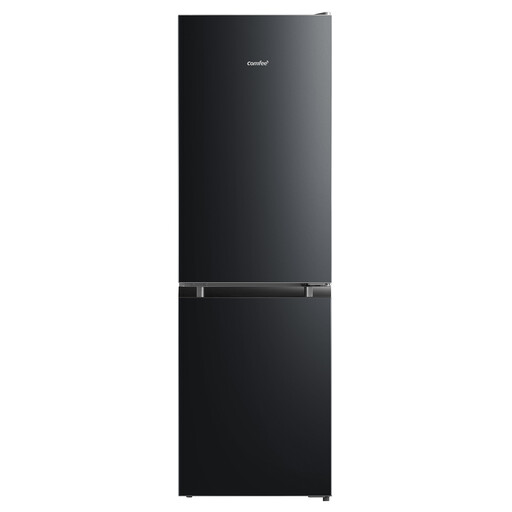 Image unavailable
Worth a look if you want to store fresh and frozen food in a 174 L fridge-freezer, provided its freezer compartment has enough room for your portions.
The model name indicates Low Frost and a reversible door. Check its energy label to compare annual consumption, then measure the space and delivery route.
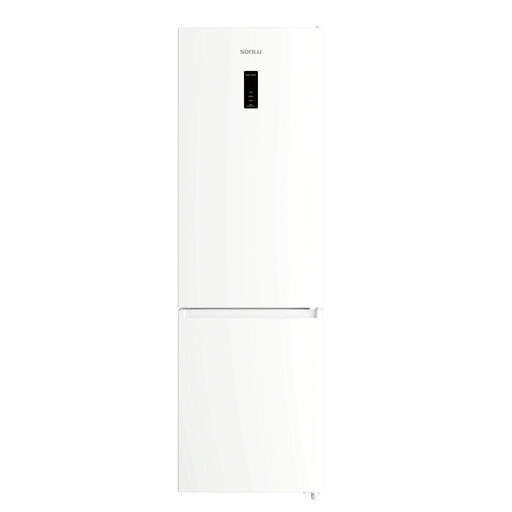 Image unavailable
Worth considering if you want to compare the stated space for fresh meals with the space for frozen portions.
The model name indicates 252 L for the fridge and 103 L for the freezer, a width of 60 cm, a reversible door and an E energy class. Check the full dimensions, clearances and kWh/year before choosing where to put it.
Compare the capacity of the freezer compartments, not just the total capacity. The European Commission explains that the energy label shows storage capacities separately. Compare the freezer space with the containers you usually use, while leaving enough room for fresh meals too.
Yes, if the garage temperature stays within the operating range specified for your chosen model and you follow the installation instructions. Beko lists some models as suitable for cold rooms, but check the climate class and manual for the specific appliance.
Follow the installation and set-up instructions in the manual before loading it for the first time. In its installation advice, Electrolux recommends leaving room for air to circulate around the appliance and specifies waiting times before plugging it in and loading it. Always follow the instructions for the model you receive.
For household appliances covered by EU energy labelling, it shows information including the energy class, annual consumption, storage capacities and noise level, according to the European Commission. Compare kWh/year figures for appliances whose style and capacity genuinely suit your needs.