What to compare
ADEME recommends planning meals and keeping track of your food stocks to help you organise your groceries. When choosing an appliance, start with how long you want to store food, then compare usable capacity, access to portions, where it will go and its energy consumption in kWh/year.
Fridge with enough suitable space
Choose this if: you’ll be eating your portions soon and mainly need more fridge space.
Bear in mind: a large fridge won’t replace a freezer compartment if you want to store food for longer.
Fridge-freezer
Choose this if: you need both functions in your kitchen and want to split your shopping between fresh and frozen food.
Bear in mind: check the capacity of each compartment separately. The total capacity won’t tell you how much space you’ll have for frozen food.
Upright freezer
Choose this if: you already have enough fridge space and often take out portions that you want to find easily in drawers.
Bear in mind: compare usable capacity, how the door opens and the space needed to access the drawers.
Chest freezer
Choose this if: you’re stocking up in bulk, have enough floor space and can organise food right down to the bottom.
Bear in mind: some food may be harder to reach. If the appliance will be in a cold room, check the specified suitability of the exact model.
| Priority |
What to check before buying |
Who it matters most to |
| Keeping meals for the next few days |
Space for sealed containers and temperature control at the coldest point. |
When I prepare several portions for upcoming meals, I want to store them without overfilling the fridge. Around 26% of consumers prioritise keeping meals they’ll eat soon. |
| Storing frozen food |
Usable capacity of the freezer compartment alone, appliance dimensions and energy consumption in kWh/year. |
If I prepare or buy food in bulk, I want to know how many portions I can actually store. Around 21% of consumers prioritise freezer capacity. |
| Easy access to portions |
How easy the drawers or baskets are to handle, visibility of the bottom and the space needed to open the door or lid. |
When I often take out small portions, I want to find and reach them without moving everything else. Around 21% of consumers prioritise access to frozen food. |
| Fitting the appliance into your home |
Dimensions and clearances, access to the installation space and the ambient temperatures permitted for the model. |
If space is tight or the appliance needs to go in another room, I want to check it will fit and that the temperature is suitable. Around 16% of consumers prioritise suitability for the intended space. |
| Managing electricity consumption |
Compare the kWh/year and the fridge and freezer capacities shown on each appliance’s label. |
If the appliance runs continuously, I want to compare its energy consumption with the usable space I need. Around 16% of consumers prioritise electricity consumption. |
For prepared meals, Que Choisir gives 2 to 3 days as a guide for homemade dishes stored in an airtight container. Anses recommends putting dishes in the fridge once they’re no longer hot, and within two hours at the latest. It gives an ideal temperature of between 0 and +4 °C at the coldest point. Freezing can be considered for longer storage, but it doesn’t keep food safe indefinitely.
Brands to consider
These examples showcase the formats and features of specific models. Their inclusion doesn’t guarantee that a range is available or that all products from a brand share the same features.
Bosch
Worth comparing if you’re looking for a fridge-freezer or upright freezer.
- Bosch Home Appliances France lists a 214 L fridge and 94 L freezer capacity, plus LowFrost, for the KGV36VBEAS fridge-freezer.
- The KGV36VBEAS isn’t No Frost. The features of this model don’t apply to other appliances from the brand.
Liebherr
Worth considering if you’re looking at a large-capacity chest freezer or need to install an appliance in a cold room.
- Liebherr lists a capacity of 359 L, a width of 167 cm and FrostProtect for ambient temperatures down to −15 °C for the CFd 2505 Plus.
- The manufacturer describes SmartFrost and StopFrost as features that reduce frost, not as a guarantee that defrosting won’t be needed.
Beko
A range to consider if you’re comparing a larder fridge and a chest freezer separately.
- Beko France lists, among other products, the B3RMLNE444HXB larder fridge and a selection of chest freezers.
- The manufacturer’s claims about food preservation or efficiency apply to the models in question and aren’t independent results that can be applied to the whole range.
Haier
Worth considering if you’re looking for an upright freezer with drawers and want to check its suitability for a cold room.
- Haier lists a capacity of 226 L, four drawers and operation at ambient temperatures down to −15 °C for the H4F226WDH1.
- The advertised conversion between freezing and refrigeration applies to this model; the two functions aren’t presented as operating at the same time.
Joybuy products for this need
This selection includes fridge-freezers for storing fresh and frozen food, as well as a chest freezer for building up your frozen food supply.
 Image unavailable
Haier HTW5618ENMG, 3-door fridge-freezer, 360 L
To split your food between chilled and frozen storage, with three advertised freezer drawers.
235 L fridge capacity and 125 L freezer capacity; stated energy consumption of 271 kWh/year.
Total No Frost, E rating and a direct-access drawer. Listed dimensions: 185 × 59.5 × 66.7 cm; reversible door noted.
View on Joybuy
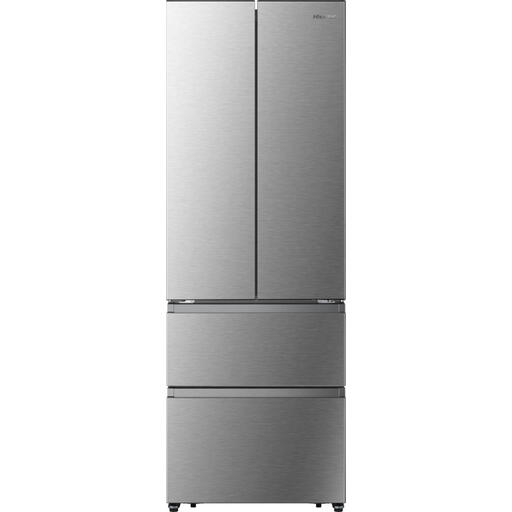 Image unavailable
Hisense RF632N4BCE, fridge-freezer, 485 L
For keeping fresh food and frozen supplies in one appliance.
336 L fridge capacity and 149 L freezer capacity; stated energy consumption of 295 kWh/year.
Total No Frost, E rating and Multi Air Flow. Water dispenser with a tank, so no fixed water connection is needed; stated noise level of 38 dB.
View on Joybuy
 Image unavailable
LG GBBSJ1CCSW, fridge-freezer, 333 L, C rating
For dividing food between the fridge, freezer and a separate cooling compartment.
183 L fridge capacity, 113 L freezer capacity and 37 L cooling compartment; stated energy consumption of 169 kWh/year.
Total No Frost. The door is stated to open to 110° to allow access to the drawers when the appliance is placed against a wall.
View on Joybuy
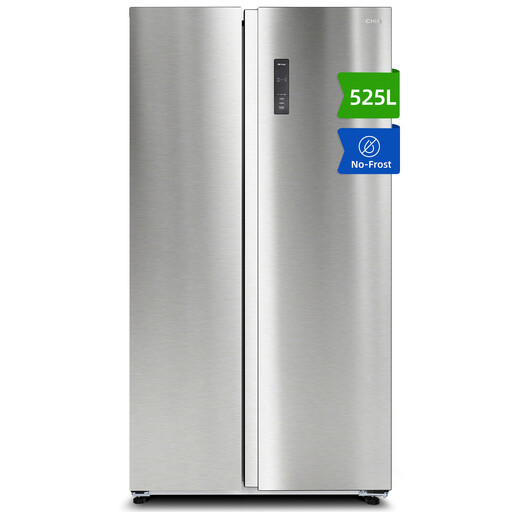 Image unavailable
CHiQ JR525WSE, 525 L side-by-side fridge-freezer
For storing fresh food and frozen supplies in separate compartments.
333 L fridge capacity and 192 L freezer capacity. No Frost and Multi-Airflow; stated noise level of 37 dB, E rating.
Adjustable feet and reversible door noted for installation.
View on Joybuy
 Image unavailable
AUCMA, convertible chest freezer, 291 L
For building up your frozen food supply in a chest freezer with a removable basket.
Switchable fridge or freezer mode, not both at once; stated energy consumption of 226 kWh/year and E rating.
Listed dimensions: 1 100 × 597 × 872 mm; stated minimum ventilation clearance of 10 cm. The description mentions five digital control settings.
View on Joybuy
Frequently asked questions
Is a large fridge enough for all the meals you’ve prepared for the week?
Not necessarily: how long food keeps depends on the dish. As a guide, Que Choisir gives 2 to 3 days for homemade dishes stored in an airtight container. If you need to keep food for longer, consider freezing it rather than exceeding the recommended fridge storage time.
When should you put cooked meals in the fridge?
Anses recommends putting them in the fridge once they’re no longer hot, and within two hours at the latest. Cover food and avoid overfilling the appliance. The ideal temperature is between 0 and +4 °C at the coldest point.
Can you put any freezer in a cold garage?
No. Compare the temperatures the room actually reaches with the permitted range for the specific model. Bosch Home Appliances France gives an ambient temperature range of +10 to +32 °C for SN climate class. Some models designed for cold rooms are rated for temperatures down to −15 °C, but this doesn’t apply to all freezers.
How can you compare electricity consumption without guessing your energy bill?
Check the kWh/year listed for each model. To estimate the cost over the same period, multiply annual consumption by the same rate in €/kWh. The result will depend on your tariff and how you use the appliance.
Does a fridge or freezer sold online in France need an energy label?
Yes. The household refrigeration appliances covered by the rules must carry an energy label, including when sold online. The DGCCRF and European Commission specify an A to G scale for these appliances. Also check the fridge and freezer capacities for the model you’re considering.


