If you mainly keep prepared meals chilled, a fridge-freezer can bring both storage areas together in one appliance, as long as its freezer compartment has enough room for your portions. If you regularly freeze large quantities, consider a separate freezer instead: the drawers in an upright freezer make it easier to organise food, while a chest freezer offers open space for bulkier items. Compare the usable capacity of each compartment, the space the appliance will take up and its kWh/year figure—not just the total capacity or energy rating. ADEME points out that these appliances run continuously.
Which type is right for you?
The amount of food you actually freeze has a bigger impact on your choice than the number of meals you prepare alone.
Households preparing several meals for the week
If you need to store fresh ingredients and frozen portions side by side, compare the usable capacity in litres of each compartment with your usual shopping. A large total capacity doesn’t guarantee enough room in the freezer.
People who often freeze portions
A separate freezer is worth considering if the freezer compartment in your fridge-freezer regularly fills up. According to UFC-Que Choisir, chest freezers can offer a large capacity; the drawers in an upright freezer can make frequently used portions easier to organise.
Small homes with space for just one appliance
A fridge-freezer could save you from having to fit two appliances, as long as both compartments have enough usable capacity. If you freeze a lot, don’t assume a small freezer compartment can replace a proper freezer: UFC-Que Choisir advises distinguishing between these uses.
What should you compare before buying?
First estimate how much space you need for fresh food and frozen portions. Then compare the formats that can hold them, without overlooking installation requirements or energy use.
| Priority | What to check | Think about your needs |
|---|
| Capacity in each compartment |
Check the usable refrigeration and freezer capacity in litres separately on the energy label or in the EPREL product information sheet. The European Commission lists these separately from the total capacity. |
I mainly keep ingredients and meals chilled, but I want to know how much room is actually available for a few frozen portions. |
| Type of compartment |
Check the capacity and layout of the freezer compartment. If you regularly store frozen food, UFC-Que Choisir says a small freezer compartment may not be enough. |
If I often freeze batches of meals, I need to work out whether a fridge-freezer will be enough or whether I need a separate freezer. |
| Access to portions |
Check the number of drawers or baskets, the open storage space and how easy it is to reach food at the bottom. Also measure the space needed to open the appliance. |
I take out portions several times a week, so being able to find them easily matters just as much as having room to store them. |
| Energy use |
Compare the kWh/year figures and usable capacities of appliances with similar formats and capacities, rather than looking at their energy rating alone. ADEME points out that fridges and freezers run continuously. |
I only need enough space for the meals I prepare; I don’t want to size the appliance around one unusually large batch. |
| Batch freezing |
If you add a lot of food at once, check the freezing capacity in kg/24 h and, where available, test results based on the same method. UFC-Que Choisir tests factors such as freezing speed and the energy needed for different loads. |
After a cooking session, I sometimes put several portions in the freezer on the same day. |
| Installation |
Measure the width, height and depth, check how the appliance opens, and measure the route to its intended position. If it’s going in a cellar, garage or other unheated room, check the operating temperatures specified for the exact model. |
I need to be able to install and open the appliance where I plan to use it, without assuming every freezer is suitable for a cold room. |
Which choices could cause problems day to day?
-
Looking only at the total capacity
A fridge-freezer might have enough space overall but too little in the compartment for frozen portions.
Compare the stated usable capacities for fresh and frozen food separately on the energy label or in the EPREL product information sheet, and check them against the quantities you usually store.
-
Choosing based on the energy rating alone
The rating letter doesn’t tell you the whole story about the annual energy use of appliances in different sizes. ADEME also highlights how an appliance’s size and extra features can affect the energy it uses while running continuously.
Look at the kWh/year figure alongside the usable capacities, then compare appliances that can meet the same needs.
-
Choosing a chest freezer without considering access
Its open space can hold bulky items, but portions at the bottom may be less convenient to get to regularly.
If you take out meals often, consider the drawers in an upright freezer, or check that a chest freezer’s baskets and depth suit the way you organise food.
-
Forgetting the space needed for installation
The appliance’s dimensions alone won’t tell you whether its lid, door or drawers can open in the space you have planned.
Measure the space and the delivery route. If the appliance will be in an unheated room, also check the operating conditions specified by the manufacturer for that model.
A guide to selected brands and models
These models show some of the configurations and features you can compare. Information about one model doesn’t necessarily apply to the whole brand.
Bosch
The KGN36VLED fridge-freezer is one example of an appliance offering 237 L of refrigeration capacity and 89 L of freezer capacity, according to Bosch Électroménager France.
- Bosch says this model has No Frost.
- Check that its 89 L of freezer capacity is enough for the portions you regularly store.
Liebherr
Liebherr lists a total capacity of 423 L for its CBNsdc 765i fridge-freezer, which features BioFresh and NoFrost.
- This model gives you the opportunity to look at a high-capacity layout with a BioFresh zone stated to be close to 0 °C.
- Total capacity isn’t a substitute for comparing the litres available in each compartment or checking the space the appliance will take up.
Beko
The B3RCHE305HW fridge-freezer is a useful example for comparing cooling features with the energy use of a specific model.
- Beko France lists a fast-freeze function, Semi No Frost cooling in the freezer and energy use of 196,80 kWh/year for this model.
- Check its usable capacities before deciding whether it can accommodate your mix of fresh ingredients and frozen portions.
Whirlpool
Whirlpool France’s product information lists a 371 L W3RHS37EW1 chest freezer and a 404 L WHFF6403W4E upright freezer.
- Whirlpool says the WHFF6403W4E upright freezer has six drawers; the W3RHS37EW1 chest freezer is an example of a different storage layout.
- When choosing between them, also check how easy the food is to access, the dimensions and the kWh/year figure for the model you’re considering.
Fridge-freezers on Joybuy
These appliances combine refrigeration and freezing in a single unit. Before considering this format instead of a separate freezer, compare the space for frozen portions with the quantities you usually prepare.
 Image unavailable
Candy CFQQ5T817EPS, 467 L, four doors
If you want to keep fresh food and frozen portions in one appliance, compare how its 467 L capacity is divided with what you need. The model name indicates Total No Frost and an E energy rating. Check its dimensions and annual energy use too before choosing this capacity.
View on Joybuy
 Image unavailable
Haier HTW5618ENMG, 360 L, three doors
This 360 L fridge-freezer is worth considering if you want to store fresh ingredients and frozen portions in one appliance. Its name indicates Total No Frost and an E energy rating. Compare the capacity of each compartment and the kWh/year figure, not just the total capacity.
View on Joybuy
 Image unavailable
CHiQ JR263LGE, 262 L, 54 cm wide
With a stated width of 54 cm, this fridge-freezer could be worth considering for a narrow space. Also check its height of 176 cm and the clearance needed to open it. The model is described as Low Frost: check the defrosting requirements and room temperature conditions before installation.
View on Joybuy
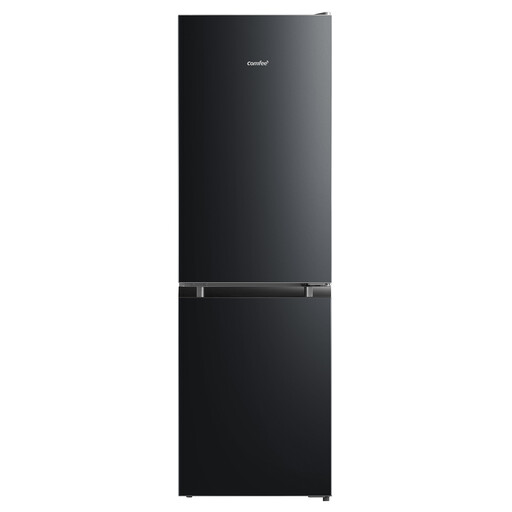 Image unavailable
Comfee' by Midea RCB230BL2EU(E), 174 L
If you prepare modest quantities of meals, compare its 174 L capacity with the space taken up by your fresh and frozen food. The model is described as having Low Frost and a reversible door. Check the label to compare its capacity in each compartment and its kWh/year figure.
View on Joybuy
 Image unavailable
CHiQ JR227LSE, 227 L, 54 cm wide
If space is tight in your kitchen, this fridge-freezer offers 153 L of refrigeration capacity and 74 L of freezer capacity in a width of 54 cm. Its name indicates Low Frost and an E energy rating. Check the model’s height, depth and kWh/year figure before deciding if this layout is right for you.
View on Joybuy
Frequently asked questions
What should I look for on the energy label?
Compare the kWh/year figure, the usable capacities of the fresh and freezer compartments, the energy rating and the noise level. The European Commission includes these details on fridge and freezer energy labels. For prepared meals, the separate capacities help you check where your food will actually fit.
Upright or chest freezer for prepared portions?
An upright freezer with drawers makes it easier to organise food if you take out portions often. A chest freezer may suit a large stock, but check its floor space and how easy it is to reach food at the bottom. UFC-Que Choisir highlights differences between the two formats, including their layout and potential capacity.
Is No Frost essential for this purpose?
No: start by choosing enough freezer capacity for your portions. No Frost may suit you if you’d prefer less maintenance, but it won’t make up for a compartment that’s too small. Also compare the model’s kWh/year figure and interior layout.
Can you put a chest freezer in a garage?
Only if the model’s operating conditions are suitable for the temperature in your garage. Check the manual rather than assuming all chest freezers are suitable: for example, Whirlpool says its W3RHS37EW1, which has FreezerGuard, can withstand temperatures down to −15 °C.


