For a raclette evening, choose aged or vintage sardines if you’d like to serve them separately on bread as a tasting option. If ease of sharing matters more, look for a product that’s explicitly labelled boneless. If ingredients or organic certification are important to you, check the specific tin: these details alone don’t tell you whether it contains bones, its drained weight or the flavour of the recipe.
Who are these sardines for?
Hosts planning a separate tasting
You’d like to serve a few sardines on bread before or alongside the raclette, rather than mixing them with the melted cheese. Connétable’s aged varieties and Albert Ménès vintage sardines suit this style of serving; their flavour descriptions come from the brands themselves.
Guests who avoid bones
To make sharing easier, look for an explicit ‘boneless’ label. A product described as fillets isn’t necessarily completely free of bones, so check the description on the specific tin you choose.
Shoppers who check the ingredients
You look first at the ingredients, type of oil, salt content or any organic certification. Compare the drained weight too: a short ingredient list, an organic label and ageing each refer to different characteristics.
What should you look for before choosing?
First decide whether the sardines will be a tasting option served on bread or an easy-to-share small plate. Then check the ingredients and drained weight of each tin.
| What to consider | What to check | Who is it for? |
|---|
| Separate tasting |
Look for ‘aged’ or ‘vintage’ labels and serving suggestions for the specific product. |
I’d like to offer a small tasting on bread, separate from the raclette. Around 36% of consumers would put this kind of tasting at the top of their list of priorities. |
| Boneless serving |
Look for an explicit ‘boneless’ label; don’t assume this from the fillet format. |
When everyone is helping themselves, I’d rather not have to remove bones from my plate. This convenience would be the top priority for around 29% of consumers. |
| Ingredients and organic certification |
Read the ingredients, check the type of oil and nutritional information, and verify the certification if it matters to you. |
I want to make an informed choice about the ingredients and, if I wish, choose a product with organic certification. Around 21% of consumers would prioritise this first. |
| Quantity to share |
Compare the drained weight and the number of tins, not just the net weight. |
For a sharing platter, I want to know how much sardine will actually be served. This would be the top priority for around 14% of consumers. |
Things to bear in mind
-
Assuming ‘premium’ means suitable for everyone
‘Aged’, ‘vintage’, ‘organic’ and ‘boneless’ labels don’t all meet the same need. A tin intended for a tasting can still be inconvenient if some guests avoid bones.
Choose the feature that matters most for your table, then check it on the exact product you’re considering.
-
Comparing tins by net weight alone
Net weight includes the oil the fish is packed in, so two tins with the same net weight won’t necessarily provide the same amount of fish to serve.
If you’re preparing a sharing platter, compare the drained weights shown on the packaging.
-
Confusing olive oil with a boneless recipe
The type of oil says nothing about whether the bones have been removed. A recipe may also contain other ingredients, such as the olives in Saupiquet’s fillets. The flavour of these isn’t the same as a recipe made only with sardines, oil and salt.
Read the product description and ingredients on each tin, especially if a guest needs to avoid a particular ingredient.
-
Leaving an opened tin on the table after the meal
Storage advice once opened varies by product. Saupiquet advises keeping its fillets in olive oil in the fridge and eating them within two days.
Once you’ve finished serving, follow the instructions on the tin you opened.
Brands to know when comparing products
Connétable
The brand offers whole sardines in extra virgin olive oil, as well as aged sardines that it describes as confit and matured for 12 months.
- The classic product featured by Connétable contains sardines, extra virgin olive oil and salt.
- If your guests avoid bones, check the specific product rather than assuming that the features of one tin apply to the whole range.
Albert Ménès
Its vintage sardines in extra virgin olive oil are intended to be served separately as a tasting option.
- The Carrefour product listing shares the brand’s advice: leave this product to mature for four months after production before tasting.
- This advice doesn’t prove that your guests will prefer it to another tin.
Parmentier
Auchan’s listing describes the ‘Sardines Fraîcheur Extra Label Rouge Huile d'olive vierge extra’ product as boneless.
- The boneless label makes this product a good option for easy sharing.
- This feature applies to this specific product and not necessarily to other Parmentier sardines.
Saupiquet
Its sardine fillets in extra virgin olive oil with olives offer a flavoured recipe rather than a tin of whole sardines.
- The fillet format makes it easy to serve pieces on bread.
- The olives matter if you’re looking for a recipe made only with sardines, oil and salt. Check the tin for information about bones too.
Auchan
The range includes a classic option and an organic variety in olive oil, making it easy to compare the two.
- The listing for the organic product gives a drained weight of 80 g and lists FR-BIO-09 certification for production and FR-BIO-01 for distribution.
- Auchan notes that the ingredients in its classic product may vary depending on where and when you buy it, so check the packaging of the one you choose.
Sardines for this kind of occasion
This selection of Joybuy products includes sardines to serve on bread, fillets and a truffle recipe for anyone looking for a more aromatic flavour. Choose a tin to suit how you plan to serve it, and check its specific details, especially if it’s essential that the sardines are boneless.
 Image unavailable
Connétable Sardines in extra virgin olive oil, 140 g
Worth considering for serving on bread if the central bone is a concern for some guests.
The Joybuy listing for this product says the central bone is removed by hand. If it’s essential that there are no bones at all, check the packaging.
View on Joybuy
 Image unavailable
Connétable Sardines in extra virgin olive oil, 135 g
Worth a look if you’d like to serve sardines in olive oil on bread alongside the raclette.
The tin is listed as 135 g. To plan how much to share, check its drained weight and whether the packaging mentions bones.
View on Joybuy
 Image unavailable
EL TATO Sardine fillets in olive oil, 115/81 g
The fillet format could work well for serving small pieces on bread.
Check the packaging for the exact type of oil and whether bones may be present: the word ‘fillets’ doesn’t mean that all the bones have been removed.
View on Joybuy
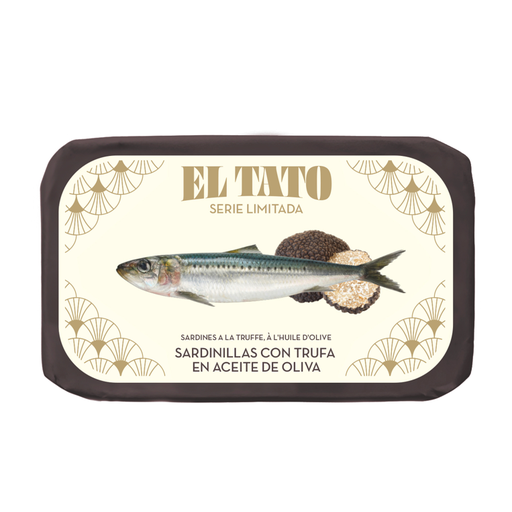 Image unavailable
EL TATO Small sardines 16/20 in olive oil and truffle, 115/81 g
Save these for a small tasting on bread if you’d like to add a truffle recipe to the meal.
This is a different flavour from a plain recipe, so check the ingredients and allergen information on the tin before sharing.
View on Joybuy
 Image unavailable
El Tato Small sardines 16/20 in olive oil, 115/81 g
An option to consider if you’d like to serve small sardines on bread without choosing a product described as flavoured with truffle.
To plan how much to share or cater for guests who avoid bones, check the drained weight and the information on the packaging.
View on Joybuy
Frequently asked questions
Which sardines go with raclette without adding too many extra flavours?
A recipe made only with sardines, olive oil and salt is a good choice if you want to avoid extra aromatic ingredients. Serve it on bread alongside the cheese. If you prefer a recipe with olives or truffle, choose that flavour with the rest of the meal in mind.
Do sardines need to be refrigerated after opening?
Yes. Follow the storage instructions for the tin you’ve bought once it’s open. Saupiquet advises keeping its sardine fillets in olive oil in the fridge and eating them within two days; the recommended time may differ for another product.
What should you check if a guest has a fish allergy?
Sardines are fish, so check the ingredients and allergen information on each tin before serving it to anyone with a fish allergy. Also pay attention to any other ingredients and the information provided for flavoured recipes.
Is one tin enough to make a sharing platter?
To estimate how many sardines to serve, use the drained weight shown on the tin and consider how many guests will want some. Net weight includes the oil the fish is packed in, so it doesn’t tell you how much fish is available on its own.


