
Livraison le jour même ou le lendemain

Qualité garantie

Débloquez vos offres de bienvenue: Livraison GRATUITE | Jusqu'à -80 % | 30 jours d'essai gratuits à JoyPlus
Téléchargez l'application
A premium notebook is about more than just a nice cover or a well-known brand. For a professional, a student, an architect or a journaling enthusiast, the wrong choice can quickly become cumbersome, uncomfortable or ill-suited to the pen you use.
Before you place an order, three common mistakes keep cropping up:
The A5 size, which measures roughly 14.8 × 21 cm, offers an excellent compromise for studying, meetings, journaling and travel. It slips easily into a bag without taking up as much room as a large notebook.
Large and Extra Large sizes give you more space for mind maps, diagrams or design portfolios. An architect or designer will appreciate this generous surface area, whereas a traveller will be more inclined to reach for a compact notebook that's easier to carry around.
The XXL size can be practical for hefty projects, but it's worth checking its dimensions and weight before you consider it for on-the-go use.
The ruling should match the way you work:
The models featured here use paper of 70, 80, 90 or 100 g/m². However, a high paper weight isn't always enough to prevent show-through with every ink. Check the manufacturer's specifications and, if possible, test your pen on a page near the back of the notebook.
A hard cover protects the contents better in a bag and provides a more stable writing surface when you don't have a desk. A soft cover reduces weight and makes it easier to carry, but it doesn't protect the pages from creases as effectively.
A stitched binding or one designed to open 180° makes note-taking more comfortable across a double-page spread. Also think about checking for an elastic closure, a bookmark, an inner pocket or detachable pages.
The FSC and PEFC labels give you information about the certified or controlled origin of the paper, depending on the scheme in question. They don't replace the need to look at the product's actual features: paper weight, number of pages and cover type.
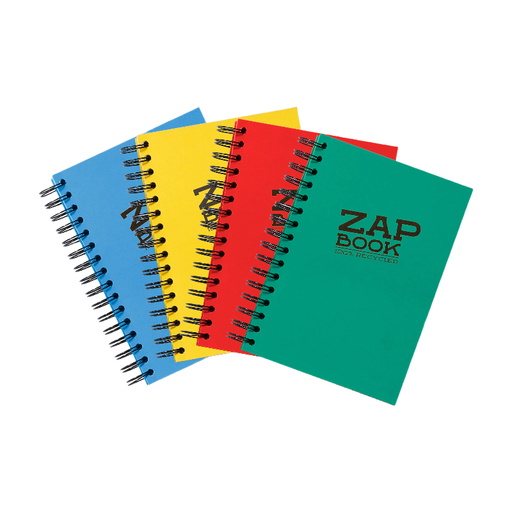
Why this choice suits this profile: With its A5 size and 160 pages, this notebook is ideal for students and anyone who wants to explore the premium end without being weighed down by an overly bulky model. The cover colour is assigned according to availability.
Its metal binding allows it to open completely flat – so you're not choosing this notebook for its looks alone. The recycled paper is stated to be acid-free and pH neutral.
A5 size, 160 pages, 80 g/m² recycled paper and variable ruling depending on the reference.
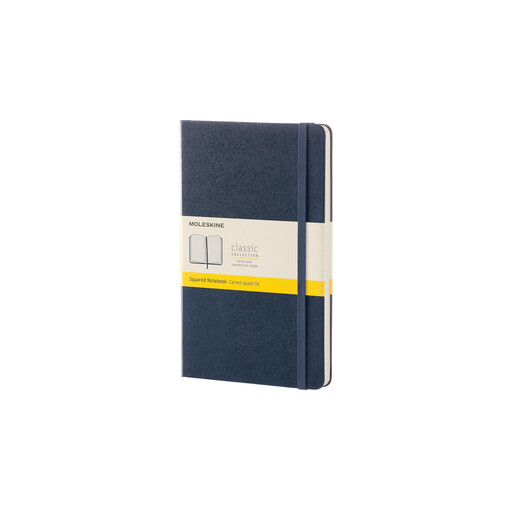
Why this choice suits this profile: Its hard cover, 180° opening and well-thought-out details are aimed at writers, creatives and professionals who want to keep their notes in a structured format.
The hard cover protects the contents better than a soft cover when you're on the move. The inner pocket and elastic closure also stop the pages from getting scattered.
Blank pages, 70 g/m² acid-free cream paper, bookmark, elastic closure, expandable pocket and paper from FSC-certified sources.
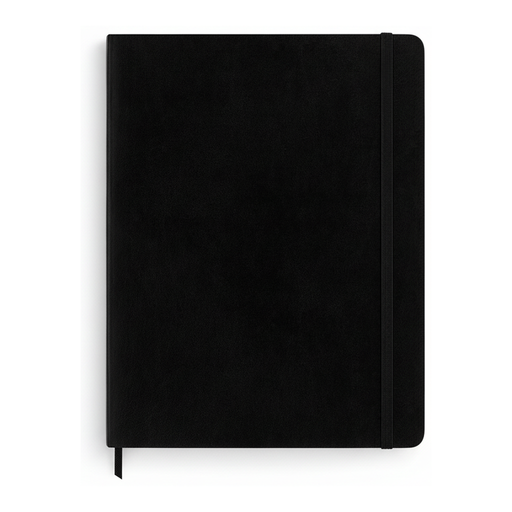
Why this choice suits this profile: Its large grid surface is ideal for architects, designers, engineers and project managers who want to bring together diagrams, tables and detailed notes in a single notebook.
The grid provides a precise guide for diagrams and plans, while the flat opening reduces any discomfort around the binding.
Extra Large size, grid ruling, 192 pages, soft cover, elastic closure, bookmark and inner pocket.
We've put together a complete, real-time updated selection of products that meet these exacting criteria and European safety standards.
The choice depends more on the notebook's features than on the name printed on the cover. The Moleskine models featured here come in hard or soft cover versions, with blank or grid pages, an elastic closure and an inner pocket. The Clairefontaine Nomaddict references focus on 90 g/m² Vélin Velouté paper and a leather-textured cover. Depending on the model, they also offer stitched binding, detachable pages or storage pockets.
For writing with a fountain pen, compare the paper weight, texture and the manufacturer's recommendations. No paper behaves the same way with every ink.
It all depends on how often you use it, the quality of the binding and the storage conditions. A notebook kept away from moisture, heat and direct sunlight will preserve its cover and pages for longer. Papers described as acid-free are designed to limit certain types of degradation caused by acidity, but they don't guarantee perfect preservation in all conditions.
A soft cover makes the notebook lighter and easier to pack in a bag. A hard cover protects the pages better and provides a more stable writing surface when you don't have a table. For a travel notebook that will be used in a variety of conditions, also look at the elastic closure, the strength of the binding and whether there's a pocket.
Blank pages give you complete freedom to mix text, sketches and collages. Dotted pages help structure your layout, while grid pages make it easier to create calendars and tracking tables. Lined pages are better suited to written entries and regular meeting notes.