People who keep track of carbohydrates per portion
If you want to fit a frozen dessert into your usual eating plan, you’ll need to know the carbohydrates and sugars in the individual lolly you’ll actually eat, not just the figures per 100 g.


If you live with diabetes and want to choose a premium ice lolly, start by comparing the carbohydrates and sugars in the portion you’ll eat, then check its size and ingredients. A mini size makes it easier to choose a smaller individual lolly, but you still need to read the nutritional information. Chocolate and almond recipes also call for extra care when checking allergens.
If you want to fit a frozen dessert into your usual eating plan, you’ll need to know the carbohydrates and sugars in the individual lolly you’ll actually eat, not just the figures per 100 g.
A mini ice lolly can help you choose a smaller portion. You’ll still need to check its nutritional information, though: “mini” doesn’t mean “low in sugars”.
The exact recipe matters just as much as the format. Depending on the product, check for milk, almonds and soya, as well as any precautionary allergen statements that are relevant to you.
Whether you’re comparing standard ice lollies, mini lollies or other individually portioned frozen desserts, start with the one you plan to eat. The label for that specific product will then let you compare its portion size, nutritional information and ingredients.
| Criteria | What to check | Who it’s relevant to |
|---|---|---|
| Carbohydrates and sugars | The carbohydrates and “of which sugars” figures per lolly, for the flavour and size you’ve chosen. | To see how my dessert fits into my usual eating plan, I want to know what’s in the individual lolly I’ll eat. Around 46% of consumers would make this their first check. |
| Portion size | The weight or volume of one lolly, followed by its nutritional information; the number of lollies in the box isn’t enough. | If I want to serve a smaller portion, I need to be able to tell a mini lolly from a standard-size one without making assumptions about its ingredients. Around 27% of consumers would prioritise this. |
| Allergens and ingredients | The ingredients list and any “may contain” statements on the packaging of the product you’ve chosen. | If a chocolate and almond recipe might contain an ingredient I need to avoid, its ingredients matter more than its flavour or size. Around 27% of consumers would make this their first criterion. |
These terms describe a recipe or format, not the amount of carbohydrates you’ll consume. The French National Authority for Health notes that carbohydrate intake is one of the factors to consider in the diet of adults living with type 2 diabetes.
Compare the nutritional information for the portion you plan to eat rather than relying on the product range name.
Two ice lollies may be different sizes. Magnum France gives figures per 100 ml lolly for Magnum Amandes, while Carrefour France lists a 65 g portion for its Côte d’Or lolly.
Check the size of one lolly and its carbohydrates per portion. If the label only gives figures per 100 g, use the weight of the lolly too when making your comparison.
Recipes with published information include ingredients such as milk or almonds; some also mention soya or possible traces of other allergens.
Check the ingredients and precautionary allergen statements on the packaging for the flavour and batch you’re buying, even if you already know the brand.
The range includes chocolate-coated ice lollies, including almond recipes, in standard or mini sizes depending on the product.
Carrefour France lists, among other products, a box of six mini vanilla, chocolate and almond ice lollies.
Carrefour France lists a vanilla, dark chocolate and almond lolly with a stated portion size of 65 g.
ALDI France lists, among other products, a box of twelve MUCCI mini ice lollies.
These coconut sorbet sticks offer a frozen dessert in individual portions. They’re not a substitute for comparing premium chocolate and almond ice lollies: check the nutritional information and allergens for the batch you choose.
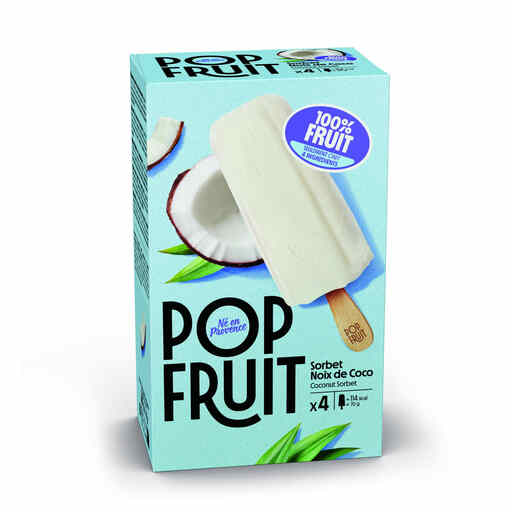 Image unavailable
If you’re looking for a frozen dessert in individual portions, this box contains four coconut sorbet sticks, weighing 280 g in total. Check the packaging for the batch you choose for the carbohydrates, sugars and allergens in the portion you’ll eat.
No. The French health insurance system says that no food is forbidden as part of a varied diet for someone living with diabetes. The amount you eat and how the dessert fits into your personal eating plan are still worth considering; this doesn’t mean an ice lolly is specifically suitable for people with diabetes.
Start with the carbohydrates and sugars in the portion you’ll eat. The French Federation of Diabetes highlights the importance of carbohydrates in managing blood glucose. As a guide when reading labels, Magnum France lists 25 g of carbohydrates, of which 23 g are sugars, per 100 ml Magnum Amandes lolly.
Not necessarily: a smaller lolly doesn’t tell you enough about its ingredients on its own. Carrefour France lists 21,4372 g of added sugars per 100 g for its Carrefour Extra mini lollies. Check the carbohydrates and sugars per lolly too before comparing them with a standard size.
At the very least, check for milk and almonds in recipes that list them. Depending on the product, the ingredients list or precautionary allergen statements may also mention soya, peanuts, other nuts, cereals containing gluten or eggs. Always check the label on the batch you buy when making your choice.