
Livraison le jour même ou le lendemain

Qualité garantie

Débloquez vos offres de bienvenue: Livraison GRATUITE | Jusqu'à -80 % | 30 jours d'essai gratuits à JoyPlus
Téléchargez l'application
Choosing a new predator fishing rod can quickly become a daunting task. Lost in a jungle of models, technical jargon, and marketing promises, it's all too easy to make a purchase you'll bitterly regret. Unsuitable gear doesn't just spoil your enjoyment on the water?: it can make you miss the fish of a lifetime. To avoid this disappointment, let's review the most common mistakes.
The first pitfall? Falling for the "all-around" rod, supposedly effective in all conditions. In reality, a jack of all trades is a master of none. Another classic trap is overlooking the quality of the components, like the guides or the reel seat. A high-end blank is useless if the guides rust after three saltwater trips or if the reel seat develops play. Finally, confusing power and action almost always leads to a poor choice, resulting in mediocre lure control and poor bite detection.
The goal of this guide is simple?: to give you the keys to choosing the predator fishing gear that perfectly matches your style, whether you're targeting sea bass on the coast or pike in freshwater.
To make an informed choice, you need to master a few fundamental concepts that define a rod's behaviour.
These two concepts are often confused, yet they are distinct and complementary.
Your choice will therefore depend entirely on the type of lure fishing rod you're after and the techniques you use most often.
The blank is the soul of the rod. Today, the vast majority of predator rods are made from carbon fibre. The quality of the carbon (its "modulus") directly affects two crucial aspects?:
Be careful, though?: a very high-modulus carbon is also more brittle and less forgiving of impacts. The balance between sensitivity, lightness, and durability is therefore a critical trade-off.
A sea bass rod or any rod intended for marine use must be equipped with corrosion-resistant components.
Rather than an endless list, we've matched iconic models to specific angler profiles. This should help you find the perfect fit.
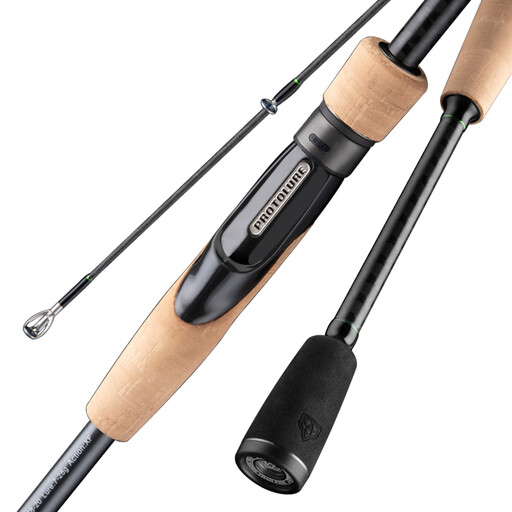
Why this model? This angler is looking for a rod that can handle sea bass fishing from the shore as well as zander or perch in freshwater. The two-piece design makes it easy to transport and store, a key benefit for the mobile angler.
Instead of being a soulless "Swiss Army knife" rod, this model is purpose-built for sea bass. This gives it the perfect action and sensitivity for soft plastics and hard baits, while remaining highly effective for freshwater predators.
Its two-piece construction makes it incredibly practical for anglers who switch spots frequently. Its targeted versatility makes it a reliable tool for the most common cast-and-retrieve techniques.
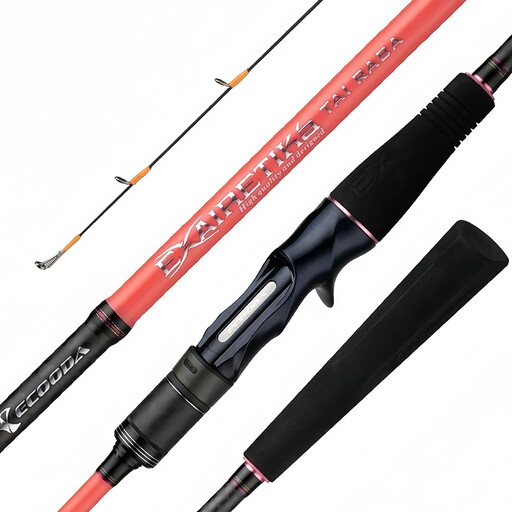
Why this model? This angler uses precision vertical techniques like Tenya or Tai Rubber to target sparids (porgies, sea bream). They need an ultra-sensitive rod with a specific action to detect the most subtle bites and avoid damaging fragile baits.
This **tenya rod** is a precision instrument. It avoids the action/power confusion trap by offering a blank designed for slow, vertical presentations and bite detection—a mission impossible for a standard spinning rod.
Its sensitive solid tip allows you to visually detect the faintest bites, while the power reserve in the butt section ensures you can control the fight with impressive fish.
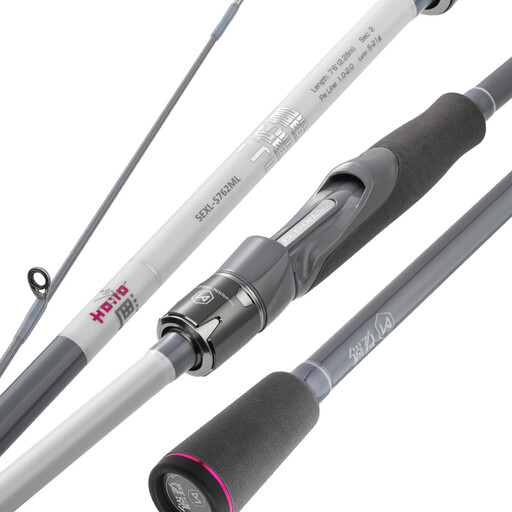
Why this model? This angler seeks performance above all else. They fish intensively, often in saltwater, and demand reliable, sensitive, and durable gear to cast far and work their lures with precision. For them, there's no compromising on component quality.
It avoids the trap of subpar components by featuring a full set of **Fuji SiC** guides. This is an undeniable mark of quality, guaranteeing bulletproof corrosion resistance and lasting casting performance, even after hundreds of hours in a saline environment.
The combination of a responsive carbon blank and Fuji SiC guides optimises casting distance and sensitivity, allowing you to detect the finest bites and control the fight from start to finish.
We have curated a complete range of products that meet our criteria for quality and performance.
This is a crucial step to extend the life of your gear. After each outing, rinse your rod thoroughly with fresh, lukewarm water, paying close attention to the guides and reel seat to dissolve all salt. Then, dry it with a soft cloth before storing it in its sleeve in a dry place away from direct sunlight.
The main difference lies in the reel's position. On a spinning rod, the reel hangs underneath the rod. This is the most common and easiest setup to master. On a casting rod, the reel sits on top, and the rod often has a trigger grip. Casting generally offers more precision and control for heavier lures but requires a learning curve to avoid the infamous "bird's nests" when casting.
Not necessarily. While a high-modulus carbon rod offers remarkable sensitivity and lightness, it is also more brittle and less tolerant of impacts. For an angler who fishes in snag-heavy environments (rocks, branches) or who wants a more robust rod for heavy-duty applications, an intermediate-modulus carbon can be a wiser choice, offering a better compromise between performance and durability.