
Livraison le jour même ou le lendemain

Qualité garantie

Débloquez vos offres de bienvenue: Livraison GRATUITE | Jusqu'à -80 % | 30 jours d'essai gratuits à JoyPlus
Téléchargez l'application
The hunt for predators, from pike in a pond to tuna on the high seas, demands flawless equipment. Every component, from the line to the hook, is the link that separates you from (or connects you to) the fish of a lifetime. In a market saturated with marketing promises, even seasoned anglers can feel lost. This guide gets straight to the point: giving you the keys to choosing reliable, high-performance predator fishing gear and avoiding disappointment at the water's edge.
Before we even talk about products, it's essential to know the most common mistakes. Knowing what to look for will save you a world of frustration when the moment of truth arrives.
An ultra-thin diameter for record-breaking strength? It's the ultimate marketing pitch. The problem: these strength figures are often obtained in a lab under perfect conditions. In reality, the true test is knot strength and wear resistance after hundreds of casts. A high-quality fishing line isn't judged on a theoretical peak strength, but on its consistency, its reliability at the knot, and its ability to handle abrasion without suddenly losing all its properties.
Watching your hook open up mid-fight is arguably one of an angler's greatest frustrations. Marketers love to tout "specially reinforced" or "heavy-duty" steel, but the true quality of a fishing hook rests on a very specific technical trio: the steel's composition (high in carbon), the quality of the tempering (the right balance between hardness and flexibility), and the geometry of the shank. A poorly designed hook or one made with low-grade steel will bend or snap when faced with the power of a trophy fish.
To build a coherent and effective setup, two components at the end of your line are absolutely crucial. Your success in lure fishing depends directly on them.
The debate is timeless, but the choice mainly depends on your fishing technique and the spot.
In many cases, the most versatile setup remains the same: a main line of braided fishing line and a fluorocarbon leader.
The fishing split ring is that small metal connector linking your lure to your line, or the hook to the lure. It's the quintessential weak link, yet so often forgotten. A low-quality model will open up on the first hard pull, leaving you with the worst kind of memory. Demand marine-grade stainless steel and check its "shape memory": it must return perfectly to its original shape after being opened to attach a hook.
Here are a few ECOODA fishing gear references that check all the boxes for reliability and technical performance, suited for different types of anglers.
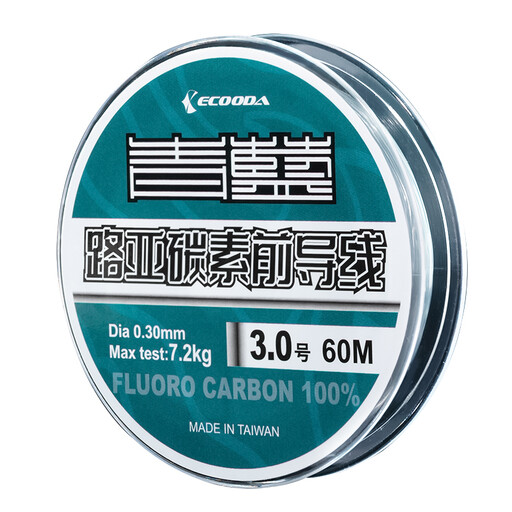
WHY IT'S A MATCH: This angler targets wary fish (zander, black bass) and needs a completely invisible leader that can withstand friction. Stealth is their absolute priority.
This is a pure fluorocarbon fishing line, not just a "coated" line that loses its properties after a few trips. Its construction guarantees lasting invisibility and excellent knot strength.
Maximum stealth thanks to its water-like refractive index. High abrasion resistance, ideal for snag-heavy spots.
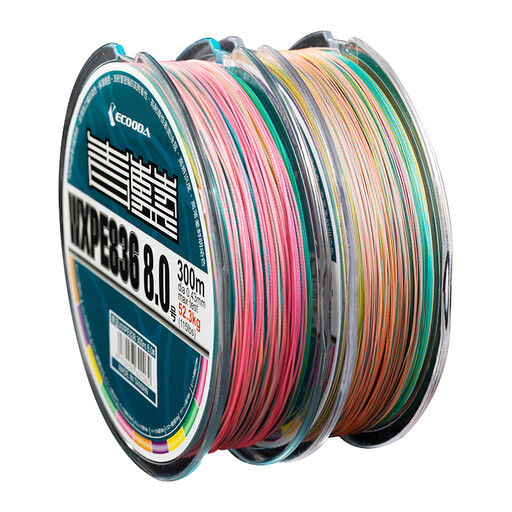
WHY IT'S A MATCH: Sensitivity is their priority. They want to feel the slightest inhale from a zander or perch. They need a reliable braided fishing line for pinpoint casts and a flawless hookset.
Unlike low-quality flat braids that soak up water and make casting heavy, this 8-strand model has a perfectly round profile for optimal glide. Its strength is consistent, not just a theoretical peak.
Extreme sensitivity (near-zero stretch). Round profile for longer casts and perfect spooling on the reel.
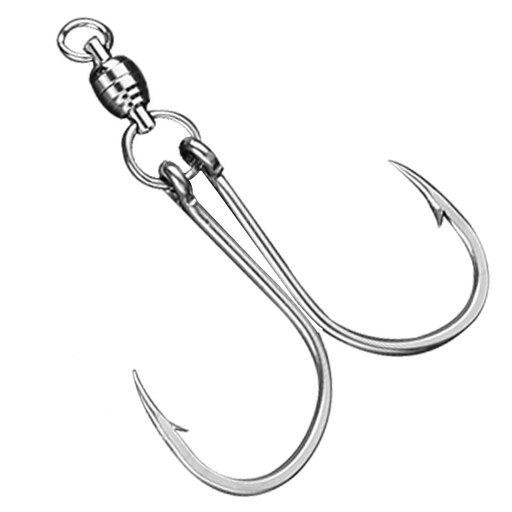
WHY IT'S A MATCH: Here, strength is not an option. Every piece of equipment must withstand phenomenal pressure. They need a bomb-proof hook capable of stopping the most brutal runs without ever bending out.
This hook is specifically forged for heavy-duty fishing. It avoids the trap of hooks that are simply thicker but made of mediocre steel. Here, everything relies on the quality of the steel and a geometry engineered for maximum resistance to opening.
"Heavy Duty" design for outstanding tensile strength. A wickedly sharp, chemically-sharpened point for perfect penetration, even with a thick wire.
Discover our full selection of gear that meets our strictest criteria for quality and performance.
The lifespan of a braided fishing line depends on the frequency of use and fishing conditions. For regular use (1-2 outings per week), an inspection every 6 months is a good habit. If it starts to fray, if its color has faded, or if it breaks more easily at the knots, it's time to replace it. Pro tip: to double its life, reverse it on the reel to use the fresh portion that was at the bottom.
The right diameter is a compromise between three factors: the required stealth, the type of spot (snag-heavy or open), and the size of the target fish. As a general rule: for zander or perch in clear water, 20/100 to 28/100 (approx. 8-12 lb test) is a good starting point. For pike, never go below 70/100 or 80/100 (approx. 60-80 lb test) to counter their sharp teeth. In saltwater for sea bass, diameters vary from 30/100 to 50/100 (approx. 15-30 lb test) depending on the spot and how wary the fish are.
Yes, the majority of ECOODA fishing gear is designed to be versatile. However, you should always check the specifications for each product. Hooks and split rings intended for saltwater, for example, receive a reinforced anti-corrosion treatment. In any case, after a saltwater trip, a thorough rinse of all your equipment with fresh water is an essential habit to keep it in good condition.