
Livraison le jour même ou le lendemain

Qualité garantie

Débloquez vos offres de bienvenue: Livraison GRATUITE | Jusqu'à -80 % | 30 jours d'essai gratuits à JoyPlus
Téléchargez l'application
Repairing a phone, building a computer or tightening a bike part requires a bit more than just a simple screwdriver. Precision repair tools need to be compatible with the screws you're using, offer sufficient control and remain easy to handle in tight spaces.
However, be wary of the features highlighted in product listings. A large number of bits doesn't guarantee truly comprehensive coverage, while excessive torque can damage a fragile circuit board. Here are the criteria to examine before buying an electronics screwdriver kit, an electric screwdriver or a digital torque adapter.
A 128-piece screwdriver kit might look comprehensive. But you still need to check which profiles are actually included: Phillips, Torx, pentalobe, hexagonal, tri-wing or bits specific to electronic devices. Some sets multiply similar sizes without offering the most useful formats for your equipment.
When working on a phone or laptop, having bits suited to Torx and pentalobe screws often matters more than the total number of pieces. Also check compatibility with the bit holder.
An electric precision screwdriver designed for electronics isn't in the same league as a tool intended for furniture assembly or car mechanics. Excessive torque can damage the screw head, the thread or the plastic housing.
For delicate devices, prioritise a precise adjustment expressed in N·m. A model offering several low levels will often be more relevant than one displaying high power but proving difficult to control.
Small screws have a habit of disappearing on a workbench. A magnetic case, clearly labelled storage and a suitable pair of tweezers make repairs much easier. Also remember to check the battery life, the type of charging and whether the tool can be used manually when the battery is flat.
Expressed in newton-metres (N·m), torque refers to the rotational force applied to the screw. For a tool intended for electronics repair, a low range and several adjustment levels are particularly useful. For a bike, motorbike or car, the required values are generally much higher.
A digital torque adapter sits between a ratchet wrench and a socket. Before buying it, check the stated measurement range, the direction of measurement and the drive size: 1/4″, 3/8″ or 1/2″. A stated accuracy of ± 2 % in the clockwise direction and ± 2.5 % in the anticlockwise direction should be treated as a manufacturer's specification, not as a guarantee valid in every situation.
S2 steel bits are common in precision kits intended for electronics. Chrome-vanadium (CR-V) steel bits are also very widespread for household tasks and light mechanical work. However, the material isn't everything: the correct size, the fit in the screw and the pressure applied during disassembly remain decisive.
A magnetic screwdriver keeps the bit in place and can help retrieve a small screw. This feature makes handling easier, but it doesn't replace fine tweezers when you need to grip fragile components.
A USB-C rechargeable electric screwdriver is practical in a home workshop. Examine the battery capacity, the charging time and whether you can finish an operation by hand. For a torque adapter, check the battery type, the reset procedure and the storage conditions. Digital sensors must be protected from shocks, moisture and extreme temperatures.
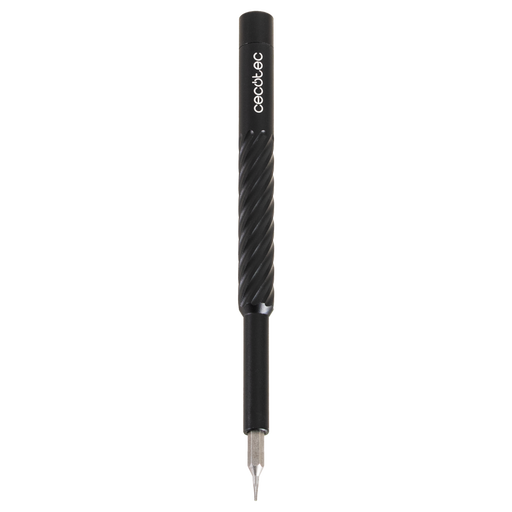
Why this choice suits this profile: Its manual format is ideal for first-time repairs on phones, computers and small devices, as well as occasional household tasks.
The 128 pieces aren't limited to a few repeated sizes, and the case keeps all accessories in one place.
CR-V bits, built-in magnetiser and case with closure.
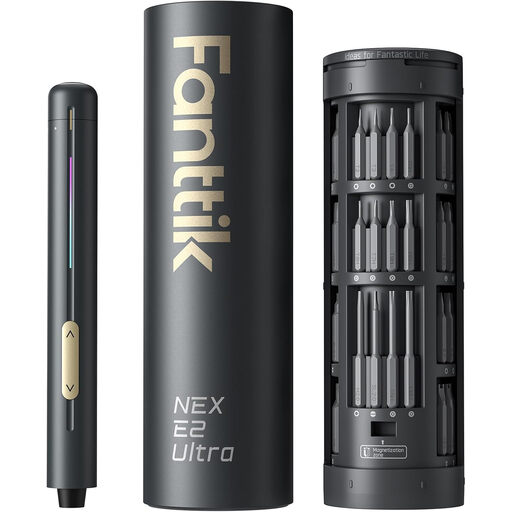
Why this choice suits this profile: It's aimed at users who regularly work with precision on laptops, cameras, phones or watches.
Its five torque levels, from 0.05 to 0.6 N·m, prevent applying the same force to screws of different sizes.
50 S2 bits, magnetic storage, motor stated at 270 rpm and USB-C charging.
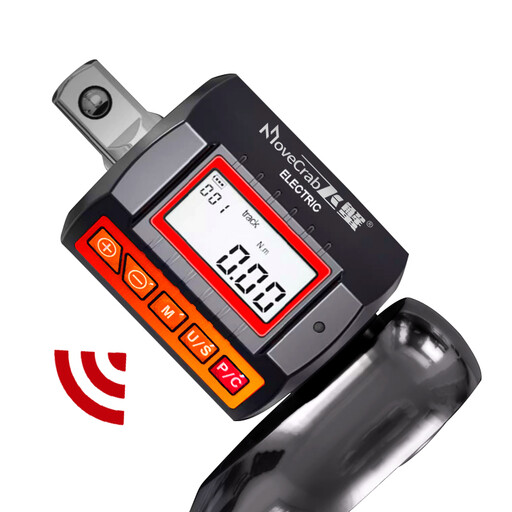
Why this choice suits this profile: Its measurement range suits bike and motorbike repairs, as well as certain automotive tasks carried out with a manual ratchet.
The real-time, peak and preset modes let you adapt the display to the task, rather than relying solely on feel.
Range of 6 to 200 N·m, audible and visual alarms, 1/4″ and 3/8″ adapters included, stated memory of 1,000 values.
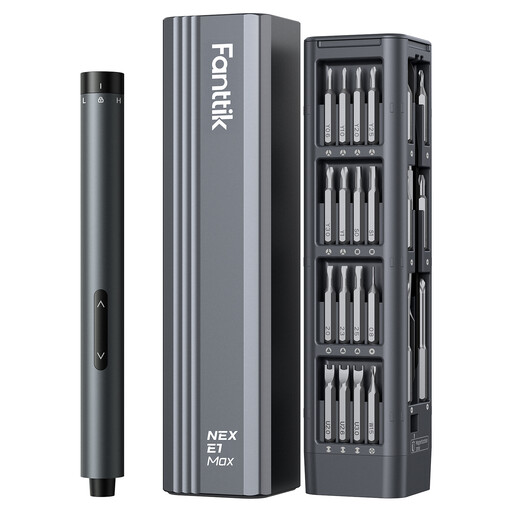
Why this choice suits this profile: Its compact size slips easily into a tool box for working on a camera, watch, graphics card or phone.
The 0.05 and 0.2 N·m settings allow you to distinguish delicate tasks, while the manual mode stated at 3 N·m can take over when needed occasionally.
50 magnetic bits, storage case and USB-C charging.
We've put together a comprehensive list, updated in real time, of products that meet these strict selection criteria as well as European safety regulations.
A repair kit for phone and computer should include Torx, pentalobe, Phillips and small hexagonal bits. A pair of tweezers, a prying tool and magnetic storage will also be very useful. For regular use, a low-torque electric screwdriver can reduce manual effort, provided you keep manual control for the final turns.
The adapter attaches to an existing ratchet wrench and measures the torque applied. It can therefore be a versatile solution, but it doesn't automatically turn an ordinary tool into equipment suited to every job. Respect its measurement range, use the appropriate adapters and avoid impact wrenches if the instructions forbid it.
Its lifespan depends on how often it's used, how it's stored and how well the bits fit. To preserve an electronics repair tool, always use the exact size, keep the shaft straight and don't force a seized screw. Worn or deformed bits should be replaced to reduce the risk of damaging screw heads.