
Livraison le jour même ou le lendemain

Qualité garantie

Débloquez vos offres de bienvenue: Livraison GRATUITE | Jusqu'à -80 % | 30 jours d'essai gratuits à JoyPlus
Téléchargez l'application
A stubborn tiny screw, a stripped head, the frustration of not being able to reach a component... If you've ever tried to repair a smartphone, build a PC, or assemble a scale model, these situations will sound familiar. The wrong tool can turn a delicate operation into a real headache.
This is precisely where a precision electric screwdriver kit becomes your best ally. It provides the control, speed, and finesse needed to work on electronic devices without the risk of causing damage.
With the multitude of models on the market, it can be overwhelming to choose. Our guide is here to help you sort through the options, identify the criteria that truly matter, and select the perfect tool for your repair or assembly projects.
Before we dive into specific models, let's review the features that make a real difference. Here are the three essential points to check.
Torque, measured in Newton-metres (N.m), is the rotational force of the device. In electronics, excessive torque is the sworn enemy of fragile threads and printed circuit boards. A good mini electric screwdriver should therefore offer several adjustable torque levels, ideally ranging from 0.05 N.m (for delicate tasks like watchmaking) to 0.6 N.m for tackling tougher screws (like those on a laptop chassis). Rotational speed, measured in revolutions per minute (RPM), is just as crucial: it ensures fast, yet controlled, work.
The advantage of a cordless precision screwdriver? Complete freedom of movement. Its battery life, measured in milliampere-hours (mAh), determines how long you can work before running out of power. Aim for at least 350 mAh for comfortable and regular use. Today, a USB-C port is no longer a luxury but an almost mandatory standard. It allows you to charge your rechargeable screwdriver with the same cable as your smartphone or laptop. Convenient!
An electronics repair screwdriver set is nothing without good bits. The best kits rely on bits made of S2 steel, an alloy renowned for its durability and longevity. The number (usually between 40 and 50) and especially the variety of bits (Phillips, Pentalobe, Torx, Tri-wing...) are crucial. This is what ensures your tool's compatibility with a wide range of devices, whether it's a smartphone screwdriver, a gaming console, or a drone. Finally, a good precision screwdriver case must be well-designed, with clear, magnetic storage so you never again spend hours searching for the right bit.
Now that the basics are covered, here is our selection of three models that caught our eye. Each one caters to a different user profile, from the curious tech enthusiast to the seasoned PC builder.
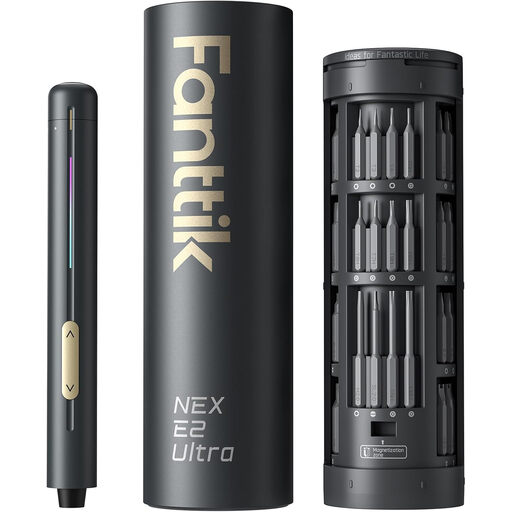
Why it stands out The Fanttik E2 Ultra plays in the big leagues: it's a powerful and versatile model. Its key feature? A high maximum torque of 0.6 N.m, finely adjustable across 5 levels. This flexibility allows you to tackle any screw without ever risking damage to a component. Its 270 RPM NeoPulse motor dispatches screwing and unscrewing tasks in the blink of an eye.
Pros
Who is it for? Ideal for those who frequently build or repair a variety of devices (laptops, tablets, small appliances) and are looking for a tool that can handle stubborn screws while offering fine-tuned control.
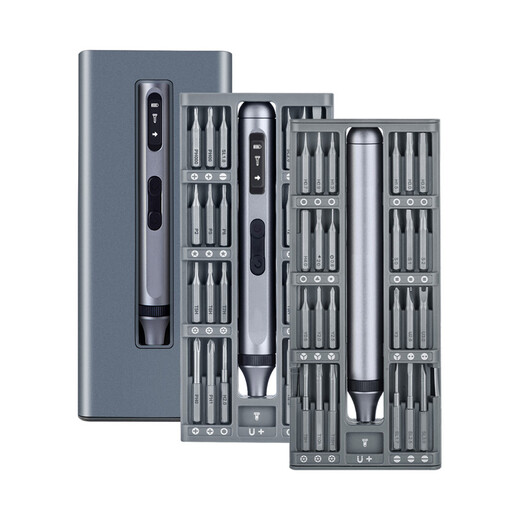
Why it stands out The EasyWox Digital strikes the perfect balance between electric assistance and manual force. It combines an electric torque of 0.3 N.m, ideal for most operations, with an impressive manual torque of 3.5 N.m. This hybrid approach is formidable: you can loosen a tough screw by hand before letting the motor do the rest, or ensure a precise final tightening without straining the motor.
Pros
Who is it for? The ideal companion for all-around DIYers and enthusiasts who want an effective PC building tool kit or a versatile tool for everyday repairs. Simple, efficient, and accessible.
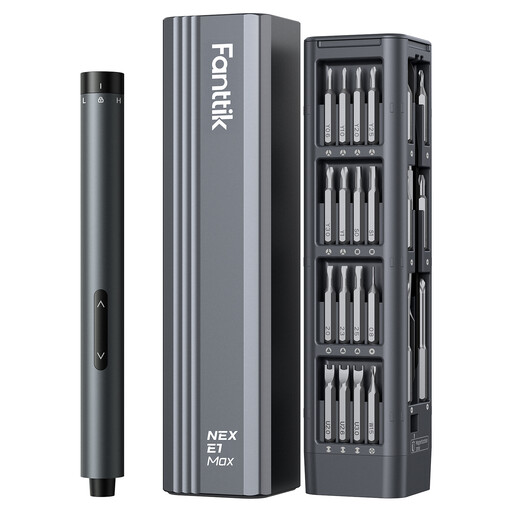
Why it stands out The Fanttik E1 Max is the watchmaker's tool, designed for operations that tolerate no mistakes. Its minimum torque of 0.05 N.m makes it a specialist for ultra-fragile components: watches, camera lenses, smartphone motherboards... Its design, an iF Design and Red Dot Award winner, isn't just about aesthetics: its magnetic pop-up case is a model of practicality.
Pros
Who is it for? The tool of choice for model makers, smartphone or watch repairers, and all micro-screwing experts for whom excessive torque is simply not an option.
Our selection is just a taste. Does your project have specific needs? Explore other models, compare spec sheets, and find the perfect complementary tools in our full catalogue.
? Discover our full range of electronics repair tools
It allows you to match the rotational force to the fragility of the part you're working on. Low torque protects plastic threads and printed circuit boards. Higher torque overcomes more resistant screws, like those in a metal chassis. It's the key to working both efficiently and without causing damage.
Absolutely. Most models (including the EasyWox and the Fanttik E1 Max) allow for this. It's very useful for starting to loosen a stuck screw or for the final tightening, which requires a level of control "by feel" that only your wrist can provide.
The vast majority of precision bits adhere to the 4mm hex (H4) standard. They are therefore often interchangeable between kits. However, it's still advisable to check before buying. But beyond compatibility, it's the quality of the steel (look for the S2 mark) and the variety of heads provided that determine the value of a set.