
Livraison le jour même ou le lendemain

Qualité garantie

Débloquez vos offres de bienvenue: Livraison GRATUITE | Jusqu'à -80 % | 30 jours d'essai gratuits à JoyPlus
Téléchargez l'application
Repairing a phone, replacing a laptop component or opening a console requires a bit more than just a basic DIY tool. A precision electric screwdriver needs to be easy to handle, accurate enough, and supplied with the right bits for the screws you’ll encounter. However, some product listings boast an appealing versatility without giving you the truly useful information.
A 50-bit screwdriver kit, or even more, isn’t necessarily more practical. Instead, check the actual profiles included: Phillips, slotted, Torx, hex, Tri-wing, Pentalobe, or even a SIM card bit. When working on a phone, watch or console, the variety of small sizes often matters more than the total number of pieces.
Also, consider the length of the bits. Short models are fine for easily accessible screws, while 35 mm bits can make it easier to reach deep areas inside a laptop or a narrow casing.
In electronics, power isn’t everything. Excessive torque can damage a miniature thread or strip a screw head. A precision screwdriver for phones should above all offer fine adjustment and a speed that’s easy to control.
Having a manual mode is also handy for finishing the tightening with better control over the pressure you apply. However, keep an eye on the figures quoted: electric torque, manual torque and stall torque all refer to different uses.
A cordless rechargeable screwdriver that lacks battery life or has an awkward connector can quickly become frustrating to use. Check the battery capacity, charging time and included accessories, especially the cable. A USB-C electric screwdriver fits more easily into your current charging habits, provided you use a charger that meets the manufacturer’s recommendations.
A well-organised case also helps prevent losing those tiny bits. Magnetic bits make picking up and holding screws easier, but they should be used carefully near sensitive components.
For electronics repairs, compare the electric torque range, expressed in N·m. A low range, for example from 0.05 to 0.6 N·m, is better suited to small assemblies than a model mainly intended for furniture assembly.
A more powerful screwdriver can be useful for a desktop computer, a shelf or certain assembly tasks. However, it doesn’t replace a mini electric screwdriver when you’re working on a watch or a camera.
The capacity, expressed in mAh, gives you an idea of the energy reserve, but it isn’t enough to determine the actual runtime. The speed you select, the resistance encountered and how often you start the motor all play a part.
In particular, check the following information:
S2 or CR-V steel bits are common in kits intended for electronics repairs. However, their composition alone doesn’t guarantee compatibility: the shape and size of the tip remain the priority criteria.
A pair of pliers, a spudger or tweezers can make an electronics repair kit significantly more versatile. For regular use, choose storage that lets you quickly identify each reference and protects the bits from moisture.
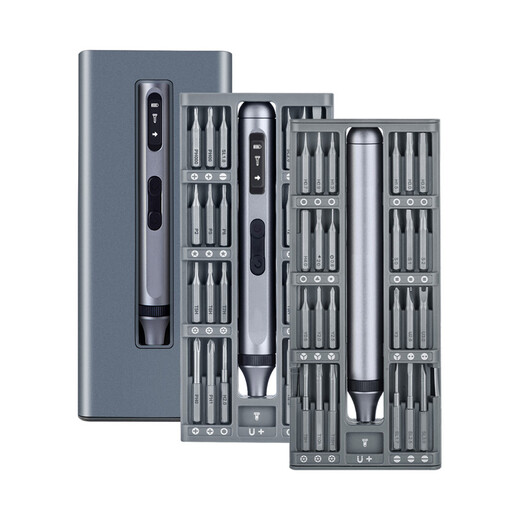
Why this choice suits this profile: this kit offers a versatile foundation for small household repairs, electronics and occasional DIY projects.
The listing clearly distinguishes an electric torque of 0.3 N·m from a manual torque of 3.5 N·m, so you won’t confuse the two values.
48 bits, 350 mAh battery, stated 90-minute charge, 115 mm tweezers and 118 mm spudger.
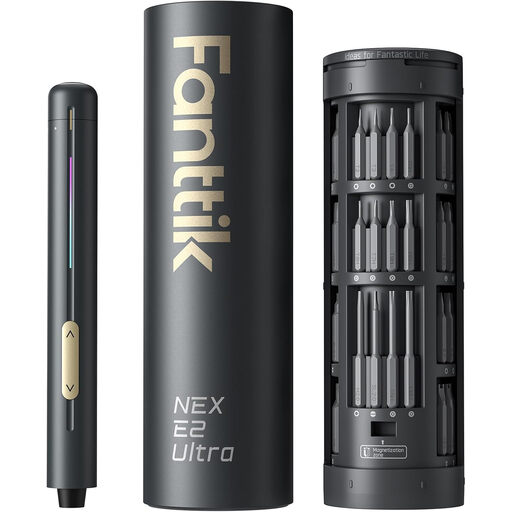
Why this choice suits this profile: its compact size and five adjustment levels make it ideal for users who regularly work on phones, cameras, watches or laptops.
The 0.05 to 0.6 N·m range lets you select the right level instead of always applying maximum power.
800 mAh battery, 50 magnetic S2 bits, rotating storage, USB-C cable, tweezers and spudger.
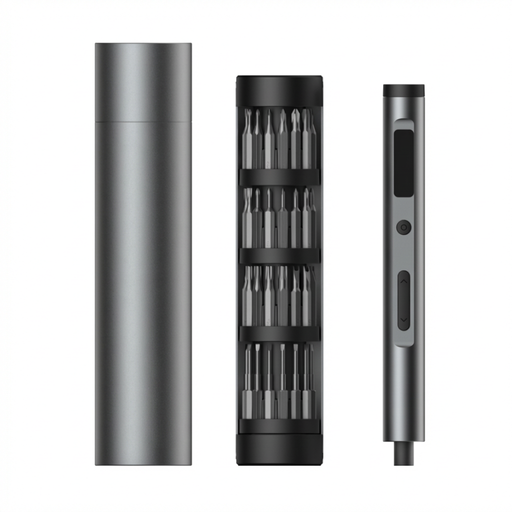
Why this choice suits this profile: the variety of bits suits hobbyist repairers who switch between different screw families and want a compact set close at hand.
The listing details 60 precision bits and 15 long bits of 35 mm, rather than just stating an overall number.
Adjustable electric torque from 0.1 to 0.3 N·m, stated manual torque of 3 N·m, 500 mAh battery and Type-C cable.
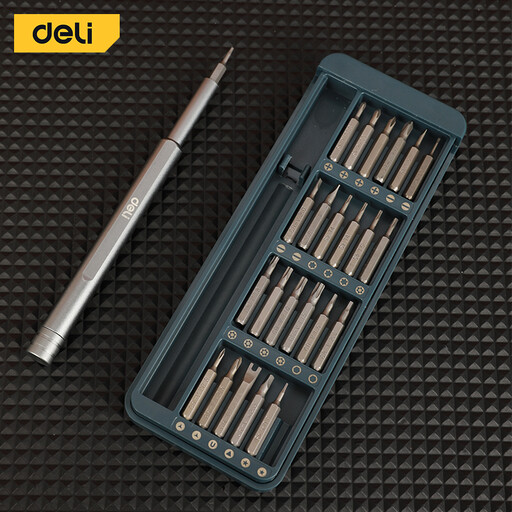
Why this choice suits this profile: this manual set is aimed at those who prefer to feel each tightening directly and don’t want to rely on a battery.
Manual operation removes the risk of over-tightening from the motor and lets you instantly adjust the pressure to the screw.
24 specialist bits, non-slip handle, magnetic shaft and compact case with sliding lid.
We’ve put together a comprehensive, real-time updated list of products that fully meet these strict selection criteria and European safety regulations.
Before each repair, switch off and unplug the device you’re working on. Choose a perfectly fitting tip, insert it fully and start with the lowest torque setting. Avoid using a precision screwdriver near water and never force it if the tip slips.
After use, wipe the bits clean, return them to their slots and recharge the tool following the instructions provided. Keep small parts out of the reach of children. With electronic devices, also take into account precautions relating to static electricity and sensitive components.
Yes, provided you have the right profiles and sizes, particularly Phillips, Torx or certain proprietary bits. A model with torque adjustment and long bits can make it easier to reach internal screws. Always check the reference of each screw before applying any pressure.
It depends on the battery capacity, the speed selected and the resistance encountered. Technical specifications sometimes state a no-load runtime or a continuous runtime: these two measurements aren’t directly comparable. For occasional repairs, a 350 to 500 mAh battery may be sufficient. For frequent use, a higher capacity will be more convenient.
An electric kit speeds up repetitive tasks, while a manual screwdriver gives you direct control over tightening and doesn’t need recharging. For particularly delicate screws, the two approaches can complement each other: use the motor to loosen or drive the screw close, then finish manually with moderate pressure.