Parents preparing snacks to take out
A pre-portioned amount can make it easier to pack a bag, without having to carry an opened pot. However, a sachet of spread and a ready-to-eat treat don’t need the same accompaniment.


For an on-the-go snack, choose a sachet if you want a set amount of spread, or an individual treat if you want something ready to eat. A pot is a better choice if you prefer to prepare the portion yourself. Before packing a snack for school, check the exact recipe, allergens and the school’s guidelines. In France, Nutri-Score is optional, as the DGCCRF points out. Its absence doesn’t mean you can skip checking the nutritional information.
A pre-portioned amount can make it easier to pack a bag, without having to carry an opened pot. However, a sachet of spread and a ready-to-eat treat don’t need the same accompaniment.
The exact product recipe and the guidelines of the childcare or school setting matter more than the pack size. The French Ministry of National Education says that an individual care plan, or PAI, can be put in place for a pupil with a food allergy.
A pot lets you choose what to serve the spread with and how much to serve at home, rather than buying a snack that’s already assembled.
When choosing a snack for children, the right packaging depends mainly on what you plan to prepare and what your child can take with them.
Consider this: if you want to take a set amount of spread without carrying a pot that needs closing.
Bear in mind: a sachet isn’t a complete snack; choose something to serve the spread on separately.
Consider this: if you need a snack that’s ready to eat, with no preparation on the go.
Bear in mind: breadsticks or a wafer are part of the product, so it isn’t a sachet of spread on its own.
Consider this: if you’re making a slice of toast at home and want to choose the amount you serve.
Bear in mind: the pot doesn’t set the portion size; that depends on how you prepare the snack.
| Consideration | What to check | Who is this for? |
|---|---|---|
| Portion and portability | Check the quantity per unit and distinguish between a sachet of spread and a ready-made snack. | If I’m packing a snack to put in a bag, I want to know how much I’m taking without having to measure it out on the go. Around 29% of consumers might put this first. |
| Allergens and group settings | Read the ingredients and allergen information on the product you buy, then check the setting’s guidelines or the PAI, if there is one. | For a child with an allergy, I need to choose based on their needs and the setting’s guidelines, not just the pack size. This would be the top priority for around 29% of consumers. |
| Recipe and nutritional information | Compare the ingredients and nutritional values per 100 g; check the Nutri-Score if it appears on the packaging. | When choosing between spread on its own and a biscuit-based snack, I want to see what the whole product contains. Around 24% of consumers might make this their priority. |
| Taste and preparation | Find out what the recipe is based on and check whether the product is spreadable or ready to eat. | If I’m preparing a snack at home, I’d rather choose the recipe and what to serve it with than pick a ready-made treat. Around 18% of consumers would put this ahead of other considerations. |
According to the DGCCRF, a nutrition declaration is compulsory for the relevant prepacked foods, while displaying Nutri-Score is optional in France. So the absence of the logo isn’t enough to judge the labelling on a spread.
To compare different formats, read the nutritional values per 100 g and the ingredients list. Use the logo as additional information when it’s shown.
Individual packaging changes how you carry a snack, not necessarily what it contains. The recipe and the arrangements for a child with an allergy need to be checked separately.
Check the label on the product you buy and the school or holiday club’s guidelines before preparing the snack.
Wafers and breadsticks contain ingredients beyond the spread itself. The weight of the snack refers to the whole product, not just the filling.
Check the product description and compare its full ingredients list before choosing a format.
The products mentioned here include hazelnut and cocoa recipes, as well as a spread that Kâliner describes as buckwheat praline. The word ‘praline’ alone doesn’t tell you what’s in a specific product.
Check the ingredients list for the product you’ve chosen, particularly if the recipe or allergens affect your decision.
The range mentioned includes hazelnut and cocoa spread in a pot, Nutella & Go and B-ready filled wafers. Your choice is about the type of snack as much as its packaging.
The brand offers a box of 24 individual 30 g portions of spread. It also sells a separate pot of crunchy spread made with buckwheat praline.
Funkie offers praline spread in a pot, which the brand describes as organic and made without added oil.
These products offer two ways to enjoy a hazelnut and cocoa flavour on the go: spread in an individual format, and treats that pair spread with other ingredients. They suit different preparation needs.
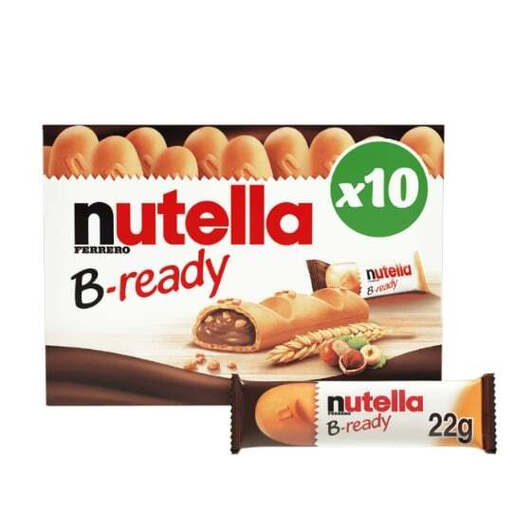 Image unavailable
If you want a snack to take out rather than spread to put on toast, B-ready is a filled wafer sold in individual sachets. This product weighs 220 g; check the ingredients and allergens for the whole pack before giving it to a child.
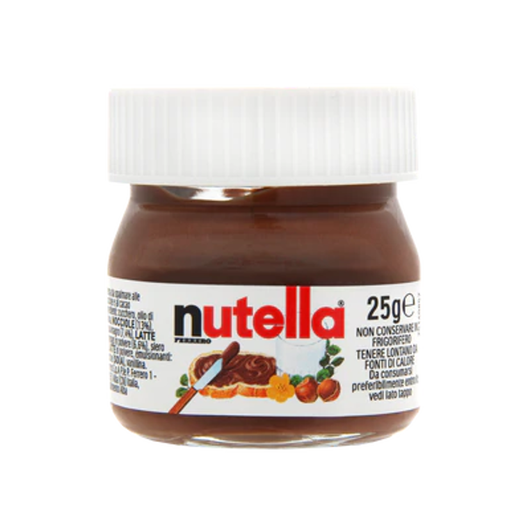 Image unavailable
This 25 g format could be a good choice if you want to take spread with you rather than a biscuit-based snack. Check the packaging format, then read the label for the product you buy to check its ingredients, allergens and nutritional information before preparing a school snack.
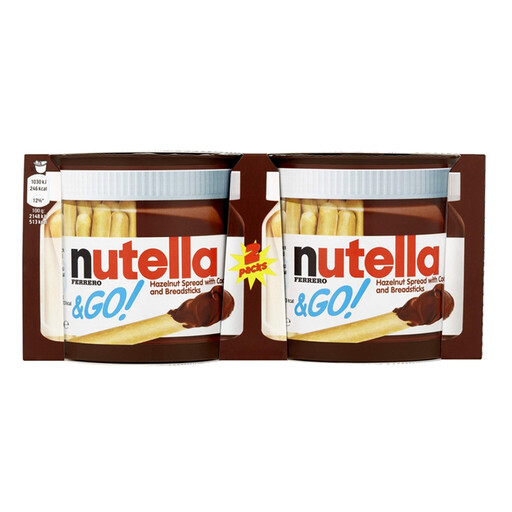 Image unavailable
If you want a snack that doesn’t need anything else to go with it, Nutella & Go pairs spread with breadsticks. The 78 g refers to the whole snack, not just the spread; read the ingredients for the full product and check the school’s guidelines before choosing it for school.
No, Nutri-Score is optional in France, according to the DGCCRF. A nutrition declaration is still compulsory for the relevant prepacked foods, so check it and the ingredients list whether or not the logo is shown.
Don’t assume so: the ingredients depend on the exact recipe. Read the ingredients list and allergen information on the packaging you buy. If the product includes breadsticks or a wafer, check those ingredients too.
Check the product recipe and the school’s guidelines before preparing the snack. The French Ministry of National Education explains that a PAI can set out arrangements for a pupil with a food allergy; individual packaging doesn’t replace these guidelines.
No, they’re complete snacks: Nutella & Go pairs spread with breadsticks, while B-ready is a filled wafer. If you want to choose what to serve the spread with, look for spread packaged separately and check the exact format.