What should you check before buying?
First, check the recipe with the school, then work out how much spread you’ll need. After that, compare pack sizes, ingredients and buying options for the exact product you’re considering.
| What to consider |
What to check |
Who it matters to |
| Allergens and school guidance |
Check the ingredients, allergens and ‘may contain’ information for the exact product, then get the recipe and sale arrangements approved by the school. |
If families have told me about pupils’ dietary needs, I need to know whether the filling and the whole cake are suitable before making them. Around 33% of consumers would put this check first. |
| Quantity and leftovers |
Work out how many grams of spread you’ll use per cake and how many cakes you plan to make before choosing between 750 g, 1 kg, 3 kg and 5 kg. |
If I’m planning several batches, I want enough filling without being left with a large opened tub. Around 27% of consumers would put quantity first. |
| Recipe and nutritional information |
Compare the product name, ingredients and nutritional values per 100 g. Only take the Nutri-Score into account if it appears on the product. |
To get the filling my recipe calls for, I need to tell the difference between a hazelnut and cocoa spread and an almond and hazelnut spread, and between smooth and crunchy versions. Around 20% of consumers would prioritise this profile. |
| Availability of the size you need |
Check the actual pack size, best-before date and availability from your chosen seller. |
For a one-off sale, I’d rather choose a pack that’s available and comes in a quantity I can use as planned. Around 20% of consumers would put this first. |
Brands to consider by size
These ranges offer options to compare, from family-size jars to catering containers. Always check the ingredients and pack size of the specific product you choose.
Nutella
A hazelnut and cocoa spread available in family-size jars and a 3 kg tub. It’s different from a praline made with a specifically defined blend of nuts.
- POMONA EpiSaveurs says its 3 kg tub provides more than 195 15 g portions, which you can use as a guide and adjust to your recipe.
- The products checked list hazelnuts, milk and soya. Make sure they’re suitable for the needs shared with the school.
Weiss
A professional range that includes smooth and crunchy 5 kg spreads, including almond and hazelnut varieties.
- The choice of textures makes it easier to find a filling that suits your recipe.
- Ask for the product details for your chosen variety so you can check allergens and storage instructions.
Valrhona Selection
A professional range that includes hazelnut and cocoa spreads in 5 kg tubs, with hazelnut percentages listed for some varieties.
- The stated hazelnut percentage helps you compare products when your recipe calls for a particular flavour profile.
- Check the ingredients, allergens and pack size for the exact product before ordering.
Carrefour Classic'
A hazelnut spread listed in 750 g and 1 kg jars.
- These sizes let you buy in smaller quantities for a sale where demand is uncertain.
- Check which variety is available and read its label rather than assuming all jars have the same ingredients.
Auchan Pasta Cao
A cocoa and hazelnut spread that Auchan lists in a 750 g jar.
- This size may suit you if you don’t need much filling.
- The product information lists hazelnuts and milk, and warns that it may contain other nuts. Check the label before approving the recipe for a school sale.
Spreads available on Joybuy
These products include family-size 750 g and 1 kg jars, as well as 3 kg and 5 kg sizes for when you’ve already worked out how much filling you need. A hazelnut and cocoa spread and a hazelnut spread aren’t necessarily interchangeable in a recipe.
 Image unavailable
Nutella hazelnut and cocoa spread, 3 kg
This size may suit you if you’ve already worked out how much filling you need for several batches. POMONA EpiSaveurs lists more than 195 15 g portions for its 3 kg jar; adjust this guide to the amount you’ll actually use in each cake.
Before choosing this filling, check the allergens on the packaging, the school’s guidance and the storage instructions for after opening.
View on Joybuy
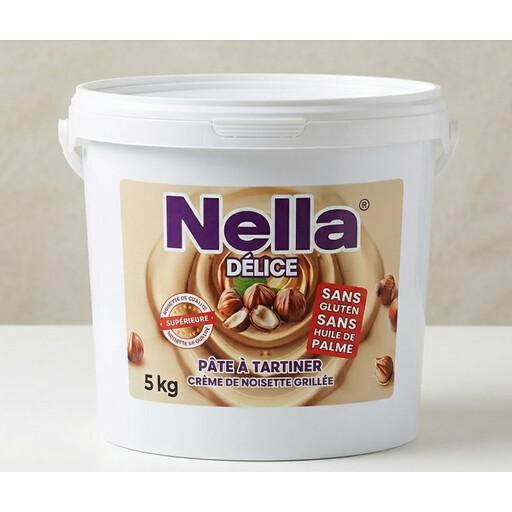 Image unavailable
NELLA PRO Roasted Hazelnut Spread, 5 kg
This hazelnut spread is worth considering for regular baking when you’ve already worked out how much you need. A 5 kg container may leave you with leftovers if you’re making a smaller batch.
Check all allergens and ‘may contain’ information on the label, as well as the storage instructions for after opening.
View on Joybuy
 Image unavailable
Nutella hazelnut and cocoa spread, 1 kg jar
A 1 kg jar makes it easier to adjust how many containers you buy if you haven’t yet settled on quantities for the sale. The product information for this variety lists hazelnuts, milk and soya.
Check the packaging on the jar you’ll use and get the recipe approved in line with the school’s guidance before you start baking.
View on Joybuy
 Image unavailable
Nutella, 750 g jar
A 750 g jar may be enough for a small batch of cakes, without having to open a container holding several kilos. Check the label on the jar you choose for allergens, possible traces and storage instructions.
View on Joybuy
Frequently asked questions
How much spread should I buy for the sale?
Multiply the amount of spread you’ll use per cake by the number of cakes you plan to make, then choose a pack size to match. POMONA EpiSaveurs says its 3 kg jar of Nutella provides more than 195 15 g portions. This only tells you how many cakes you can make if your recipe uses that amount per cake.
Is the Nutri-Score required on spreads in France?
No. The DGCCRF describes the Nutri-Score as a voluntary label. Nutritional information is required for most pre-packed foods, subject to applicable exceptions. Compare the values per 100 g and the ingredients, whether or not the product displays a Nutri-Score.
Do all praline spreads contain gluten?
No. The product category name doesn’t tell you whether a spread contains gluten. The Bio Village product checked by E.Leclerc states that it may contain traces of cereals containing gluten. Check the ingredients and ‘may contain’ information on the jar you’ll use, as well as on the cake’s other ingredients.
How should I store cakes during the sale?
Choose a recipe and transport and storage arrangements that suit the ingredients, and follow the instructions on their packaging. The French Ministry of National Education lists cakes containing crème pâtissière or Chantilly cream among the preparations that need particular care at school events. Check the school’s guidance, too.


