For filling, mixing or decorating a recipe with children, choose a spread in a jar that an adult can portion out, after checking its ingredients and allergens. A sealed individual portion is better suited to a one-person snack: Nutella B-ready, for example, is a filled wafer, not a spread to mix into a recipe. For a school activity involving a child with an allergy, follow the adjustments set out in their Individualised Welcome Plan (PAI) and the school’s guidance.
Who is this choice for?
Parents baking with a small group of children
You’re looking for a spread that children can spread or mix in under supervision. The key is to be able to measure out the amount you need, rather than mistaking an individually wrapped wafer for an ingredient to mix in.
Activity organisers managing allergy requirements
You need to check the allergens in the product you buy and, if a child has a PAI, follow the adjustments set out in their plan. The French Ministry of National Education says a PAI can help schools support a pupil with a food allergy.
Anyone who wants to control portion sizes
You’re deciding between a sealed portion for each child and a jar of spread portioned out in advance. The right format also depends on how you plan to use it: for eating as it is or for making a recipe.
What should you check before the activity?
If the spread is going into a recipe, start by choosing a format you can measure out and mix in. Then check the allergens and how much you’ll need to portion out. A ready-to-eat portion is intended for a different use.
Spread in a jar
Choose this if: the children will be filling, spreading or mixing the spread into a recipe.
Bear in mind: an adult will need to measure out and share the contents; a jar doesn’t set a portion size for each child.
Sealed mini pot
Choose this if: each child needs their own portion of spread, particularly for tasting.
Bear in mind: check how many units are in the pack. Colis Gastronomiques lists 25 g Nutella mini pots in a pack of 60, intended for food service.
In the table, each percentage represents the consumers who would make that need a top priority when choosing praline or hazelnut spread for baking with children.
| Criteria |
What to check |
Who it’s for |
| Portioning for a recipe |
Choose a spread you can measure out rather than a filled wafer; plan how much to divide between small bowls. |
When mixing or filling with children, I want to measure out the spread rather than let everyone serve themselves from the jar; around 29% of consumers would put portioning at the top of their list. |
| Allergens and activity requirements |
Read the allergens on the exact product packaging. At school, confirm the school’s guidance and, if the child has one, their PAI. |
If a child needs to avoid an allergen, I need to know which ingredients are allowed before preparing the activity; around 29% of consumers would prioritise this check. |
| Individual portions |
Compare the amount in each unit and the number of units with how you plan to use them: for tasting or mixing into a recipe. |
When everyone needs a sealed portion, I want the pack size to match the number of children; around 24% of consumers would make portion size their first consideration. |
| Recipe and nutritional information |
Compare the ingredients and nutritional information per 100 g of the products you’re considering, rather than relying on a single logo. |
If I’m choosing between several spreads, I want to understand what they contain before deciding; around 18% of consumers would put this comparison first. |
What common mistakes should you avoid?
-
Mistaking an individually wrapped wafer for spread to mix into a recipe
According to Nutella France, B-ready is a filled wafer in an individual wrapper. Its shape means you can’t measure it out like a smooth spread to fill or mix into a recipe.
For baking, choose a spread in a jar and measure out the amount you need before the children start. Keep the wafers for a separate snack.
-
Assuming “gluten-free” means “free from allergens”
Carrefour’s Nocciolata La Bianca product listing describes it as gluten-free, while also listing hazelnuts, milk and soya. A claim about gluten doesn’t address other dietary requirements.
Check the label on the exact product and, for a school activity, follow the adjustments set out in the child’s PAI, if they have one.
-
Ordering a large pack of mini pots for a single activity
A small amount in each pot doesn’t necessarily mean the pack is suitable for a small group: the 25 g Nutella mini pots listed by Colis Gastronomiques come in a pack of 60.
Count the children and work out how many portions you need before choosing between this type of pack and a jar whose contents an adult can portion out.
Brands to consider by format
These products illustrate differences in format and ingredients; the brand alone doesn’t tell you whether a product is right for your recipe or the children taking part.
Nutella
The range includes the individually wrapped B-ready wafer and a 25 g mini pot of spread, listed for food service.
- Nutella France describes B-ready as individually wrapped, making it handy for handing out as a ready-to-eat snack.
- B-ready isn’t a spread to use in a recipe; its ingredients include wheat, barley, milk, soya and hazelnuts. The mini pots listed by Colis Gastronomiques come in packs of 60.
Sainte Lucie
Carrefour lists Sainte Lucie praline paste in a 225 g jar, a format you can measure out for filling or mixing into a recipe.
- Carrefour’s product listing states that it contains 49% hazelnuts, as well as sugar and cocoa butter.
- The listed recipe contains hazelnuts and soya lecithin; check that it meets the activity’s requirements.
Nocciolata
La Bianca Pralinée aux Noisettes is a spread in a 400 g jar, rather than an individual portion.
- Carrefour’s product listing states that it contains 30% hazelnut paste and describes it as gluten-free.
- The same listing mentions skimmed milk powder and soya lecithin. The jar itself doesn’t determine how much each child is served.
Funkie
Funkie offers praline spread in a 200 g jar, made with red kidney bean purée and roasted hazelnuts.
- Carrefour’s product listing specifies 28.2% red kidney bean purée and 21% hazelnuts, useful details for comparing this recipe with the other spreads you’re considering.
- It still contains hazelnuts. Compare the ingredients and nutritional information on the jar you buy rather than assuming what it contains from a claim on the front.
Nos Régions ont du Talent
The E.Leclerc range includes hazelnut spread in a 400 g jar, worth considering when you don’t need individual portions.
- E.Leclerc’s product listing states that it contains 35% hazelnuts and displays a Nutri-Score E.
- The ingredients also include skimmed milk. Nutri-Score doesn’t replace checking the allergens and nutritional information.
Jarred spreads available on Joybuy
These products are jarred spreads that you can measure out for baking with children. At 700 g to 1 kg, they aren’t mini portions, so plan how much you’ll use and check the label of each product if there are any dietary requirements.
 Image unavailable
Nutella hazelnut and cocoa spread, 1 kg
If you need spread to fill a recipe, an adult will need to measure out and portion this 1 kg jar. Check the allergens on the packaging before the activity.
View on Joybuy
 Image unavailable
Nutella, 750 g jar
This jar lets you measure out the amount you need for a recipe, but it doesn’t provide individual portions. If a child needs to avoid an ingredient, check the allergen list on the jar you buy.
View on Joybuy
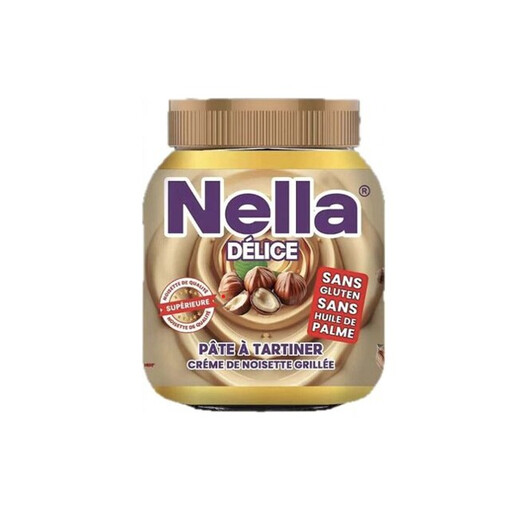 Image unavailable
NELLA roasted hazelnut spread, 700 g
If you want to use spread in a recipe rather than serve an already portioned snack, measure out this 700 g jar separately. Check the exact label for ingredients and allergens before serving it to children.
View on Joybuy
Frequently asked questions
Is Nutri-Score compulsory on spreads sold in France?
No. The DGCCRF says that displaying Nutri-Score is voluntary. It also states that nutrition declarations are compulsory for prepacked foods. Compare the nutritional information per 100 g and the ingredients of the products you’re interested in.
Is a spread labelled gluten-free suitable for every child with a food allergy?
No: the words “gluten-free” don’t tell you about all the other allergens. Carrefour’s Nocciolata La Bianca product listing describes it as gluten-free, but also lists hazelnuts, milk and soya. Check the exact product label against the child’s requirements.
How should you plan a spread for a school activity if a child has an allergy?
Before bringing the product in, confirm with the school and the family which foods are allowed and what arrangements need to be made. The French Ministry of National Education says a PAI can set out adjustments for a pupil with a food allergy. If the child has one, follow the guidance in their plan.
Can Nutella B-ready replace spread in a cake?
Not directly: Nutella France describes B-ready as a filled wafer in an individual wrapper, not a spread you can weigh or mix in. If your recipe calls for spread to be mixed in or spread on, choose a product in a jar that’s suited to that use.


