Praline lovers enjoying a solo treat
You want a recipe clearly labelled as praline for your own enjoyment. If you choose a jar, plan how you’ll serve a portion and store the rest according to the product instructions.


If praline flavour is your priority, choose a jar clearly labelled as praline spread and plan to portion it out yourself. If everyone needs a ready-to-serve portion, a single-serve hazelnut and chocolate spread meets that need, but it shouldn’t be mistaken for a praline recipe. Check the product name, weight per portion and allergens before choosing for your party.
You want a recipe clearly labelled as praline for your own enjoyment. If you choose a jar, plan how you’ll serve a portion and store the rest according to the product instructions.
You want to hand out portions without passing round a shared jar. Check the number of portions, their individual weight and the product name: a hazelnut single-serve portion isn’t necessarily praline.
You compare the ingredients, nutritional values and allergens in the product you’ll be serving. Atelier du Chocolat’s praline recipe, for example, lists hazelnuts, almonds, milk and soya among its ingredients. Always check the label of the product you choose.
Choose this if: a clearly labelled praline recipe matters more than a ready-to-serve format.
Bear in mind: you’ll need to portion out the spread and follow the storage instructions once opened.
Choose this if: handing out individual portions matters more than finding a recipe that is specifically praline.
Bear in mind: a hazelnut and chocolate spread, or another recipe, isn’t the same as praline spread just because it comes in a single-serve format.
Whether you’re enjoying it on your own or serving it at a party, start by deciding whether the recipe or the format matters more, then check the label of the product you choose.
| What to consider | What to check | Who it matters to |
|---|---|---|
| Individual portion | Check the type of packaging, the number of portions and the net weight of each one. | If I want to serve portions without sharing an opened jar, I look for something ready to hand out; around 33 % of consumers would prioritise this format. |
| Praline recipe | Look for the product name ‘praline’ and read the ingredients. Don’t assume it’s a praline recipe just because it says ‘hazelnut’. | If praline flavour is essential to my treat, I’m happy to serve myself from a jar; nearly 27 % of consumers would put this recipe first. |
| Nutritional information | Compare the nutritional values per 100 g and check the ingredients list. Also consider the portion you plan to serve. | When comparing two recipes for my party, I want to check their nutritional information on the same basis; around 20 % of consumers would make this their main consideration. |
| Allergens and ingredients | Read the ingredients and the allergens highlighted on the packaging of the exact product. | When serving people with dietary requirements, ingredients matter more to me than format or flavour; around 20 % of consumers would prioritise this check. |
In France, the DGCCRF says that displaying the Nutri-Score is voluntary. Its absence is no reason to skip comparing the ingredients and nutritional values.
Check the nutrition declaration per 100 g, which is required for most prepacked foods, subject to certain exemptions. Use the Nutri-Score as additional guidance when it appears on the product.
Individual packaging tells you how the product is served, not what the recipe is. A single-serve hazelnut and chocolate spread won’t necessarily meet your need for praline spread.
Check the product name, format, weight of each portion and number of portions together.
These claims don’t tell you everything about the ingredients. Atelier du Chocolat’s praline spread lists hazelnuts, almonds, milk and soya among its ingredients, but ingredients vary between products.
Before serving, check the allergens highlighted on the exact product packaging, especially if someone needs to avoid a particular ingredient.
Carrefour offers Funkie organic praline spread in a 200 g jar. Its plant-based recipe includes red bean purée and 21 % roasted hazelnuts.
Atelier du Chocolat offers a 220 g jar of hazelnut praline spread, with a recipe that contains 37 % hazelnuts.
Cluizel offers its Praliné 78 % spread in a 200 g jar. The praline percentage is specific to this recipe.
These two products suit different priorities: a jar of praline spread that you can portion yourself, or a small serving of hazelnut and chocolate spread if an individual format matters more than the ‘praline’ label.
 Image unavailable
Worth considering if you prioritise a praline recipe and are happy to portion out a jar yourself.
The recipe shown by Carrefour contains 21 % roasted hazelnuts. Check the allergens on the packaging before serving.
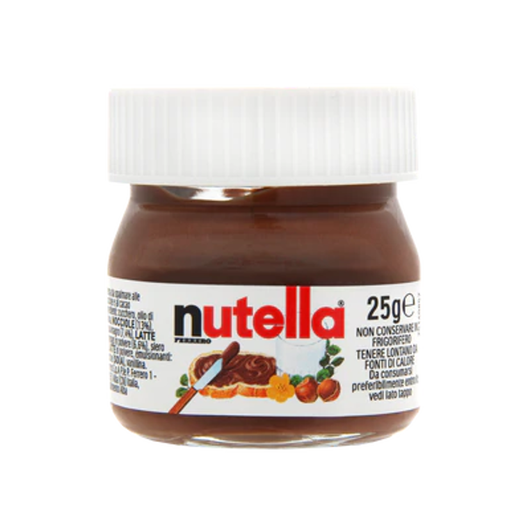 Image unavailable
Worth considering if you’re mainly looking for an individual 25 g portion to enjoy on your own.
It’s labelled as hazelnut and chocolate, not praline. Check the label on the exact product for ingredients, allergens and nutritional values.
No. The DGCCRF says that displaying the Nutri-Score is voluntary. However, a nutrition declaration is required for most prepacked foods, subject to applicable exemptions. Compare the values per 100 g and the ingredients list, whether or not the logo appears.
Read the allergens highlighted on the packaging of the product you’re serving. Atelier du Chocolat’s praline recipe lists hazelnuts, almonds, milk and soya among its ingredients, but another spread may have a different composition.
Follow the instructions on the jar you choose, as they vary from one recipe to another. Funkie advises refrigerating its product after opening and consuming it promptly. Atelier du Chocolat recommends storing its product between 15 and 20 °C and refrigerating it in hot weather.