Fans of rich cocoa
If your guests prefer a pronounced cocoa flavour, check the cocoa percentage if it’s listed, then look at the sugars per 100 g. The word “dark” alone doesn’t tell you what’s in the recipe.


For a garden party, choose a rich cocoa spread if your guests enjoy that flavour. A milder hazelnut and cocoa recipe may suit a wider range of tastes. Before deciding, compare the ingredients and nutritional information per 100 g, check the allergens on the jar you choose, and pick a size that suits the amount you plan to serve.
If your guests prefer a pronounced cocoa flavour, check the cocoa percentage if it’s listed, then look at the sugars per 100 g. The word “dark” alone doesn’t tell you what’s in the recipe.
Choose a jar size based on the number of guests and the other spreads on offer. Also think about where you’ll keep the jar during an outdoor gathering.
To compare recipes or cater for your guests’ needs, read the ingredients list, allergen information and nutritional values per 100 g. If the jar displays a Nutri-Score, you can use it as an additional point of reference.
First decide which flavour you’d like to serve, then work out how much you need and check the label on the specific product. A recipe described as intense won’t, by itself, answer questions about ingredients or allergens.
| What to consider | What to check | Who it’s for |
|---|---|---|
| Cocoa intensity | Check the recipe description and the cocoa percentage, if listed. Lindt France states that its Dark Intense Cocoa spread contains 17% low-fat cocoa powder. | If I’m hosting fans of dark chocolate, I want to choose a more pronounced cocoa flavour rather than a mild hazelnut and cocoa spread. Around 33% of consumers prioritise this intensity. |
| Size for sharing | Compare the jars’ net weights with the amount you plan to serve and keep after the party. | For a buffet with several guests, I want a size that works without opening more spread than necessary. Around 20% of consumers put this amount for sharing first. |
| Nutritional information | Compare the sugars and saturated fatty acids per 100 g in the jars you’re considering. The DGCCRF states that Nutri-Score is voluntary in France. | Before choosing between two recipes, I want to be able to compare their nutritional values on the same basis. This is the priority for around 27% of consumers. |
| Ingredients and allergens | Read the ingredients list, highlighted allergens and any “may contain” warnings on the jar you choose. | If a guest needs to avoid an ingredient, I need to know the exact composition before serving. Around 20% of consumers consider this check more important than the other criteria. |
The name describes a flavour, not the nutritional profile. Lindt France states that its Dark Intense Cocoa spread contains 40 g of sugars per 100 g.
Compare the nutritional values per 100 g and the stated cocoa content instead of relying on the word “intense” alone.
According to the DGCCRF, displaying a Nutri-Score is voluntary in France, so its absence doesn’t tell you what’s in a spread.
Check the nutrition declaration and ingredients list. A nutrition declaration is generally required for prepacked foods, subject to applicable exceptions.
Ingredients vary from jar to jar. For its Dark Intense Cocoa spread, Lindt France lists hazelnuts, almonds, milk and soya, among other ingredients.
Check the label on the product you’re serving and keep it handy for guests who need to check the ingredients.
These products give you a starting point for comparing recipes with a rich cocoa flavour against classic hazelnut and cocoa spreads. The ingredients vary from product to product.
The Dark Intense Cocoa spread is aimed at shoppers looking for a pronounced cocoa flavour.
A classic hazelnut and cocoa spread to consider if you’re after this flavour rather than a recipe described as intense.
Another hazelnut and cocoa recipe to compare for ingredients and nutritional values.
The retailer features spreads from several brands and in different sizes in its dedicated category.
The retailer lists, among other products, a 400 g jar of Nos Régions ont du Talent spread.
The retailer’s spread category features recipes from several brands.
These three Nutella sizes are classic hazelnut and cocoa spreads for a buffet. If a rich cocoa flavour is your main priority, compare their labels with one for a recipe described that way before choosing.
 Image unavailable
This 3 kg jar could suit you if you’re planning to serve a large amount of hazelnut and cocoa spread. Check that you’ll also use the rest after the garden party.
If a guest needs to avoid hazelnuts, milk or soya, check the jar’s label before serving.
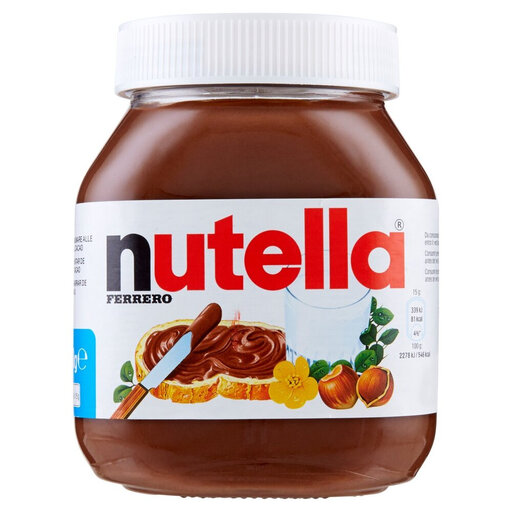 Image unavailable
The 630 g jar gives you another option for your buffet, between the 1 kg and 3 kg sizes. Read the label if ingredients or allergens are important to your choice.
 Image unavailable
This 1 kg jar is another size to consider if you’re sharing a classic hazelnut and cocoa spread. Check the ingredients and allergens on the label before serving.
No. The DGCCRF states that Nutri-Score is voluntary in France. A nutrition declaration is generally required for prepacked foods, subject to applicable exceptions, and lets you check the sugars and fat per 100 g.
Compare the ingredients and nutritional values per 100 g, without assuming that “dark” means less sugar. Lindt France states that its Dark Intense Cocoa spread contains 17% low-fat cocoa powder and 40 g of sugars per 100 g. Bonne Maman states that its 360 g hazelnut and cocoa product contains 5.5% low-fat cocoa powder and 51 g of sugars per 100 g. These values apply only to these two products.
Check the allergens listed on each jar and any “may contain” warnings. Depending on the recipe, these may include hazelnuts, other nuts, milk or soya. Don’t infer the ingredients from the words “praline” or “dark chocolate” alone.
Follow the storage instructions on the jar you’ve bought. For its 360 g hazelnut and cocoa spread, Bonne Maman recommends keeping it away from heat and light and not refrigerating it. Check the instructions for any other recipes you choose.