People organising group bike rides
You’re preparing a snack for several people before or after the ride. How much you can serve matters, but so do portioning and storing what’s left once the product has been opened.


For a snack to share on a bike ride, choose a jar to serve if you’re making toast for the group, or individually wrapped portions if everyone needs to take their own. However, an individually wrapped wafer isn’t a spread, and neither format is a complete fuelling plan for a long ride. Check the carbohydrates per portion, fat, allergens and how well you tolerate it.
You’re preparing a snack for several people before or after the ride. How much you can serve matters, but so do portioning and storing what’s left once the product has been opened.
You’d prefer something easy to hand out or slip into a pocket. But convenient packaging alone doesn’t tell you how well it will fit into your fuelling plan during a ride.
You compare the ingredients, allergens and nutritional values of similar products. If there’s a Nutri-Score on the packaging, you can use it alongside the nutrition table, but not as a substitute for it.
Your choice depends first on when you’ll serve the product. A snack prepared for the group, a portion to take with you and food intended for a long ride all have different requirements.
Choose this for: adding praline paste to recipes for the group. E.Leclerc, for example, lists a 1 kg almond and hazelnut product for baking.
Bear in mind: you’ll need to serve and portion it; this tub doesn’t provide ready-to-carry individual portions.
Choose this for: making toast to share before or after the ride. Carrefour, for example, lists Nocciolata La Bianca in a 400 g jar.
Bear in mind: you’ll need to portion and serve it; a jar isn’t a sealed individual snack.
Choose this for: giving each participant a sealed snack. Nutella France offers its B-ready wafer in packs of 2, 6, 10 or 15.
Keep in mind: a filled wafer can be carried without portioning, but it’s neither praline paste for baking nor a spread to serve.
| Consideration | What to check | Who it matters to |
|---|---|---|
| Fuelling during exercise | Compare the carbohydrates per portion you’ll actually eat and the fat content. Also take into account your other food and drinks, and how well you tolerate them on a long ride. | If I’m planning to eat during a long ride, I want to know how each portion fits into my fuelling plan rather than rely on the pack format alone. Around 42% of consumers would put this measured fuelling need first. |
| Sharing and carrying | Check the net weight or number of individual portions, then consider whether you’ll need to serve or portion the product, or store an opened container. | For a group stop, I need to decide whether to make toast or give everyone a sealed portion. Around 33% of consumers would prioritise this ease of sharing. |
| Ingredients and allergens | Read the ingredients and allergen information for the exact product. Compare the nutritional values per 100 g with products in the same category, and check the Nutri-Score if one is shown. | When I’m choosing for a group with different dietary requirements, I want to be able to check the ingredients before serving. Around 25% of consumers would put checking the label first. |
Praline paste for baking, chocolate spread in a jar and an individually wrapped wafer are used in different ways. So the pack weight alone isn’t enough to help you decide.
Decide whether you’ll be baking, making toast or handing out sealed portions, then check how to use the product and how it’s packaged.
On a long ride, a convenient snack doesn’t tell you how many carbohydrates you’ll consume in total. The spreads and wafers mentioned here also contain fat.
If you’re planning to eat during exercise, consider the carbohydrates in your chosen portion alongside those in your other food and drinks, and try out your fuelling plan in training.
Santé publique France says that producers display the Nutri-Score voluntarily. Its absence alone doesn’t tell you whether a product complies with regulations or what it contains.
When the logo appears on comparable products, use it as an additional guide. Otherwise, read the ingredients list and nutritional information.
The products mentioned include nuts and, depending on the product, milk, soya or cereals containing gluten. Anyone with an allergy or intolerance needs to be able to check the label of the product they’re offered.
Keep the packaging to hand, check each product before serving, and use separate utensils when the group’s dietary requirements call for it.
These examples are suited to different uses. They aren’t a ranking of brands or a selection of interchangeable products.
The 1 kg almond and hazelnut praline paste listed by E.Leclerc is intended to be mixed into baking recipes.
Nutella France’s B-ready range is a filled wafer sold in packs of individual portions, rather than a spread in a jar.
La Bianca is a 400 g jar of hazelnut praline spread, best served or spread on toast rather than handed out in individually wrapped portions.
These products suit two ways of sharing a snack on a bike ride: handing out individually wrapped wafers or serving a spread from a jar. The hazelnut and cocoa spreads featured here shouldn’t be confused with praline paste for baking.
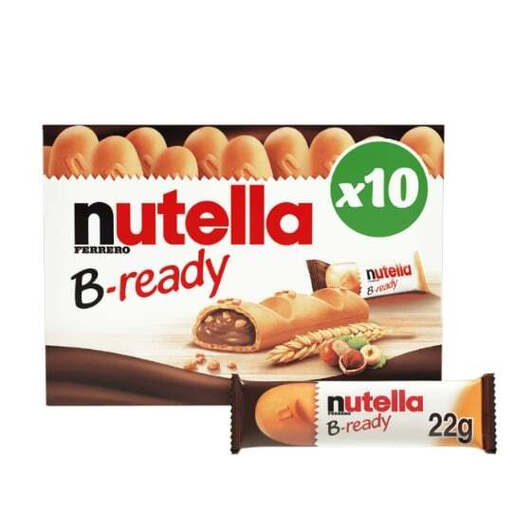 Image unavailable
Worth considering if you want to give everyone a sealed portion rather than serve a spread from a jar.
These are filled wafers, not praline chocolate spread. If you take them with you on a ride, check the nutritional values per wafer and the allergens listed on the packaging.
 Image unavailable
This jar is handy for making toast to share with several people before or after a ride, as long as you plan how to serve and portion it.
If you’re planning to eat it during exercise, compare the nutritional values for the portion you have in mind with the rest of your fuelling plan. Check the allergens on the jar before sharing.
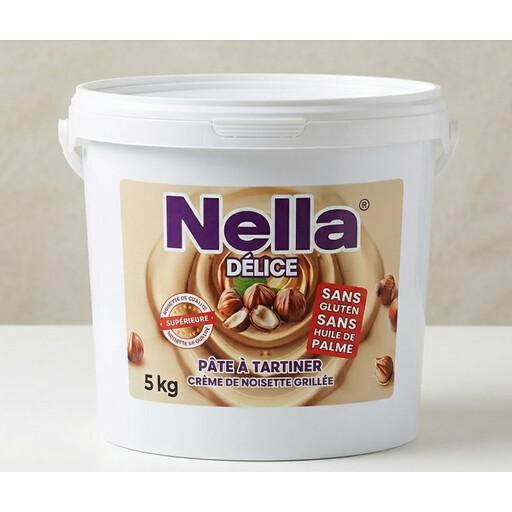 Image unavailable
This large tub is worth considering if you’re making toast or desserts for a group and can organise how to serve them.
The 5 kg format means you’ll need to plan portions and storage for the tub. Check the ingredients and allergens on the product you receive before serving.
 Image unavailable
This jar is designed for serving larger groups, rather than handing out sealed individual snacks.
Plan your portions, utensils and storage for the jar. To compare its ingredients with other spreads, read the nutritional values per 100 g and the allergen information.
 Image unavailable
The 400 g jar is a handy size for making toast for a small group, without needing a container weighing several kilos.
You’ll still need to serve and portion it: it isn’t a ready-to-carry individual snack. If you’re comparing it with another spread, read the ingredients, allergens and nutritional values on the exact jar.
No. Santé publique France says producers display it voluntarily. To compare spreads, read the ingredients and nutritional information. If the logo is present, use it as an additional guide when comparing similar products.
On its own, it isn’t enough to plan fuelling for a long ride. If you’re planning to eat it during exercise, start with the portion you’ll actually take, check its carbohydrates and fat, take your other food and drinks into account, then see how well you tolerate it during training.
Choose according to how you plan to serve it: a jar for toast, a large tub if you’re preparing food for a group, or individual portions if everyone needs to leave with a sealed snack. Before comparing weights, check that you’re looking at the right type of food: chocolate spread, praline paste for baking or a filled wafer.
Check the allergen information for each exact product before serving it. The examples featured contain nuts, and some also list milk, soya or cereals containing gluten. Keep the packaging within reach of everyone, and avoid sharing utensils if this could put someone at risk.