Praline fans at breakfast
If you’re looking specifically for a praline spread rather than a hazelnut and cocoa recipe, check the product name, the hazelnut percentage if stated, and the allergens listed for the jar you choose.


For a quick slice of toast, choose a praline spread if that’s the recipe you’re specifically looking for, or a hazelnut and cocoa spread if it suits your taste. A chocolate gift box is more of a present. According to Manger Bouger, breakfast can also include a cereal product, a dairy product, a whole piece of fruit and a drink with little added sugar. If you’re using Nutri-Score to compare similar spreads, check their ingredients, allergens and nutritional information per 100 g too: in France, displaying this logo is optional.
If you’re looking specifically for a praline spread rather than a hazelnut and cocoa recipe, check the product name, the hazelnut percentage if stated, and the allergens listed for the jar you choose.
When comparing two spreads in the same category, Nutri-Score can be a useful guide if it’s displayed. Complete your comparison by checking the ingredients and nutritional information per 100 g.
A gift box lets you give someone a selection of recipes, but you’ll need to check what’s inside each product. It may not be the right choice if you’re looking for a jar to use every morning.
Choose it if: you’re looking for a spread explicitly described as praline to enjoy on toast.
Check: recipes vary from jar to jar; the product name alone doesn’t tell you about allergens or nutritional information.
Choose it if: this is the recipe you prefer, whether you want a jar for home or an individual portion to take with you.
Bear in mind: a spread containing hazelnuts isn’t necessarily described as praline.
Choose it if: you want to give a gift or let someone try a selection of recipes.
Bear in mind: the pack sizes and ingredients can vary between products in the same gift box.
| Criteria | What to check | Who is it for? |
|---|---|---|
| Praline recipe | Read the product name and ingredients, and check the hazelnut percentage if it’s shown on the packaging; check the allergens too. | I want the taste of praline spread on my toast, without confusing it with recipes simply labelled hazelnut and cocoa. Around 36% of consumers are said to prioritise this distinction. |
| Nutritional information | When comparing similar spreads, check the Nutri-Score if it’s displayed, then look at the sugars, fat and other nutritional information per 100 g. | When choosing between two jars, being able to read and compare their ingredients is my top priority. Around 29% of consumers are said to feel the same way. |
| Breakfast format | Choose between a jar and an individual portion based on how you plan to use it; also consider what else you’ll be having for breakfast. | When I’m heading out early, I first look for a format that’s easy to use at home or take with me. Around 21% of consumers are said to make convenience their main criterion. |
| What’s in the gift box | Check the recipes, pack sizes, allergens for each product and the best-before date. | I want to give someone an assortment rather than buy a jar for everyday breakfasts. Around 14% of consumers are said to prioritise giving a gift. |
According to Santé publique France and the DGCCRF, displaying Nutri-Score is voluntary in France. So don’t judge a jar solely because it doesn’t show the logo.
If the logo is displayed, use it to compare products in the same category, then check the ingredients list and nutritional information.
Products described as praline and hazelnut and cocoa spreads can contain different ingredients. An image of hazelnuts on the jar isn’t enough to tell you what the recipe is.
Check the product name and ingredients list for the specific product before choosing.
A gift assortment may contain small jars and different products. For example, E.Leclerc describes a Smartbox gift box that combines four 120 g spreads with a 130 g Ruby chocolate.
If you’re buying a gift, check each recipe, pack size, best-before date and the collection or delivery options. If you want something for regular toast, choose a jar size that suits how you’ll use it.
A claim such as “no oil” or “no palm oil” doesn’t tell you everything about the sugars, fat or allergens in a spread.
Compare the ingredients lists and nutritional information per 100 g for the products you’re interested in. Don’t assume that one recipe’s features apply to the whole brand.
La Bianca is a praline spread made with milk and hazelnuts. Carrefour’s listing states that this 400 g product contains 30% hazelnut paste.
According to Carrefour’s listing, Funkie’s 200 g praline spread includes roasted hazelnuts and red bean purée.
Nutella describes its spread as a hazelnut and cocoa recipe, distinct from a product explicitly described as praline.
ALDI describes Tartichoc as a hazelnut spread in a 750 g format, but doesn’t call it a praline spread.
These three Nutella formats are hazelnut and cocoa options for toast at home or an individual portion to take with you. They’re not presented as praline spreads or as gift boxes.
 Image unavailable
Consider this jar if you make toast at home and want a hazelnut and cocoa recipe rather than a spread explicitly described as praline.
The product description states that this product contains 13% hazelnuts, 539 kcal and 56.3 g of sugars per 100 g. Check the allergens on the label of the specific jar.
 Image unavailable
This large jar is worth considering if you’re looking for a hazelnut and cocoa spread for frequent use. Check that the size suits how quickly you’ll use it and that you can store it as required.
The product listing states that it contains 13% hazelnuts, 539 kcal and 56.3 g of sugars per 100 g, as well as milk and soya. Check the best-before date before buying.
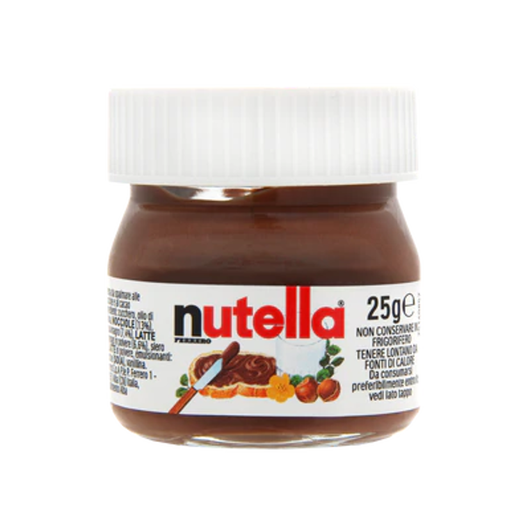 Image unavailable
The 25 g individual portion is a handy option if you’re having breakfast away from home. It doesn’t replace the need to choose other foods for your meal.
This product is described as a hazelnut and chocolate spread, not as a praline spread. Check the packaging for ingredients, allergens and nutritional information.
No. As Santé publique France and the DGCCRF explain, displaying Nutri-Score is voluntary in France. Its absence doesn’t tell you whether a jar is nutritionally good or bad; check the nutritional information and ingredients list on the packaging.
When choosing between spreads, compare the logos within that same category if they’re displayed, rather than directly comparing a spread with a gift box containing several different products. Also read the nutritional information per 100 g and, for an assortment, check the information for each individual recipe.
Always check the label for the specific product. Carrefour’s listing for Nocciolata La Bianca, for example, mentions hazelnuts, milk and soya. Check other recipes separately, even if they’re also praline spreads.
A spread can go with toast, while a gift box is mainly intended as a present. To put together a breakfast in line with Manger Bouger’s guidance, also consider a cereal product, a dairy product, a whole piece of fruit and a drink with little added sugar.