Those looking for a praline recipe
If the product description matters more than the format, check that it really is praline paste. Carrefour describes the Sainte Lucie product as ‘praline spread’ and says it contains 49% hazelnuts.


If you prioritise a praline recipe over convenience, Carrefour’s 225 g jar of Sainte Lucie praline paste fits the bill, but you’ll need to prepare and portion your toast yourself. For a ready-to-eat portion to take with you, Nutella & Go with breadsticks or Kâliner single portions are better suited to the format, although neither is described as praline spread. Compare the ingredients, allergens and nutritional values per 100 g too: France’s DGCCRF notes that Nutri-Score is optional in France.
If the product description matters more than the format, check that it really is praline paste. Carrefour describes the Sainte Lucie product as ‘praline spread’ and says it contains 49% hazelnuts.
A portion with something to dip can save you from carrying bread and a utensil separately. Nutella describes Nutella & Go as an option for when you’re in a hurry; the version with breadsticks is a hazelnut and cocoa spread, not a product described as praline spread.
A small format is no reason to skip checking the ingredients and nutritional information. If you have an allergy, check the ingredients for the whole product, including anything served with it.
First decide whether a praline recipe or a ready-to-go portion matters more to you. Then check the labels of the formats that meet your needs.
| What to consider | What to check | Who is it for? |
|---|---|---|
| Portion to take with you | Check the weight per unit and whether it comes with something ready to eat. | If I’m heading out without time to make a sandwich, I look for a portion that comes with an accompaniment. Around 42% of consumers are said to put this convenience first. |
| Praline recipe | Read the product description and ingredients: ‘hazelnut and cocoa’ doesn’t necessarily mean ‘praline’. | If a recipe explicitly described as praline is my priority, I’m happy to portion it myself from a jar. This is said to be the top priority for around 33% of consumers. |
| Label and allergens | Compare the nutritional values per 100 g and check the allergens in the whole product. | When choosing between different recipes and accompaniments, I start with the nutritional or allergen information. Nearly 25% of consumers are said to make this their first consideration. |
Packaging that’s easy to take with you doesn’t guarantee the recipe you’re looking for. Carrefour describes Sainte Lucie as praline paste, while Nutella & Go with breadsticks is described as a hazelnut and cocoa product.
If praline is your main priority, check the product description and ingredients before choosing a format.
The DGCCRF says that displaying Nutri-Score is voluntary in France. So its absence alone isn’t enough to judge a product.
Compare the nutritional information per 100 g, then check the ingredients list and allergens. Use Nutri-Score as additional information if it appears on the packaging.
The breadsticks are part of the Nutella & Go product. The allergens listed for this format include wheat, hazelnuts, milk, eggs and soya.
If you have an allergy or avoid certain foods, read the label for the entire product you’re buying.
Carrefour lists a 225 g jar of Sainte Lucie praline spread.
Nutella & Go pairs hazelnut and cocoa spread with breadsticks in a 52 g pack.
Kâliner offers a box of 24 single portions, each weighing 30 g.
This breadstick format is for those who prioritise a breakfast they can take with them without making a sandwich, rather than a recipe explicitly described as praline.
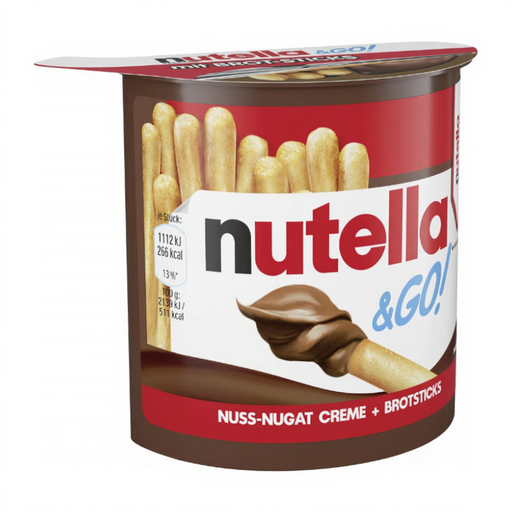 Image unavailable
For breakfast on the go without having to make a sandwich, this format pairs hazelnut and cocoa spread with breadsticks.
52 g pack. It isn’t described as praline spread; check the label for the whole product, especially if you’re allergic to wheat, hazelnuts, milk, eggs or soya.
No. The DGCCRF says that Nutri-Score is voluntary in France. However, a nutrition declaration is compulsory for pre-packed foods, subject to the exemptions set out in the regulations.
Start with the product description, ingredients list, allergens and nutritional information. The DGCCRF says that, where required, the nutrition declaration for pre-packed foods is given per 100 g or 100 ml. Also check the net quantity and the date shown on the product.
No: portion size and ingredients are two separate things. When comparing products with different portion sizes, check their nutritional values on the same basis: per 100 g.
The ingredients aren’t the same: Carrefour lists hazelnuts and soya in Sainte Lucie praline paste, while the product details for Nutella & Go with breadsticks list wheat, hazelnuts, milk, eggs and soya, among others. If you have an allergy, rely on the label of the product you actually buy.