Parents baking with children
If your recipe calls for praline, look for a paste intended for baking rather than a box of chocolates to give as a gift. The praline paste product pages from E.Leclerc and Auchan list baking among their uses.


To mix praline into a cream, filling or other preparation, choose a praline paste that’s specifically described as suitable for baking. A praline spread is better suited to use as a ready-made filling, while a chocolate gift box is ideal for giving or enjoying after your baking session; it isn’t automatically a substitute for a recipe ingredient. Before buying, check the allergens, storage instructions and nutritional information for the product you’ve chosen, taking into account the amount you plan to use.
If your recipe calls for praline, look for a paste intended for baking rather than a box of chocolates to give as a gift. The praline paste product pages from E.Leclerc and Auchan list baking among their uses.
Ingredients vary from one product to another. Products described by Auchan and Carrefour include nuts, while some spreads also contain milk or soya. Check the exact packaging before planning your activity.
An assortment of praline chocolates is a good choice for giving or sharing. Choose it separately from the paste you’ll use to make a filling.
First decide whether the product needs to go into your recipe, work as a ready-made filling or be given as a gift after the activity. Then check the label on the product you’ve chosen, especially if several children will be trying it.
Choose this: when you need to measure out an amount to mix into a cream, filling or dessert.
Bear in mind: the almond and hazelnut pastes mentioned by Auchan and E.Leclerc contain nuts, and their storage instructions after opening differ.
Choose this: to fill something that’s already made, rather than as a substitute for a measured ingredient in your recipe.
Bear in mind: ingredients vary by product, so check for nuts, milk and soya in particular.
Choose this: to give as a gift or share after your baking session.
Bear in mind: an assortment of chocolates to enjoy may not have the ingredients or texture needed for a baking filling.
| Consideration | What to check | Who it matters to |
|---|---|---|
| Use in the recipe | Check that the paste is described as suitable for baking, and choose an amount that’s right for your preparation. | When making a cream or filling with the children, I want to be able to measure the ingredient without relying on the texture of a chocolate meant for eating as it is. Around 34% of consumers would put this first. |
| Allergens | Read the allergens highlighted on the packaging. For a school activity, also confirm the school’s guidelines. | If a child needs to avoid an allergen, I need to check the ingredients of the product that will actually be served. This would be the priority for around 33% of consumers. |
| Sugars and portion size | Compare the sugars per 100 g in the nutrition declaration and work out how much will be used per portion. | When planning a tasting, I want to know how much paste or chocolate each child will be served, rather than judging the product by its packaging alone. Around 20% of consumers would put this question first. |
| Gift or sharing | Distinguish a box of chocolates from a baking ingredient, and check its net weight and allergens. | To extend the fun after the baking session, I’m mainly looking for chocolates to give or share, not a paste to mix into the recipe. This would be the priority for around 13% of consumers. |
According to the DGCCRF, prepacked foods must carry a nutrition declaration, subject to the exemptions set out in the regulations, while displaying a Nutri-Score is voluntary. So if a pack displays a Nutri-Score, you should still check the nutritional information, ingredients and allergens for the product you’ve chosen.
A box of praline chocolates is intended as a gift or treat. Its shape and ingredients aren’t automatically right for making a cream or filling.
If your recipe calls for praline, choose a paste that’s explicitly described as suitable for that use. Keep the gift box for giving or sharing, unless your recipe specifically calls for the chocolates you’ve chosen.
Praline pastes and chocolates don’t all have the same recipe. Products described by Auchan and Carrefour include nuts, while some products also contain milk or soya.
Read the ingredients list and allergen information on every pack you buy. Don’t assume that information shown for one product applies to an entire category.
The DGCCRF explains that Nutri-Score is voluntary. Its absence doesn’t mean you can skip the nutrition declaration when one is required for a prepacked product.
When comparing two products for the same recipe, look at the sugars per 100 g and the amount you’ll use. If the pack displays a Nutri-Score, treat it as additional information.
Storage instructions after opening vary. Auchan says to keep its 200 g La Patelière praline paste in the fridge for 21 days, while the ScrapCooking product page published by E.Leclerc recommends keeping the product shown in a cool place for up to 10 days.
Estimate how much you’ll need for your baking session and any recipes you plan to make afterwards, then check the storage instructions on the jar you choose.
These products illustrate different uses: a paste to mix into a recipe, a spread or a base for recipes. Always compare the specific product and its packaging rather than assuming that every product from a brand has the same ingredients.
Praline paste intended for baking, sold in a 200 g jar on the Auchan product page.
A 1 kg almond and hazelnut praline paste that E.Leclerc presents as an ingredient for a range of preparations.
A milk and hazelnut praline spread, sold in a 400 g jar according to the Auchan product page.
A 200 g praline spread. The recipe listed by Carrefour includes ingredients such as red kidney bean purée, hazelnuts, cocoa and caramel.
A hazelnut and cocoa spread. Nutella France shares recipe ideas using its product.
This gift box is a good choice if you’d like to give or share chocolates after a baking session with children. If you’re looking for an ingredient to mix into your recipe, choose a paste that’s explicitly intended for that use instead.
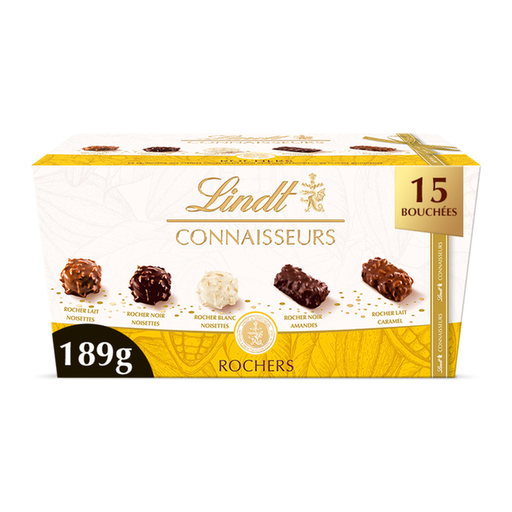 Image unavailable
Consider this as a gift or something to share after your baking session, rather than as praline paste to mix into a preparation.
Before offering it to children, check the allergens on the packaging of the gift box you buy. If you’re taking it to school, check the school’s guidelines as well.
No. In France, the DGCCRF describes Nutri-Score as voluntary, while a nutrition declaration is compulsory for prepacked foods, subject to the exemptions set out in the regulations. When choosing a product, read the nutritional information and ingredients list even if a Nutri-Score is displayed.
No, it depends on the product. Auchan describes its Nocciolata La Bianca spread as ‘gluten-free’, but that claim applies only to that specific product, not to other praline spreads or gift boxes. Check the exact packaging, including any information relevant to allergies.
Start with the allergens highlighted in the ingredients list of the product you’ve bought. Products described by Auchan and Carrefour include hazelnuts or almonds, while some spreads also contain milk and soya. If the preparation is for school, check the school’s guidelines before taking it in.
Not automatically. Praline paste described as suitable for baking is intended to be mixed into a preparation, while a gift box is designed for giving or enjoying the chocolates. Only use the chocolates in your recipe if it specifically calls for them and their ingredients are suitable for everyone who’ll be eating them.
Follow the storage instructions and use-by period for the jar you’ve bought, as they vary by product. Auchan says to keep La Patelière in the fridge for 21 days after opening, while the ScrapCooking product page published by E.Leclerc recommends keeping the product shown in a cool place for up to 10 days.