Shoppers keeping an eye on quantity
You’re looking for a quick treat to add to your regular shop and want to choose a pack size that suits how much you’ll eat.


For a quick breakfast, start by choosing a product that suits how you’ll use it: a praline chocolate bar can be broken into pieces, while individually wrapped bites are ready to serve. Almond pralines can be eaten whole or crushed; praline paste is better suited to baking. Then check the pack size and the allergens listed for your chosen product.
You’re looking for a quick treat to add to your regular shop and want to choose a pack size that suits how much you’ll eat.
You’d like to enjoy a piece of praline chocolate with your toast, rather than choose candied almonds to eat whole or crush.
Check the label for each product: depending on the recipe, these products contain or may contain nuts, milk, soya, cereals containing gluten or eggs.
First decide whether you want to eat the product as it is or add it to a recipe. Then choose the quantity and check the ingredients.
| What to consider | What to check | Who is it for? |
|---|---|---|
| Pack size | Compare the net weight with the amount you plan to use. | If I only have a little in the morning, I want a size that matches what I’ll eat. Around 36% of consumers in this group prioritise getting the right quantity. |
| Ready-to-eat format | Look for a bar you can break up or bites that are already portioned. | When there’s little time in the morning, I prefer something I can serve without any preparation. Convenience comes first for around 29% of consumers. |
| Ingredients and allergens | Read the ingredients list, the allergens highlighted and any “may contain” warnings. | If certain ingredients are a concern in my household, the exact recipe matters more than the format. Around 21% of consumers prioritise this compatibility. |
| Type of product | Identify whether it’s candied almonds, praline chocolate or praline for use in a recipe. | If I’m making a recipe, I’m looking for the right ingredient rather than a sweet to eat as it is. Around 14% of consumers put product type first. |
Candied almonds, a chocolate bar and a baking ingredient each serve a different purpose.
Choose the form you want before comparing products.
The bars covered here include 150 g, 170 g and 200 g formats, so the amount you buy varies by size.
Check the net weight and consider how much you’ll actually use.
Recipes vary: they may contain nuts or milk, for example, and may also carry warnings about traces of other allergens.
Check the ingredients and any “may contain” warnings on the product you’re buying.
Hot weather can make it harder to transport an order of chocolate.
Before ordering, check the delivery method offered and its transport conditions.
The 200 g Dessert Praliné bar is a milk chocolate bar that can be broken into pieces.
Its praline milk chocolate bar is available in a 150 g format.
This 170 g praline bar is presented as suitable for desserts and ready to eat.
Chocoletti Lait Noisettes and Les Grandes Lait Noisettes are two hazelnut chocolate products available in different formats.
Auchan’s 100 g praline is an ingredient for baking.
These two products match the ready-to-eat formats discussed here: a praline bar to break into pieces and an assortment of chocolate rochers.
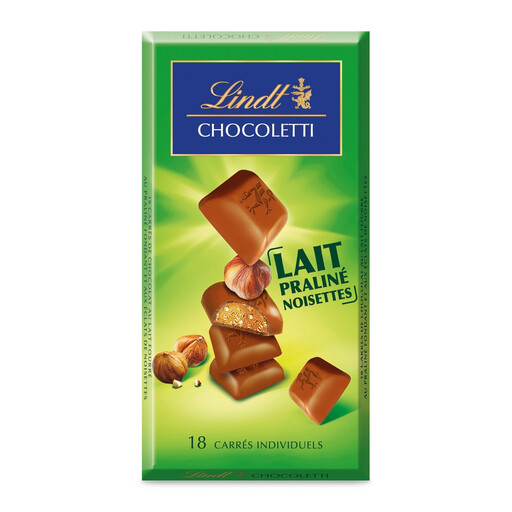 Image unavailable
Worth considering if you’d like to break a chocolate bar into pieces to enjoy with breakfast. It weighs 100 g; if you need to avoid certain ingredients, check the allergen information on the packaging.
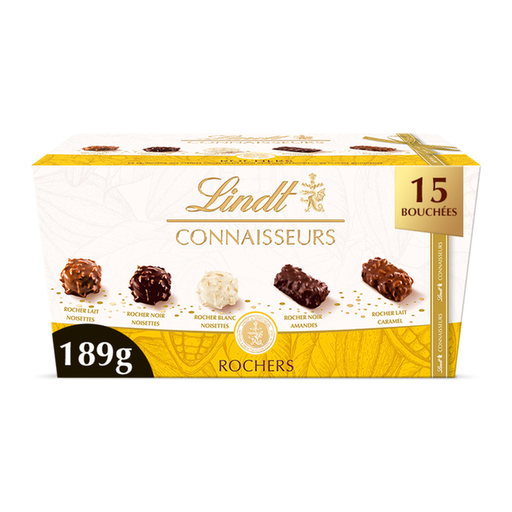 Image unavailable
Worth considering if you’d rather serve rochers than break up a chocolate bar. This assorted gift box weighs 189 g; check the ingredients of each chocolate if you need to avoid any allergens.
No. Carrefour’s “Pralines” range includes almond pralines and pink pralines, while a search for praline chocolate also brings up bars and rochers. Check the product name and ingredients to find the form you want.
Start with how much you’ll use, then compare the format and ingredients. A larger pack won’t necessarily be a better choice for an occasional breakfast.
Check the ingredients for the specific product you’ve chosen, paying particular attention to nuts, milk, soya, cereals containing gluten and any traces warnings. According to the Directorate-General for Competition, Consumer Affairs and Fraud Control, allergens must be highlighted in the ingredients list of relevant prepacked foods.
For the Auchan praline mentioned here, the advice is to use it within 15 days of opening and store it away from heat and moisture. Follow the instructions on the packaging of the product you buy.
Compare the nutritional values per 100 g so you’re looking at the same quantities, then consider the portion you plan to have. The Directorate-General for Competition, Consumer Affairs and Fraud Control states that the nutrition declaration for relevant foods is given per 100 g or 100 ml.