For marathon fuelling, first choose a source with enough carbohydrates per serving to fit your plan, rather than picking a praline bar simply because it comes in an individual portion. The Journal of Sports Sciences puts typical intake at 30–60 g of carbohydrates per hour during prolonged exercise. A chocolate bar can still be a treat before or after your run. If you want to take one with you on race day, check the serving size and allergens, then try it in training.
Who is this option for?
Runners who plan their race-day fuelling
You need to know how many carbohydrates are in each serving and be able to repeat your intake during exercise. The Journal of Sports Sciences gives a guideline of 30–60 g of carbohydrates per hour for prolonged exercise. It also notes that intake can reach 90 g per hour during efforts lasting more than 2 hours 30 minutes, under certain conditions.
Runners looking for a portion-sized treat
You want a chocolate treat to take with you before or after a session, or to enjoy after crossing the finish line, without relying on it as your sole source of race-day fuel. In that case, the portion size and how easy it is to carry matter just as much as the recipe.
People who pay attention to ingredients and allergens
Check the exact recipe before you buy: the chocolates and bars featured here may contain milk or nuts, or carry a precautionary ‘may contain traces’ statement. Check the label on the pack you buy.
What should you look for?
When preparing for a marathon, treat race-day fuelling and an individual chocolate treat before or after exercise as two separate things.
Carbohydrate fuelling for the race
Choose this if: you need to keep track of regular carbohydrate intake during the marathon.
Bear in mind: practise your strategy in training. The higher intakes mentioned for efforts lasting more than 2 hours 30 minutes are not a target for everyone.
Chocolate or praline bar
Consider this if: you’re mainly looking for a treat before or after a session, or after crossing the finish line.
The limitation: a small serving may provide some carbohydrates, but it may not cover all the fuel you plan to take during an hour of running.
| What to consider | What to check | Who is it for? |
|---|
| Carbohydrates per serving |
Check the grams of carbohydrates in the portion you’ll actually take with you and compare them with your planned intake per hour. |
If I’m relying on a bar during the race, I want to know how much each serving contributes to my fuelling plan. Around 50% of consumers are said to prioritise being able to quantify their carbohydrate intake. |
| Format and portability |
Check the weight of each item, the packaging and how well the chocolate will keep while you’re carrying it. |
For a treat before or after exercise, I’d prefer a portion that’s easy to carry, without making it the focus of my race strategy. Convenience and individual enjoyment are said to be the main priorities for around 30% of consumers. |
| Ingredients and allergens |
Read the ingredients, highlighted allergens and any precautionary statements about traces on the pack you buy. |
Before choosing a hazelnut or milk chocolate recipe, I need to check that it suits my dietary requirements. This check is said to be a priority for around 20% of consumers. |
Mistakes to avoid
-
Planning your fuelling based on calories alone
A race-day fuelling plan is measured in part by grams of carbohydrates per hour. According to figures from Lindt France, a 35 g EXCELLENCE Dark 70% mini bar contains around 12.3 g of carbohydrates and 14.4 g of fat. This is dark chocolate, not a praline bar.
Work out the carbohydrates in the portion you plan to eat; don’t treat total calories as if they were all carbohydrates.
-
Trying a new bar on marathon day
A review published in Nutrients highlights that the amount of food needed, carrying it and digestive discomfort can all make it harder to eat ordinary foods during exercise.
If you’re considering taking a bar with you on race day, try it on a long run first to see how you find the texture and how well you tolerate it.
-
Assuming two recipes contain the same allergens
Ingredients and possible traces vary between products. Lindt’s EXCELLENCE Dark 70% mini bar and Carrefour milk chocolate bars, for example, do not carry the same allergen information.
Check the label on the recipe and pack you buy, even if you already know the brand.
-
Confusing the pack size with an individual serving
A multipack, a small bar and a sharing-size bar don’t provide the same amount per serving.
Check how many pieces there are and how much each one weighs before adding the product to your race-day supplies.
Brands to know when comparing formats
Lindt
The 35 g EXCELLENCE Dark 70% mini bar is a good example of a smaller chocolate format, distinct from a praline bar.
- For this product, Lindt France lists 35 g of carbohydrates and 41 g of fat per 100 g.
- Check the allergens listed on the pack, and don’t mistake this format for a full hour’s worth of carbohydrate fuelling.
Ferrero / Kinder
Kinder is a Ferrero Group brand. Kinder Country is one of the chocolate bars available in French shops.
- Smaller formats can be a good choice when you fancy a portion of chocolate.
- The Kinder or Country name alone won’t tell you how many carbohydrates are in each bar, what allergens it contains or whether it’s suitable for a race-day fuelling plan.
Carrefour
Carrefour milk chocolate bars come in a pack of ten 21 g portions.
- The stated weight of each bar makes it easy to identify the serving size.
- For this product, Carrefour France lists 34 g of fat per 100 g and dairy ingredients. Check the label for the carbohydrate content per serving and any allergen traces listed.
Chocolate bars and formats on Joybuy
These products are mainly suited to anyone looking for an individually portioned chocolate treat, or something to share before or after exercise. The formats vary, so check how much you’d actually eat before adding one to your fuelling plan.
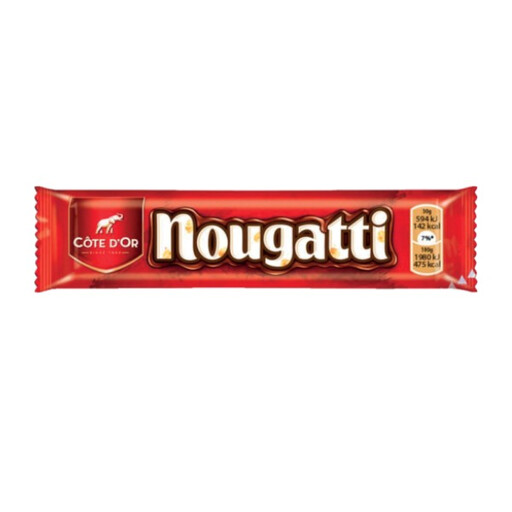 Image unavailable
Côte d’Or, nougat and hazelnut chocolate bar, 30 g
The 30 g format is ideal for a small chocolate treat. If you’re taking it on a run, check the packaging and the carbohydrate content of the whole bar. Try it in training rather than relying on it as your only source of fuel.
View on Joybuy
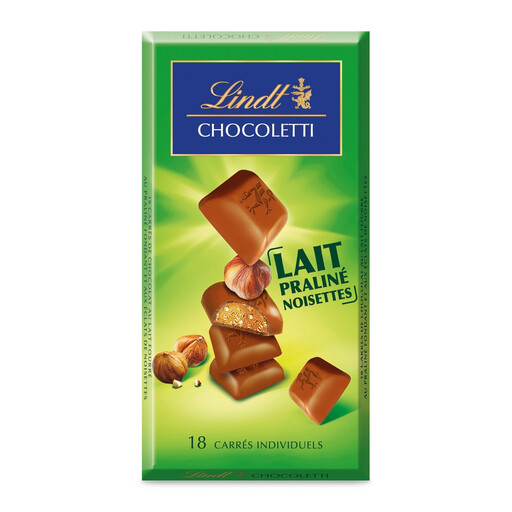 Image unavailable
Lindt Chocoletti, milk chocolate praline, 100 g
This 100 g praline bar is better suited to sharing or portioning than to taking with you as a small, individually wrapped bar. If you want to count the carbohydrates in a square, check its weight and the nutritional information on the pack. Also check the allergens in this recipe.
View on Joybuy
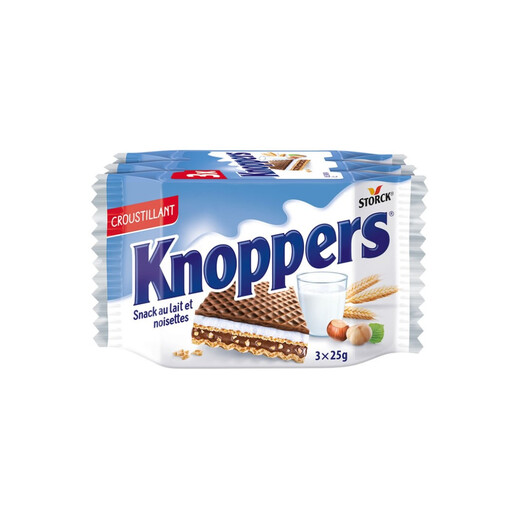 Image unavailable
Knoppers milk and hazelnut, 3 × 25 g
This pack of three 25 g pieces could be a good choice for a chocolate and hazelnut treat. It’s a wafer, not a bar specifically described as praline. Check whether each piece is individually wrapped, then use the nutritional information to work out the carbohydrates per piece before including it in a race-day fuelling plan.
View on Joybuy
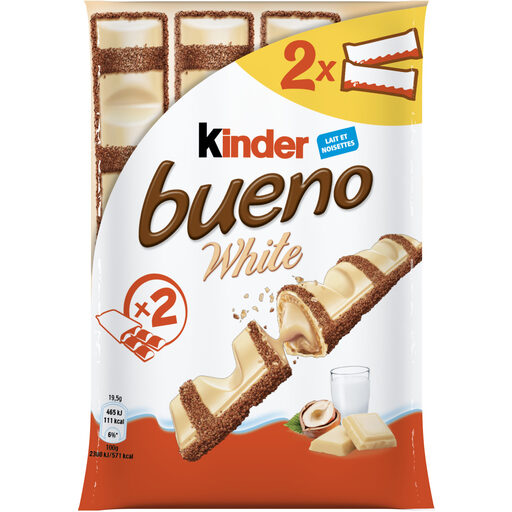 Image unavailable
Kinder Bueno White, 2 × 2 bars, 78 g
This pack of white chocolate and hazelnut bars is a handy option if you want separate portions, though it isn’t described as a praline bar. Check the weight and carbohydrate content of the bar you plan to eat, as well as the allergens listed on the pack. Try it in training before taking it with you during exercise.
View on Joybuy
Frequently asked questions
Can a praline bar be my only fuel during a marathon?
Don’t choose it as your only source of carbohydrates without first working out your intake. The Journal of Sports Sciences gives a typical guideline of 30–60 g of carbohydrates per hour for prolonged exercise. For each bar you’re considering, check the carbohydrates in the portion you’ll actually eat and try it in training.
How can I try a chocolate bar before race day?
Try it on a training run similar to the race, rather than having it for the first time on race day. A review published in Nutrients notes that carrying food, eating enough and digestive discomfort can all affect how practical it is to eat during exercise.
What should I check on the label of a bar sold in France?
Check the ingredients, allergens, serving weight and nutritional information for the amount you’ll eat. For pre-packed foods, the DGCCRF says that allergenic ingredients must be highlighted. Also check for any precautionary statements about traces and the storage instructions for the product you buy.
Can I save a praline bar for after the marathon?
Yes, if you simply fancy a treat after crossing the finish line and the ingredients suit you. That’s separate from calculating your carbohydrate intake during the race: a chocolate bar on its own won’t replace everything you plan to eat and drink after exercise.


