
Livraison le jour même ou le lendemain

Qualité garantie

Débloquez vos offres de bienvenue: Livraison GRATUITE | Jusqu'à -80 % | 30 jours d'essai gratuits à JoyPlus
Téléchargez l'application
A cupboard that’s bursting at the seams, a pair of shoes you can’t find, or a lunch that ends up jumbled at the bottom of your bag – practical storage boxes can simplify so many everyday situations. That is, provided you choose a model that’s genuinely suited to the job you have in mind. The look and the promises on the product page aren’t everything: some details that seem appealing at the point of purchase can quickly become annoying after just a few uses.
A slim box might look easy to carry, but its interior space can turn out to be far too limited. For a full lunch, check the length, width and, most importantly, the usable height. A compartmentalised, shallow food box will work well for flat foods, chopped fruit or small portions, but not for bulky dishes.
For a shoe box, also measure your largest pair – especially if you store high-top trainers or shoes with thick soles. The external dimensions don’t always reflect the space that’s actually available inside.
A simple clip-on lid doesn’t necessarily protect the contents the way a model with a seal and side closures does. If you’re transporting a salad with dressing, soup or a saucy dish, read the manufacturer’s instructions carefully and avoid filling the compartments to the brim.
On a portable lunch box, the compartments help stop different foods from mixing, but they don’t guarantee that liquid preparations won’t leak.
Whether a box is dishwasher-safe, oven-safe or microwave-safe depends on the material and the different parts of the box. A container might be fine in the dishwasher but not suitable for the microwave. So check the instructions for that specific model, especially for the lid and any removable dividers.
A glass food storage box lets you see the contents at a glance and absorbs fewer odours than some plastics. On the downside, it’s generally heavier. Borosilicate glass is often chosen for its better resistance to temperature changes, but you should still follow the manufacturer’s recommendations and avoid sudden thermal shocks.
Lightweight and practical to carry, polypropylene is commonly used for storage boxes and some food containers. Whatever material you choose, check that it’s food-safe, find out what temperatures it can withstand and read the cleaning instructions.
For a snack box, six compartments can be very handy for separating fruit, biscuits and small portions. In a work setting, a larger model with several sections lets you prepare a full meal without needing multiple containers.
At home, a multi-purpose storage box should be sized according to the space you have available: the width of a shelf, the height under a piece of furniture or the depth of a cupboard. Stackable models are a good option, as long as each box remains easy to access.
A lid that closes properly makes transport much safer. For shoes, a transparent front lets you quickly spot the right pair without having to open several boxes. Ventilation holes can improve air circulation, but they don’t mean you can skip drying your shoes completely before storing them.
Before you order, also check how many units are included, the total weight of the set and the dimensions of each item.
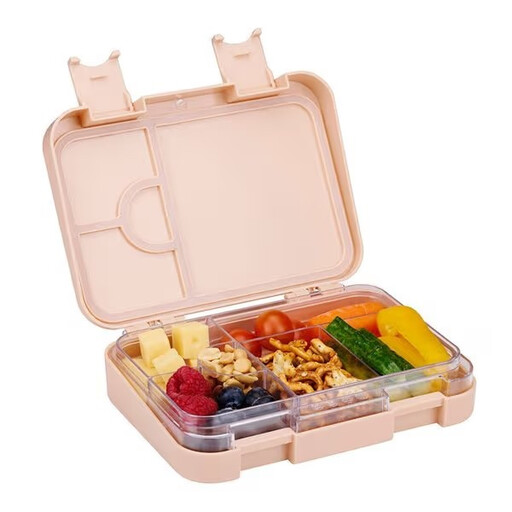
Why this choice suits this profile: with its six compartments and 21 × 15 × 4.5 cm size, this box is ideal for students, schoolchildren and adults who want to organise a meal or snack in a single container.
The product page clearly states that the box is not microwave-safe and advises against very liquid foods. This means you can tailor its use rather than assuming it works for every type of preparation.
Six removable sections, dishwasher-safe and a stated weight of around 425 g.

Why this choice suits this profile: the eight capacities, from 150 ml to 1,040 ml, let you pick the right size for leftovers, individual portions or pre-prepared meals.
The volume of each piece is clearly stated, so you can check the capacity you need before buying, rather than relying on the mere mention of a family set.
Stated borosilicate glass, rectangular shapes and removable lids to cover several storage needs.
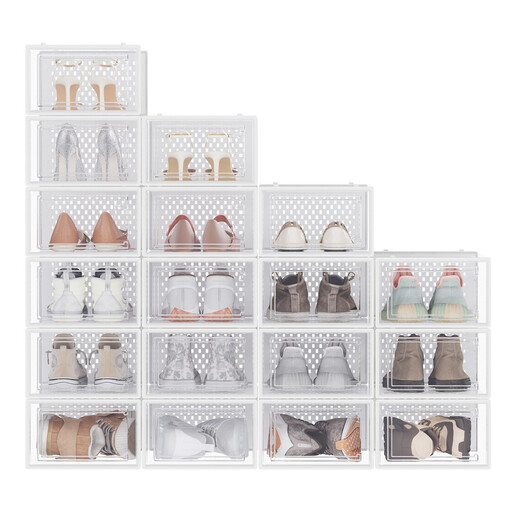
Why this choice suits this profile: this set of 18 boxes is aimed at families, trainer collectors and households that want to organise their hallway or wardrobe in a lasting way.
The dimensions of each box are given: 33.3 × 23.1 × 14.3 cm. Measure your shoes before ordering to avoid any nasty surprises.
Transparent front, stackable design, reportedly simple assembly and ventilation holes.
We’ve put together a complete, real-time updated selection of products that meet these exacting criteria, as well as European safety standards.
For daily use, go for a size that slips easily into your bag, with a lid that stays securely closed and compartments that suit your portions. Also check the weight, whether it’s dishwasher-safe and any restrictions on liquid foods.
A glass food storage box can be carried without any problems if it closes properly and is protected from knocks. However, it is heavier than a plastic model. Borosilicate glass is presented on some products as being more resistant to temperature changes, but the manufacturer’s recommendations should always come first.
Avoid filling the compartments to the brim, remove any removable parts to wash them separately and dry the boxes completely before closing them. For shoe boxes, let damp shoes air-dry fully before placing them in a transparent shoe storage box. Regularly check the lids, hinges and closures so you can quickly replace any damaged parts.