
Livraison le jour même ou le lendemain

Qualité garantie

Débloquez vos offres de bienvenue: Livraison GRATUITE | Jusqu'à -80 % | 30 jours d'essai gratuits à JoyPlus
Téléchargez l'application
A powerful cordless vacuum cleaner can genuinely simplify your daily cleaning routine – provided you don’t just rely on the number printed on the box. Between the stated suction pressure, the theoretical battery life and the automated features, several specifications are worth a closer look.
In a British home with wooden floors, tiles, carpets or pets, three common pitfalls keep cropping up.
The values given in Pa or kPa refer to the maximum suction pressure measured under specific conditions. On their own, they don’t let you judge how well the machine will perform on a thick carpet or in corners. The brush design, airflow, seal integrity and how full the dustbin is all play a part.
A cordless stick vacuum with a high pressure reading can therefore lose effectiveness if its filter clogs quickly or its brush traps hair and pet fur.
A standard brush can quickly accumulate long hair and pet fur around its roller. The rotation then gradually slows down, meaning you’ll need to clean it manually quite often. To minimise this issue, go for a tangle-free brush, a V-shaped roller, an integrated comb or a hair-cutting mechanism.
The filter demands the same attention. On a vacuum fitted with a HEPA filter, you need to empty it, wash it if the manufacturer allows, and then let it dry completely before putting it back. A damp filter can damage the appliance.
A battery life of “up to 60 or 70 minutes” usually refers to Eco mode, with a specific brush and power setting. In Turbo mode, the running time often drops much faster. For a medium-sized flat, it’s better to check for a removable battery, an accurate charge indicator and several suction levels.
For a powerful vacuum for carpets and hard floors, choose a model with separate modes for bare floors, carpet and intensive cleaning. A motorised brush designed for fibres helps dislodge embedded dust, while a softer roller is better suited to wooden floors.
The advertised power should always be considered alongside the accessories supplied. A crevice tool is handy for skirting boards and stairs, while a motorised brush will be more effective on carpets and pet hair.
A multi-layer filtration system reduces the release of particles back into the room. Models advertised with a HEPA filter can appeal to households looking to trap more fine dust, provided you follow the manufacturer’s recommendations for cleaning and replacement.
The dustbin capacity also makes a real difference. A 500 to 700 ml tank is fine for quick sessions, while a 1.5 to 1.8 litre bin saves you from having to empty it repeatedly in a larger home.
A vacuum with a mopping function can remove dust and some dirt from hard floors in a single pass. However, it doesn’t always replace a traditional wash, especially when it comes to stubborn stains.
To minimise manual effort, a robot vacuum and mop can vacuum, map rooms and return to its base on its own. An automatic emptying station offers real convenience, but it takes up space and requires you to maintain the water tank, and possibly buy consumables regularly. Also check the robot’s height, whether it can fit under furniture, and its compatibility with long-pile carpets.
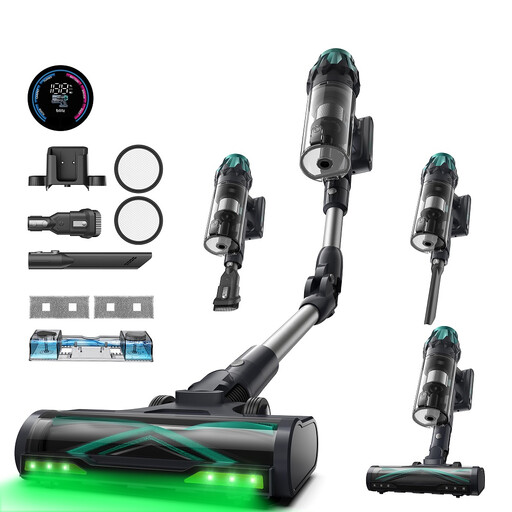
Why this choice suits this profile: It combines vacuuming, hard-floor mopping, a flexible hose and several power levels in an accessible cordless format, ideal for everyday cleaning.
The V-shaped brush, advertised as tangle-resistant, limits hair build-up, while the sealed filter needs regular maintenance.
Up to 60 minutes of advertised battery life, removable battery, green LED lighting and a 230 ml water tank.
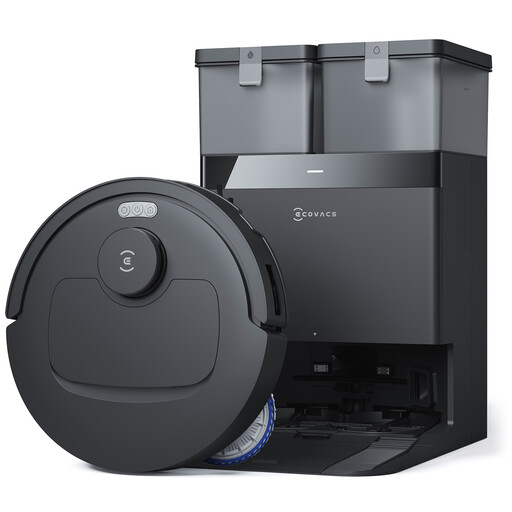
Why this choice suits this profile: This robot is designed for those who want to automate vacuuming and mopping across several rooms, with minimal intervention between cycles.
The OMNI station handles emptying the dust, washing the mop pads at 75 °C and drying them with hot air. You still need to allow enough space for it.
Advertised suction of 25,000 Pa, multi-floor mapping, TruEdge 2.0 edge cleaning and ZeroTangle 3.0 system.
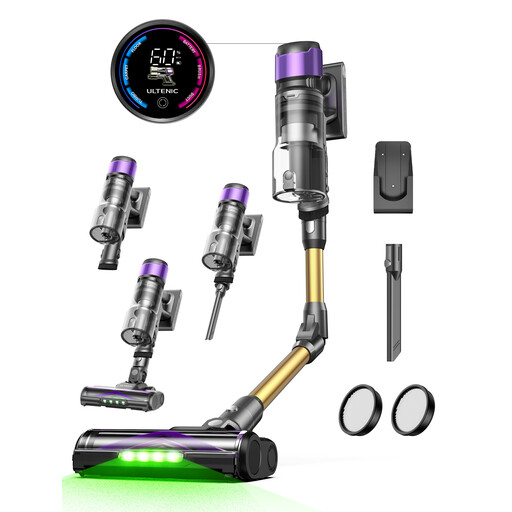
Why this choice suits this profile: Its stick format is ideal for frequent cleaning in homes with pets, carpets, hard floors and hard-to-reach furniture.
The three modes let you adjust power consumption to the surface, while the V-shaped brush is designed to reduce hair tangling.
Advertised suction up to 55 kPa, maximum battery life of 60 minutes, foldable tube, touchscreen and 1.5-litre dustbin.
We’ve put together a comprehensive, real-time updated list of products that meet these demanding criteria as well as European safety standards.
For a pet hair vacuum cleaner, power shouldn’t be your only consideration. A motorised tangle-free brush, a large enough dustbin and an easily accessible filter are just as important. Carpet and Turbo modes can help dislodge embedded fur, but they reduce battery life.
A machine with a mopping function is suitable for regular maintenance of hard floors and light marks. It doesn’t necessarily replace a manual wash for stubborn stains, heavily soiled grout or moisture-sensitive floor coverings. Always check the restrictions specific to your floor type.
The running time depends on the mode selected, the brush in use, the condition of the filter and the battery. A removable battery makes it easier to swap or use a second pack, while a charging station keeps the appliance ready between sessions. When estimating running costs, also factor in filters, any bags, rollers and cleaning products.