
Livraison le jour même ou le lendemain

Qualité garantie

Débloquez vos offres de bienvenue: Livraison GRATUITE | Jusqu'à -80 % | 30 jours d'essai gratuits à JoyPlus
Téléchargez l'application
Navigating the jungle of cordless stick vacuums can quickly become a daunting task. Between promises of "cyclonic" power and runtimes that seem to defy the laws of physics, it's easy to feel lost. Make the wrong choice, and you're guaranteed disappointment: weak suction, a battery that dies before you've even finished the living room, and ultimately, a device that ends up collecting dust in a closet.
As a product expert for Joybuy, my mission is to help you decode the spec sheets and identify the features that truly make a difference. This guide sifts through the common pitfalls and essential criteria for choosing a powerful cordless stick vacuum that won't let you down.
Marketing loves eye-popping figures, but they often hide disappointing performance. Here are three red flags to watch out for so you don't invest in a device that will frustrate you daily.
To guarantee flawless cleaning performance over the long term, focus on these three technical indicators.
Forget Watts; look for Pascals (Pa). This unit measures the vacuum's ability to lift dirt. For versatile use on carpets and hard floors, a value of 20,000?Pa is an excellent baseline. The highest-performing models climb to 25,000?Pa and beyond, which is essential for deep-cleaning allergens and fine dust embedded in carpets.
Good runtime isn't just about the battery's raw capacity (in mAh); it also depends on intelligent management. Battery Management Systems (BMS) optimise the discharge to maintain stable suction power from start to finish. A removable battery is a significant advantage: it allows you to easily replace it at the end of its life or have a second one on hand to double your cleaning time.
For allergy sufferers or households with pets, a high-performance filtration system is non-negotiable. A HEPA (High-Efficiency Particulate Air) filtration stick vacuum is designed to capture at least 99.97% of particles as small as 0.3 microns, such as pollen, dust mites, and pet dander. Ensure the entire system is fully sealed to guarantee that the air expelled by the device is cleaner than the ambient air, and doesn't release allergens back into the room.
Rather than an endless catalogue, we've selected devices that excel at specific tasks, based on the performance and design criteria we've just covered.
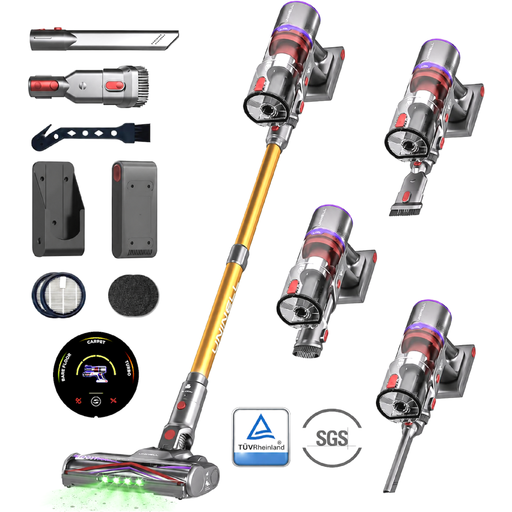
Why It Stands Out : It checks all the boxes for the most demanding situations: record-breaking suction power for thick carpets, anti-tangle technology for pet hair, and intelligent battery management to clean the whole house in one go.
It boasts a true suction power of 60,000 Pa, far exceeding market standards. Its certified anti-tangle brush and up to 65-minute runtime (with AI management) sidestep the classic pitfalls of power and maintenance.
Its LED touchscreen displays real-time battery life, and its advanced 7-stage filtration captures 99.99% of fine dust.
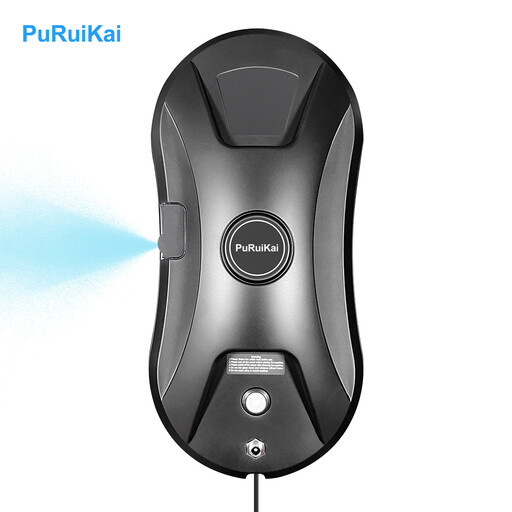
Why It Stands Out : Because it automates one of the most dreaded chores: window cleaning. It frees up precious time and guarantees streak-free results on all glass surfaces.
It avoids the trap of ineffective gadgets with a strong 5600 Pa suction that ensures secure adhesion and a deep clean, where entry-level models slip and leave streaks.
Its intelligent water spray dissolves dirt, and its versatility on all smooth surfaces (windows, mirrors, tiled walls).
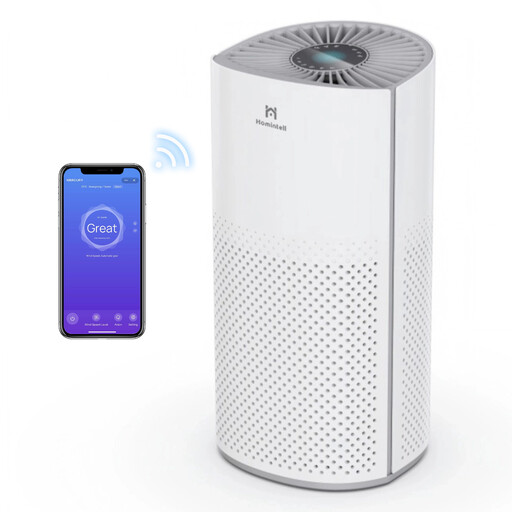
Why It Stands Out : It's the perfect complement to a good vacuum because it tackles invisible airborne pollutants. For allergy sufferers, it's the winning combination for a truly healthy home environment.
It sidesteps the trap of "secondary pollution" (dust that's simply kicked back into the air). While a vacuum cleans surfaces, this purifier ensures the air you breathe is also free of allergens thanks to its H13 HEPA filter.
Its dual-action UV sterilisation + ioniser to neutralise bacteria and viruses, and its real-time air quality sensor with a colour-coded display.
Home cleaning doesn't stop with vacuuming. For a connected and easy-to-maintain home, other smart solutions can make your life easier.
Can a lightweight stick vacuum be powerful? Yes. Advances in digital brushless motors and lithium-ion batteries now make it possible to design a lightweight and manoeuvrable vacuum without sacrificing suction power. Weight is no longer a reliable indicator of performance; it's better to focus on the motor technology and the overall design of the device.
What is the lifespan of a cordless stick vacuum? The lifespan depends on the quality of the motor and, most importantly, the battery. On average, a well-made model can operate optimally for 3 to 5 years. The battery is often the first component to show signs of wear. Choosing a model with a removable battery is therefore a smart move to extend its life at a lower cost.
Should a HEPA filter be washed or replaced? It depends on the type of filter. Some HEPA filters are designed to be washable with plain water, which can be cost-effective. Others are disposable and must be replaced every 6 to 12 months. It is crucial to follow the manufacturer's recommendations: a poorly dried washable filter or a worn-out filter loses all its effectiveness and can even develop mould, which degrades air quality.