
Livraison le jour même ou le lendemain

Qualité garantie

Débloquez vos offres de bienvenue: Livraison GRATUITE | Jusqu'à -80 % | 30 jours d'essai gratuits à JoyPlus
Téléchargez l'application
A multifunction power tower typically combines a freestanding pull-up bar, a dip station and several supports for upper-body strengthening. It’s a great solution for setting up a home gym without cluttering your space with multiple machines. But a catalogue photo alone won’t tell you about stability, footprint or the station’s real-world capacity.
Before buying a power tower, three common pitfalls keep cropping up.
For an adjustable pull-up bar or a dip station, the weight of the frame alone isn’t enough to guarantee a comfortable workout. Look at the width of the base, how the support points are distributed, and whether you can set the equipment up on a perfectly level floor.
A home gym station intended for a flat also needs to work with your flooring. A mat can help reduce slipping and protect the floor, but it will never fix a poorly assembled frame. Bolts and connectors must be tightened after assembly and checked regularly.
Movements that involve swinging put extra strain on the frame. A maximum load stated as 440 lb (around 200 kg) doesn’t mean it’s safe to use the equipment near that limit with dynamic movements.
Compare the figures on a consistent basis: maximum user weight, recommended load, total weight of the unit and usage conditions. Some manufacturers list several values. In that case, go with the most cautious limit mentioned in the manual and never exceed the intended capacity.
The Pooboo C966S model states a maximum capacity of 440 lb. The Pooboo C860 lists a maximum capacity of 480 lb, along with a weight recommendation of 400 lb. These details should be cross-checked against the manual and assembly instructions. A figure highlighted on a product page is not a guarantee of performance in every situation.
A height-adjustable power tower can suit several users and different ranges of motion. However, do check the minimum and maximum heights, as well as the space needed around the station.
A tower that’s too close to the ceiling will limit pull-ups and can make lowering yourself uncomfortable. For a home installation, measure the room, the ceiling height and the width of doorways before delivery. Also think about access to the handles, where your feet will go, and whether you can store the equipment without having to move furniture.
The adjustment must be locked before each session. Foam handles can make the grip more comfortable, but they don’t replace a visual check of the fixing points.
The models below cater to different needs. The features listed here come from the available product pages; assembly is required for the models concerned.
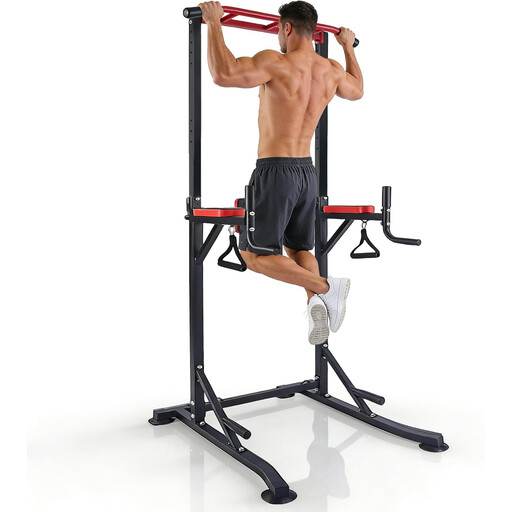
Why this choice suits this profile: This structure is aimed at those who want to start gradually with a freestanding pull-up bar and two resistance bands, without investing straight away in highly specialised equipment.
The bands let you adapt your exercises, while the product page doesn’t promise features that aren’t detailed. Check the manual and the overall stability after assembly, before first use.
A freestanding design and two included resistance bands to vary your exercises, without needing extra accessories.

Why this choice suits this profile: This model brings together the features you’d expect from a home strength-training machine: pull-ups, dips and strengthening exercises in an alloy steel frame.
Its stated dimensions of 41.73 × 41.73 × 94 inches (roughly 106 × 106 × 239 cm) let you plan your space in advance. The 440 lb limit must be respected, and the station should be set up on a level floor.
A high-strength alloy steel frame, adjustable height and a stated maximum capacity of 440 lb.
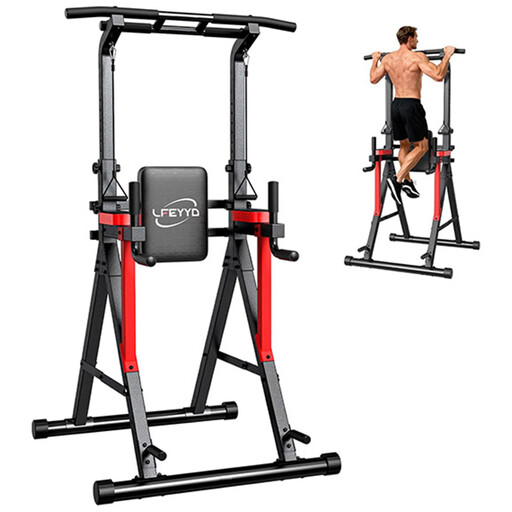
Why this choice suits this profile: The 13 adjustment levels can suit different body shapes and training habits, especially when several household members use the station.
The documented adjustment range reduces the risk of ending up with a single height that doesn’t suit you. However, the structure must be assembled on a stable surface and the fixings checked before each session.
13 height levels, foam handles and a stated maximum capacity of 480 lb, with a 400 lb recommendation to bear in mind.
We’ve put together a comprehensive, real-time selection of products that meet these demanding criteria and European safety standards.
Set aside a proper assembly session, and get a second person to help if the frame is bulky. Before using your pull-up and dip station:
A dry cloth is usually enough to clean the frame. Avoid storing the equipment in a very damp room, and keep children and pets away during sessions.
Measure the total height of the tower, then add the space needed above your head and to reach the bar. A stated height of 94 inches is already around 2.39 m, without the extra margin you need to move comfortably.
Yes, as long as you start with exercises suited to your level: dead hangs, assisted pull-ups, partial dips or strengthening with bands. Progress should be controlled and must respect the weight capacity stated by the manufacturer.
Unlike a motorised machine, a power tower generally doesn’t need electricity. The main costs are the purchase, delivery, a possible protective mat and the occasional replacement of handles or accessories. Regularly checking the fixings is the most important maintenance task for long-term use of the equipment.