
Livraison le jour même ou le lendemain

Qualité garantie

Débloquez vos offres de bienvenue: Livraison GRATUITE | Jusqu'à -80 % | 30 jours d'essai gratuits à JoyPlus
Téléchargez l'application
Starting a home fitness routine can be a real challenge. Between limited space and the overwhelming array of equipment, it's easy to feel lost. Do you dream of an all-in-one solution for a complete workout without sacrificing your living room? The Power Tower, also known as a workout station or fitness tower, might just be the answer you've been looking for.
This guide is designed to provide clear benchmarks and concrete selection criteria. As a Joybuy Product Advisor, my mission is to help you find the equipment that truly aligns with your goals and your space.
Before we dive into our top picks, let's review the essential factors to consider to ensure you make the right choice.
Safety is non-negotiable. A Power Tower must be rock-solid to support your weight during dynamic movements. There are two key points to scrutinise:
Not all power towers offer the same range of exercises. A basic station will allow you to perform the four core bodyweight training exercises:
More advanced models go a step further by integrating additional accessories, such as a foldable bench for dumbbell exercises or specialised grips. Carefully assess your needs: a simple model is more than enough to get started, while a multi-function station can become a true compact home gym.
The main advantage of a home workout machine is being able to fit it in your space. The number one rule before buying: measure your ceiling height. Plan for at least 20 to 30 cm of clearance above the pull-up bar so you don't hit your head mid-set.
Most modern power towers, like the Pooboo Power Tower, offer adjustable height. This is a crucial feature for adapting the machine to your body size and ensuring comfortable and proper exercise form.
Here are a few options that stand out for their design and versatility, suitable for different user profiles.

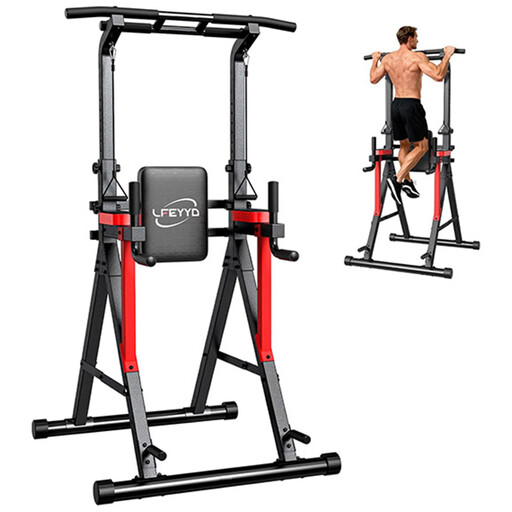
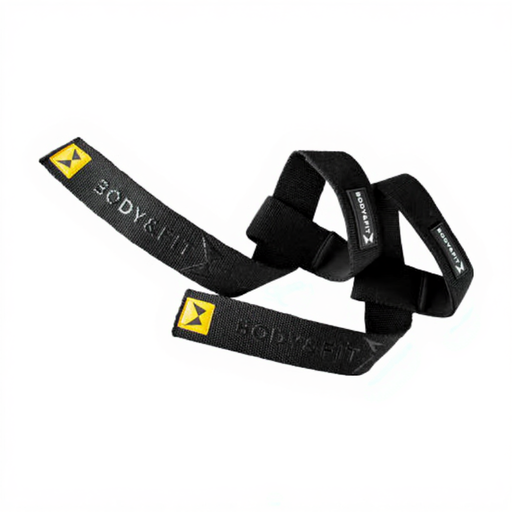
The models featured here are excellent starting points, but every home gym project is personal. To discover a wider selection of equipment and build the workout space of your dreams, take a look at our complete category.
? Discover All Our Multi-Function Gym Accessories
A Power Tower is a highly versatile piece of equipment that engages most of the major muscle groups in the upper body and the core. Specifically: pull-ups target the back (lats) and biceps; dips sculpt the chest, triceps, and shoulders; and leg raises are incredibly effective for the entire abdominal area.
Yes, provided you choose a quality model. Stability depends on three key factors: the width of the base, the weight of the machine, and the durability of the materials. Models with a thick steel frame and a high load capacity (over 150 kg) are designed to remain stationary, even during dynamic movements. Also, be sure to place it on a flat, hard surface.
This is a crucial detail! Measure the maximum height of the Power Tower you are considering, then add a safety margin of about 30 centimetres. This clearance is essential to ensure your head can pass over the bar during a full pull-up without hitting the ceiling. For reference, a standard ceiling height of 2.50 m is suitable for the vast majority of models.