
Livraison le jour même ou le lendemain

Qualité garantie

Débloquez vos offres de bienvenue: Livraison GRATUITE | Jusqu'à -80 % | 30 jours d'essai gratuits à JoyPlus
Téléchargez l'application
A cordless drill-driver for assembling furniture, a rotary tool for finishing touches, or a glue gun for creative projects: power tools for DIY cover a wide range of uses. Yet product listings often focus on power or the number of accessories, at the risk of pushing truly useful criteria into the background.
Before you place an order, make sure to check:
A high maximum speed doesn't mean the tool will handle all materials with ease. For fine sanding, polishing or finishing a 3D-printed part, precise speed control is often more useful than an impressive top figure. Without the right adjustment, the accessory can overheat, leave marks or wear out prematurely.
A rotary tool kit may contain dozens of pieces without being truly versatile. Not all of them will necessarily fit your collet. Check the shank diameter, the quality of the discs and the availability of replacements. A set of 35 accessories compatible with a 2.3 mm shank can prove far more practical than a larger assortment that's poorly organised or difficult to use.
Some tools run on a brand-specific battery sold separately. This is particularly the case with several cordless circular saws. The displayed price can therefore be significantly lower than the real cost to get started. To compare two models, add up the price of the tool, battery, charger and essential accessories.
For a cordless drill-driver intended for light household tasks, the maximum torque, the number of available settings and the two speed ranges play a decisive role. A model rated at 25 N·m, with 25 torque positions and 3 modes, can handle screwdriving, light drilling and various assembly jobs.
A cordless impact driver or electric wrench intended for automotive mechanics, however, should be chosen based on the torque needed for nuts and bolts. A value of 200 N·m, for example, doesn't guarantee the tool will suit every vehicle. Check the socket size, compatibility with the fasteners in question and the manufacturer's recommendations.
For portable use, compare battery capacity, charging time and whether you can use the tool while it's charging. A compact tool rechargeable via USB-C will easily find its place in a home workshop, while a more powerful machine with a removable battery will be better suited to long renovation projects.
Be wary of battery life stated in minutes: the actual duration varies depending on the pressure applied, the speed selected, the material being worked and any pauses. For a cordless glue gun, a claimed battery life of 60 minutes may be enough for creative hobbies, without necessarily corresponding to continuous use.
A lightweight tool makes precision work easier, while a heavier machine can become tiring during prolonged use. Examine the handle shape, the presence of an LED light, the stability of the base and the accessibility of the controls.
For cutting or painting work, safety precautions are non-negotiable:
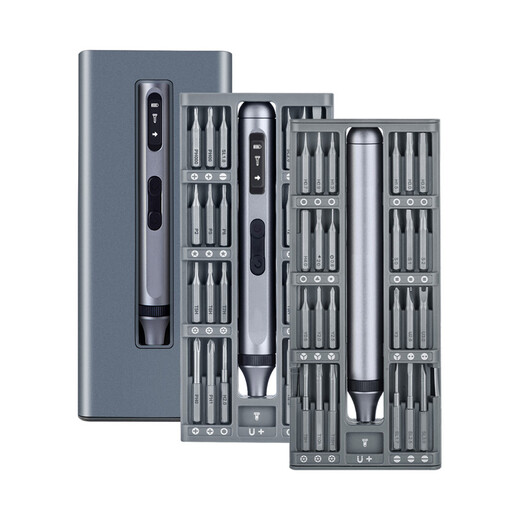
Why this choice suits this profile: Its compact format lends itself to small household repairs, furniture assembly and work on electronic devices.
The listing states 48 bits and clearly distinguishes the electric torque of 0.3 N·m from the manual torque of 3.5 N·m.
Aluminium handle, 350 mAh battery, claimed run time of up to 120 minutes at no load and disassembly accessories included.
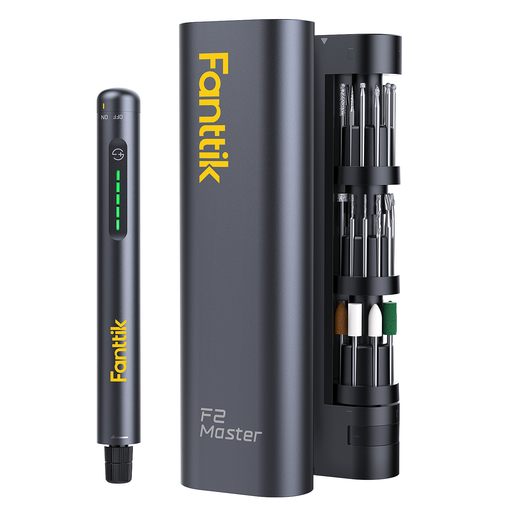
Why this choice suits this profile: DIY creators and 3D printer users will appreciate the precision, cordless freedom and easy-access storage.
The 5 speeds and stated compatibility with 2.3 mm accessories allow you to adapt the tool to each task.
Claimed weight of 100 g, maximum speed of 25,000 rpm, 35 accessories and USB-C charging in 60 minutes according to the listing.
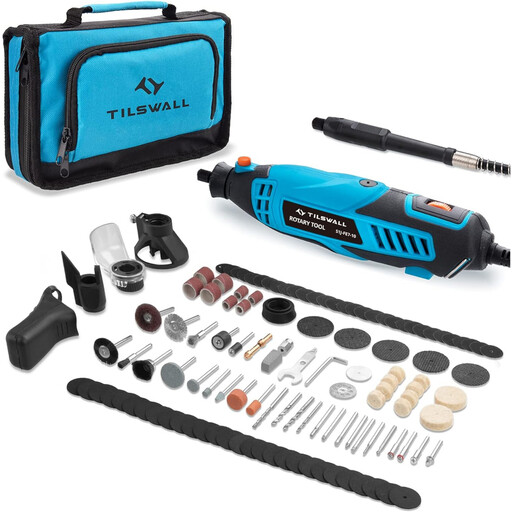
Why this choice suits this profile: It's aimed at workshops where you're regularly switching between engraving, drilling, cutting, polishing and finishing on different materials.
The 6 speed levels, from 8,000 to 33,000 rpm, let you adjust the speed to the material and accessory being used.
Claimed 160 W motor, 145 accessories, non-slip handle, LED light and storage case.
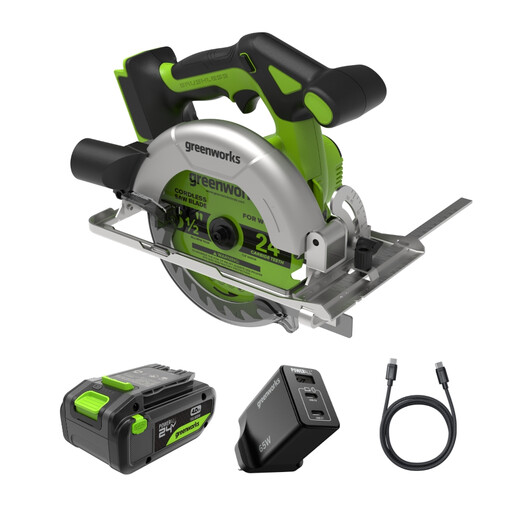
Why this choice suits this profile: Its format is ideal for the wood cuts needed for fitting out rooms, building shelves, decking and various woodworking projects.
The listing clearly states that the battery and charger are sold separately. This means you can calculate the total cost before making a decision.
165 mm blade, claimed cutting depth of 57 mm at 90°, bevel adjustment from 0 to 45° and LED light.
We've put together a comprehensive, real-time updated selection of products that meet these demanding criteria, while also taking European safety regulations into account.
An electric screwdriver or a small cordless drill-driver is generally an excellent starting point. For precision work, a mini multi-function tool can complete your setup. Base your choice on the projects you actually plan to do, rather than on the number of accessories supplied.
It all depends on the battery, how often you use it, storage conditions and maintenance. Avoid leaving a battery completely discharged for a long period, clean the ventilation slots regularly and use each accessory within its intended limits. Before buying, also check the availability of batteries and spare parts.
To the purchase price, add the cost of consumables: blades, discs, bits, glue sticks, paint or abrasives. For a battery-powered tool, also factor in the charger and the possible purchase of an extra battery. A cheaper model at the till can end up costing more if its accessories are proprietary or hard to find.