
Livraison le jour même ou le lendemain

Qualité garantie

Débloquez vos offres de bienvenue: Livraison GRATUITE | Jusqu'à -80 % | 30 jours d'essai gratuits à JoyPlus
Téléchargez l'application
Whether you're tackling an electrical installation, carrying out a computer repair, or simply need a power supply at your desk, choosing the right power tools and accessories isn't just about comparing prices. A pair of pliers that won't cut cleanly, an inaccurate cable tester, or an undersized USB extension lead can slow you down, damage a conductor, or even pose a safety risk.
Some marketing claims, therefore, deserve a closer look.
A pair of pliers marketed as multi-functional won't necessarily suit every wire diameter. For stripping, the compatible wire sections must match the cable you're using. A notch that's too wide can damage the conductor; one that's too narrow may crush the insulation or require excessive force.
A USB extension lead doesn't automatically replace a properly rated electrical installation. Always check the rated voltage, maximum current, and permissible power rating. Plugging several high-power devices into a compact adapter can cause overheating, even if there are still spare sockets available.
For prolonged use, the handle shape, its grip, and the cutting mechanism matter just as much as the jaw material. A tool that's difficult to control increases fatigue and can lead to uneven cuts. Good visibility is also invaluable when working inside a toolbox, under a desk, or in a poorly lit space.
Before choosing a wire stripper, side cutter, or cable stripping knife, identify the dimensions of the conductors you'll be handling. The tool should have legible section markings or offer an adjustable setting. For solid wires, also check the maximum cutting diameter stated by the manufacturer.
The WORKPRO multi-function pliers featured below are designed for stripping 10, 12, 14 and 16 AWG wires and cutting hard wires up to 2.0 mm in diameter. These values should not be extrapolated to other materials or sections.
Chrome-vanadium steel provides a durable construction for cutting and stripping operations. A corrosion-resistant surface treatment makes storage in a tool box easier, provided you keep it in a dry place. TPR handles with a non-slip texture improve control during repetitive tasks.
For a stripping knife, the ability to adjust the cutting depth is a real advantage. It allows you to match the blade to the insulation thickness and reduces the risk of damaging the inner conductor.
A EU standard plug adapter or USB extension lead with a nightlight must be used within the limits stated on its specification sheet. The cable-free model shown here has a rating of 10 A, 250 V and a maximum power of 2,500 W. It features two universal sockets, one USB-C PD3.0 port up to 20 W, one USB-A QC3.0 port up to 18 W, and one standard USB-A port at 2.4 A.
These specifications may suit an office, bedroom, or rental property, but they don't replace the need to check the compatibility of each device. Use must be strictly indoors, away from moisture, and plugged into a properly earthed wall socket.
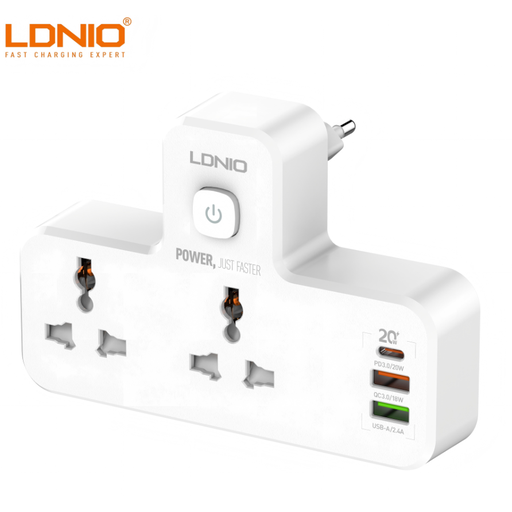
Why this suits your profile: this wall adapter combines power supply, USB charging and a nightlight in a compact, cable-free design. It's ideal for small spaces, the office, or a rental property.
The maximum power of 2,500 W and current of 10 A are clearly stated. You must still respect these limits and keep the adapter away from water.
Two universal sockets, three USB ports, an adjustable brightness nightlight, and built-in safety shutters.
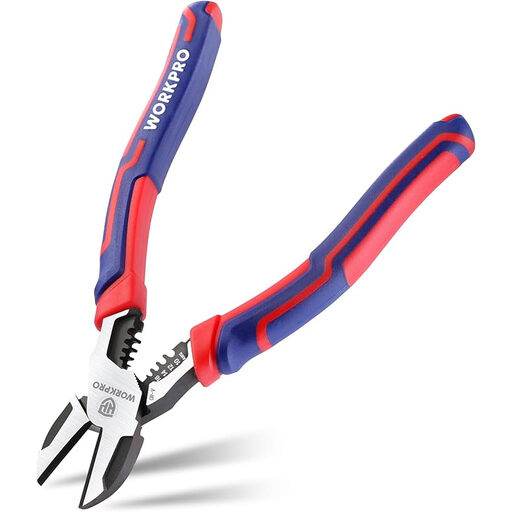
Why this suits your profile: users who value a metal construction and a comfortable handle get a tool that combines side cutting and stripping for well-defined wire sections.
The wire sections and cutting capacity are clearly specified: do not force the tool beyond the stated values.
Chrome-vanadium steel, blackened surface treatment, non-slip TPR handles, and an eccentric lever system claimed to reduce cutting effort by approximately 30% compared with conventional pliers.
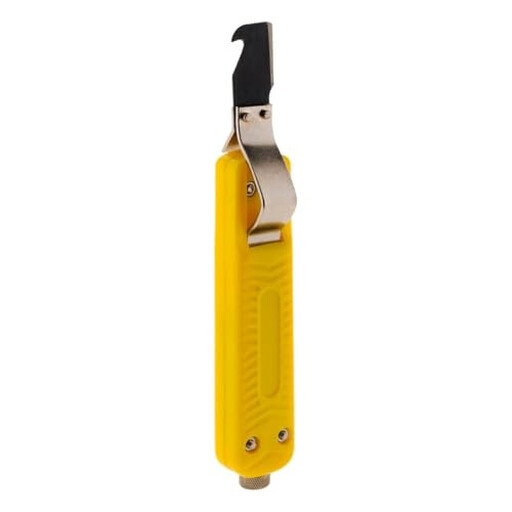
Why this suits your profile: this cable stripping knife is designed for installation and maintenance work that requires a compact tool capable of handling several tasks.
The adjustment screw lets you set the cutting depth. Always work with the blade moving away from your body and check its condition regularly.
165 mm format, hardened steel blade, highly visible yellow handle, and a three-in-one function for stripping, scoring and cutting.
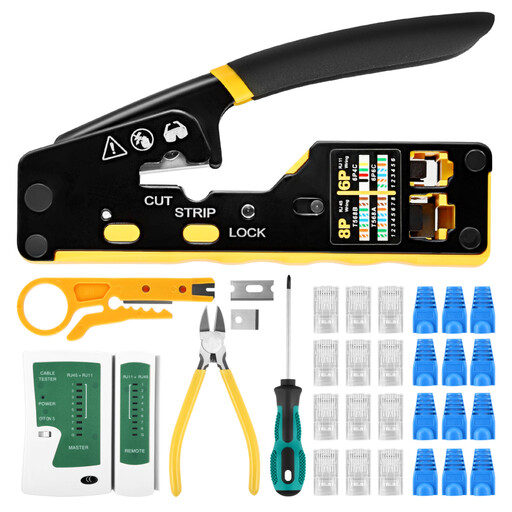
Why this suits your profile: this kit meets the needs of network installations, office maintenance and computer repairs when a single toolbox needs to cover several functions.
The stated inclusion of crimping pliers, a cable cutter, a stripping tool and a tester makes checks easier before commissioning. However, do verify the type of connectors supported.
A kit that brings together the essential functions of network cabling in a format suited to on-site work and routine maintenance.
A wire stripper, side cutters, a suitable screwdriver, a cable stripping knife and a tester make a good starting point. For computer networking, add a pair of crimping pliers and a network cable tester compatible with the connectors you're using.
Add up the power of the devices plugged into the mains sockets and stay within the limit stated on the adapter. The USB ports must also be used according to their output specifications. Avoid covering the device, placing it near a heat source, or using it in a damp room.
That depends on how often you use it, the materials you cut, and how you store it. Clean the jaws after each use, keep your tools dry, and replace any damaged blade. A pair of crimping pliers or side cutters should never be used on a section larger than its stated capacity.