
Livraison le jour même ou le lendemain

Qualité garantie

Débloquez vos offres de bienvenue: Livraison GRATUITE | Jusqu'à -80 % | 30 jours d'essai gratuits à JoyPlus
Téléchargez l'application
At a time when remote work and connected devices are becoming a staple in our daily lives, the power strip has become an essential accessory. However, behind this seemingly mundane object lie vast differences in quality and safety. Choosing one at random means risking frying your valuable devices, or even putting your safety at risk. Before you buy, here are the most common pitfalls to avoid.
To navigate the jungle of options and choose a reliable product, you need to understand a few technical concepts. These are the details that make all the difference between a good investment and a potentially dangerous gadget.
In Europe, a standard electrical outlet can deliver a maximum current of 16 amps (A), for a total power of 3680 watts (W) (16A x 230V). The golden rule: your power strip and all the devices connected to it must never exceed this limit.
Always check for the NF (Norme Fran?aise) mark. More than just a logo, it guarantees that the product has undergone rigorous testing covering:
The CE mark is mandatory, but it is only based on a self-declaration by the manufacturer. The NF standard represents a much more robust safety guarantee, as it is verified by an independent body.
A standard power strip, or basic power strip, simply multiplies the number of available sockets. This is sufficient for lamps or less sensitive devices.
However, to protect a computer, television, game console, or any valuable electronic equipment, a surge protector is essential. An effective model must comply with the NF EN 61643-11 standard. This certification ensures that the device can handle power surges (caused by lightning or grid disturbances) and keep your devices safe. Without this standard, the term "surge protector" is often just a marketing claim with no real substance.
Beyond safety, certain features are there to simplify your life:
Rather than an endless catalogue, we've chosen to offer targeted solutions for every need, based on the safety and practicality criteria we've just covered.
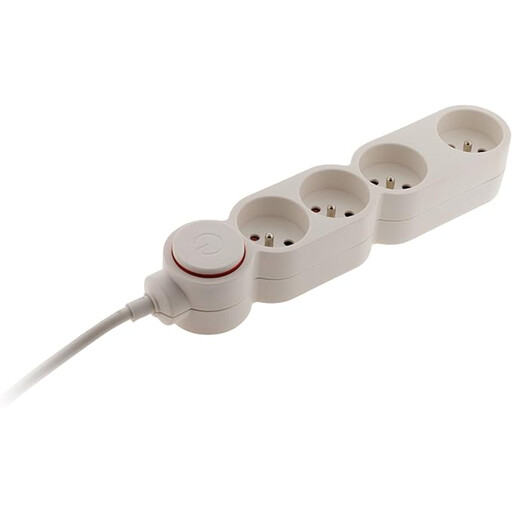
Why we chose it: Ideal for a computer setup or a TV corner (computer, monitor, console). It allows you to plug everything into one place while protecting your valuable devices from the whims of the power grid.
This block includes true surge protection certified EN 61643-11 (Class III). This is tangible security, far from vague marketing promises.
The dual NF and CE certification guarantees compliance with the strictest French safety standards, including the presence of shutters to protect children.
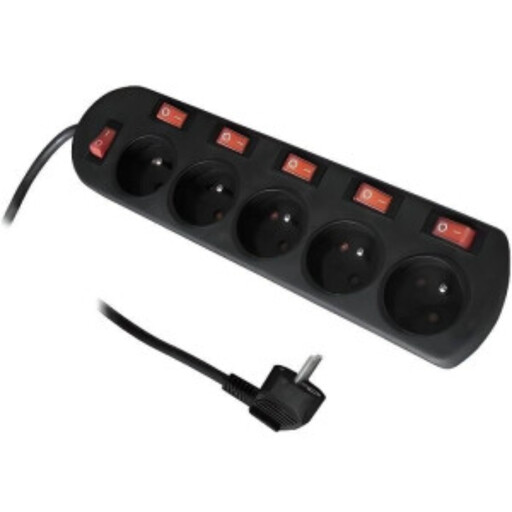
Why we chose it: Perfect for managing a fully-loaded media centre or a small home studio. The socket-by-socket control lets you power only what's necessary and cut off passive consumption.
It declares war on the phantom load of devices in standby mode. No need to unplug everything: one press of the right switch is all it takes to isolate a device.
5 individual illuminated switches plus a master switch for absolute control. The 3-meter cable provides plenty of flexibility for installation.
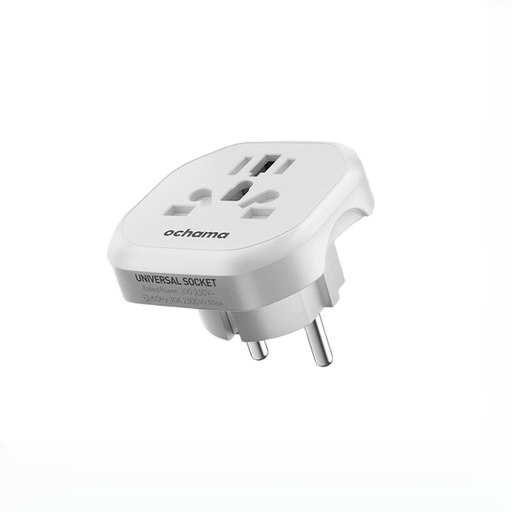
Why we chose it: The essential accessory for travellers. This single adapter replaces an entire suitcase of specific plugs and lets you connect your European devices in over 150 countries (USA, UK, Australia...).
No more hassle and clutter from multiple adapters. Note, this is a travel adapter, not a voltage converter: check your devices for 100-240V compatibility.
Its robust design with fire-retardant materials and child safety features make it a reliable travel companion built to last.
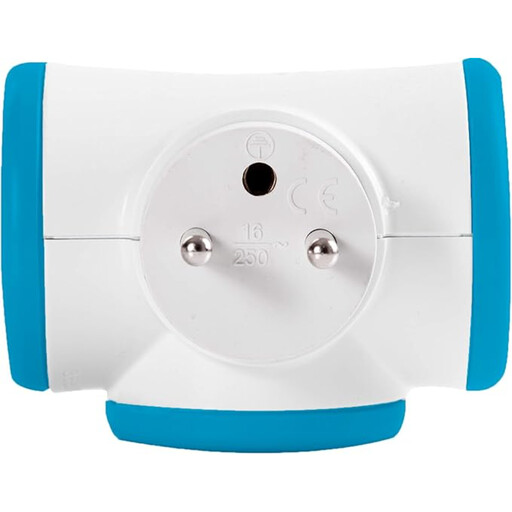
Why we chose it: The miracle solution for inaccessible wall outlets stuck behind furniture or in a corner. Its compact form factor and pivoting head solve plugging puzzles in tight spaces.
Ends the frustration of a bulky conventional power strip that won't fit or forces you to pull furniture away from the wall. This one fits anywhere.
Its 180° rotating head allows you to position it however you want, flat against the wall or at an angle, for unmatched plugging flexibility.
Explore our full selection of products that strictly adhere to our selection criteria and French safety standards.
Absolutely not! Plugging power strips in a series (a practice known as daisy-chaining) is extremely dangerous. It drastically increases the risk of overloading the first power strip and the wall outlet, which can lead to overheating and a fire. The golden rule: a power strip should always be plugged directly into a wall outlet.
The protection in a surge protector is not eternal. Its internal components, the varistors, wear out each time they absorb a voltage spike. Most manufacturers recommend replacement every 2 to 5 years. You should also replace it immediately after a major thunderstorm or a known surge on your line, even if it appears to be working normally.
There are several tell-tale warning signs: the power strip becomes hot to the touch, you smell hot plastic, you hear crackling or buzzing sounds, or your devices shut off for no reason. Good models include a thermal circuit breaker that cuts the power in case of an overload. If this happens, unplug one or two devices before resetting the protection.