
Livraison le jour même ou le lendemain

Qualité garantie

Débloquez vos offres de bienvenue: Livraison GRATUITE | Jusqu'à -80 % | 30 jours d'essai gratuits à JoyPlus
Téléchargez l'application
Our homes and offices are overflowing with electronic devices, making the power strip an essential accessory. Yet, choosing the right model often feels like an obstacle course. Between marketing hype and a jungle of safety standards, it's easy to make a mistake. A poor choice isn't just a daily frustration? it puts your valuable devices and your own safety at risk.
Before you buy, here are the three pitfalls to avoid at all costs:
This guide is here to help you see clearly and choose the model that's perfectly suited to your needs, without making a mistake.
To find the perfect model that is both reliable and practical, you need to understand a few technical concepts. They are the key to ensuring your setup is safe and convenient for daily use.
Electrical safety is not optional. As a reminder, a standard wall socket in France can deliver a maximum power of 3,680 Watts (W) at 16 Amps (A). Your power strip, and therefore all the devices plugged into it, must never exceed this limit.
A surge protector power strip is essential for protecting your valuable electronic equipment (computer, TV, game console, etc.) from power surges caused by lightning or grid instability.
Once safety is covered, the ergonomics should be designed for your daily use.
Design is no longer just about aesthetics; it's also functional.
To move from theory to practice, here is our selection of models that meet specific needs, all validated against our safety and ergonomic criteria.
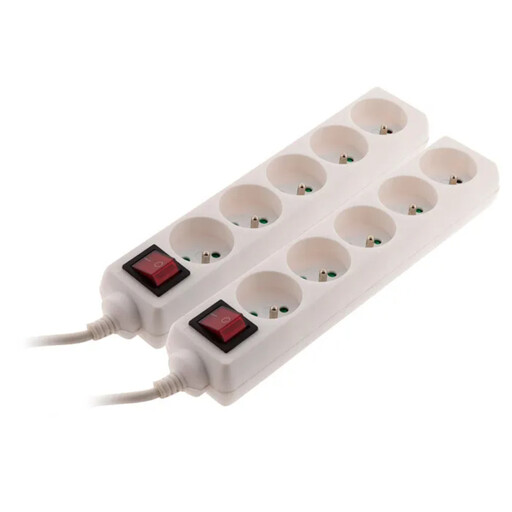
Why it's a great choice : Ideal for outfitting multiple rooms (office, living room) with a simple and safe solution. This pack offers excellent value for money for everyday needs: plugging in a computer, a lamp, a charger, etc.
This model includes essential safety features: a certified 16A power rating, child safety shutters, and a master switch to control power consumption. It avoids the trap of low-end power strips that lack any protection.
Pack of two for an excellent price. 5 versatile sockets. Convenient illuminated switch.
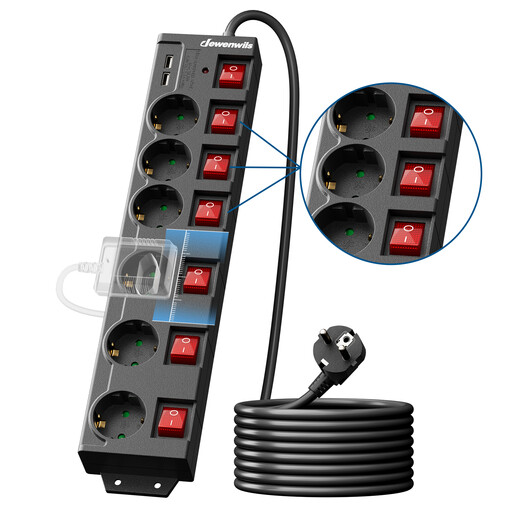
Why it's a great choice : Perfect for tech enthusiasts and remote workers juggling multiple peripherals. It allows you to manage each device independently (monitor, PC, printer, etc.) and charge your gadgets via USB, all while keeping your setup secure.
This model perfectly addresses the pitfall of neglected protection. It includes surge and overload protection, which is vital for valuable computer equipment. The individual switches are a bonus for managing power consumption.
Total control with 6 individual switches + 1 master switch. 2 integrated USB ports. 5-meter cable for great installation flexibility.
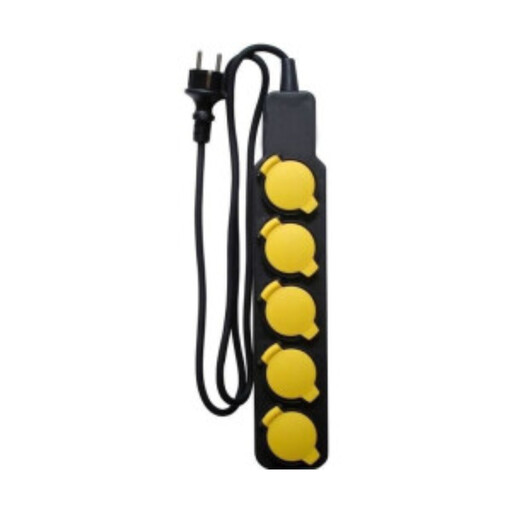
Why it's a great choice : Designed for DIY enthusiasts and gardeners. Its robust construction and protection against moisture make it the perfect ally for powering tools in the garage, workshop, or lighting on a patio.
This model eliminates the danger of using a standard power strip in a damp environment. Its IP44 certification and spring-loaded covers ensure foolproof safety against water splashes and dust.
IP44 waterproof certification. Protective covers on each socket. Ultra-durable rubber cable for maximum longevity.
Explore our full selection of power strips that meet our selection criteria and French safety standards.
1. Can you plug one power strip into another? No, this is a very bad idea. So-called "daisy-chaining" multiple power strips creates a major risk of overloading the first strip and the wall socket. The danger of overheating, and even fire, is very real. This practice is strictly forbidden by safety standards.
2. What is the lifespan of a surge protector power strip? Its protection is not eternal. The component that absorbs power surges (the varistor) wears out with each voltage spike it handles. Its lifespan therefore depends on the stability of your electrical grid. As a precaution, it is recommended to replace it every 3 to 5 years, and always after a major thunderstorm or a significant electrical incident on your line.
3. How can I tell if my power strip is overloaded? Several signs should alert you. Abnormal heat from the casing or plug is the first one: if the power strip is hot, unplug everything immediately. The circuit breaker in your electrical panel tripping repeatedly is another symptom. To avoid an overload, the calculation is simple: add up the wattage of all connected devices and check that the total remains well below the power strip's maximum rating (usually 3,680?W).