
Livraison le jour même ou le lendemain

Qualité garantie

Débloquez vos offres de bienvenue: Livraison GRATUITE | Jusqu'à -80 % | 30 jours d'essai gratuits à JoyPlus
Téléchargez l'application
Who hasn't run out of electrical outlets? Behind the TV, at the office, in the kitchen… we've all frantically searched for a free socket to plug in yet another device. A power strip is the first solution that comes to mind. However, choosing the right one is more complex than it seems. A poor choice can be ineffective, or even dangerous for your devices and your safety.
At Joybuy, our mission is to help you make an informed decision. Let's break down the common pitfalls and essential criteria to find THE power strip that truly meets your needs, cutting through the marketing hype.
Before you grab the first model off the shelf, let's review the hidden flaws that can turn a convenient purchase into a real headache.
To make the right choice, a few technical specifications are simply non-negotiable. They guarantee your safety and the product's longevity.
A power strip's capacity is defined by two key values: the current, in amps (A), and the maximum power, in watts (W).
Rule of thumb: Before plugging in multiple devices, add up their power consumption (found on their labels or in their manuals) to ensure you never exceed your power strip's limit. For sensitive setups, a model with a built-in circuit breaker offers an extra layer of safety by automatically cutting the power in case of an overload.
Never overlook safety markings. In Europe, two certifications are essential:
Your specific use case will dictate the type of connections you need.
Instead of an endless list, here is a curated selection of models suited for clear user profiles, always with safety and practicality in mind.
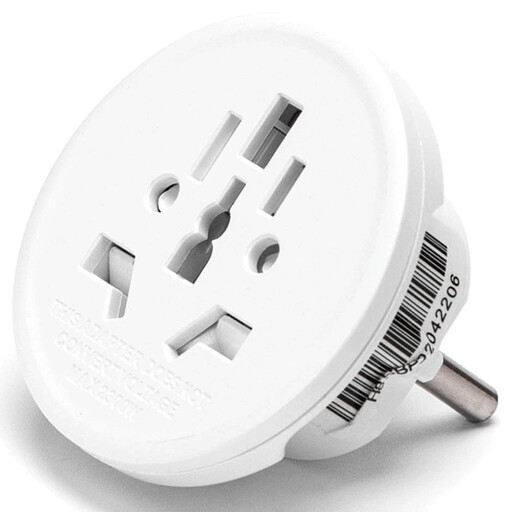
Why we chose it: Ideal for adding extra sockets to a single outlet for low-power devices (chargers, lamps, etc.). Its compact form factor is perfect behind furniture or for occasional use, without the clutter of a cable.
Its maximum power rating of 2300W is clearly displayed, encouraging sensible use with low-consumption devices and preventing the risk of accidental overload.
Ultra-compact, it plugs directly into the wall outlet without taking up space. CE and RoHS certified, it meets European safety standards for indoor use.
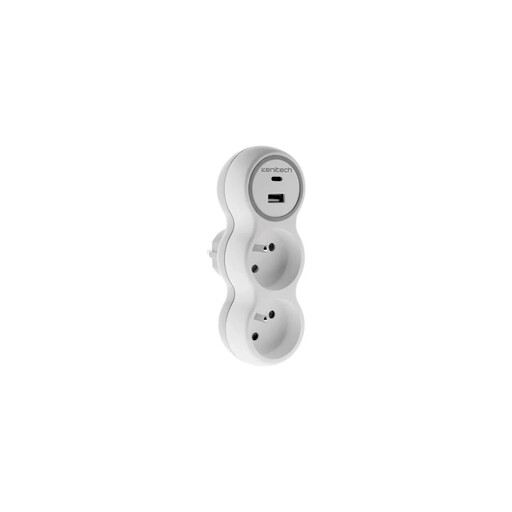
Why we chose it: The perfect work-from-home companion. It combines two grounded outlets (for a computer and monitor, for example) with USB-A and USB-C ports to charge a smartphone and other peripherals without extra adapters. All in a compact, modern design.
Thanks to its integrated USB ports, you can say goodbye to a clutter of chargers on your power strip. This saves space and prevents overloading a single outlet with a cascade of adapters.
A two-in-one solution that delivers up to 3680W to the main sockets while providing dedicated charging for USB devices. Its sleek design allows it to blend into any decor.
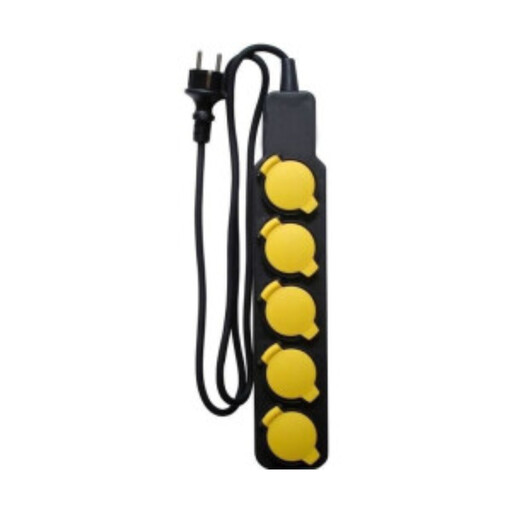
Why we chose it: Built for harsh environments. It's perfect for plugging in garden tools, patio lighting, or equipment in a damp garage. Its rugged design protects it from impacts and moisture.
This model avoids the pitfall of outdoor use. Its IP44 certification ensures protection against water splashes, where a standard power strip would create an immediate short-circuit risk.
Each socket has a spring-loaded protective cover that seals it when not in use, blocking dust and moisture. Its rubber cable also provides enhanced durability.
We have curated a complete, up-to-date selection of products that meet our strict selection criteria and safety standards.
A standard power strip simply distributes power to multiple devices. A surge protector goes a step further: it includes a component that protects your sensitive electronics (computer, TV, gaming console, etc.) from sudden voltage spikes, such as those caused by lightning or power grid instability. It's an essential safeguard for valuable equipment.
Absolutely not. This practice, known as "daisy-chaining," is strictly forbidden by safety standards. It drastically increases the risk of overloading the first power strip (or the wall outlet), creating a serious danger of overheating and fire. A golden rule: always plug a power strip directly into a wall outlet.
Check its Ingress Protection (IP) rating. For outdoor use sheltered from rain (under a covered patio, for example), an IP44 rating is the bare minimum. It guarantees the product is protected against solid objects larger than 1mm (like dust) and against water splashes from all directions. For more direct exposure to the elements, a higher rating (IP65, IP67) is essential. The absolute rule: never use a non-IP-rated product outdoors.