
Livraison le jour même ou le lendemain

Qualité garantie

Débloquez vos offres de bienvenue: Livraison GRATUITE | Jusqu'à -80 % | 30 jours d'essai gratuits à JoyPlus
Téléchargez l'application
Computers, smartphones, home appliances, power tools… our need for electrical outlets has never been greater. All too often, a single wall socket just isn't enough. The power strip has become an essential accessory, but be warned?: not all are created equal. The wrong choice can be a daily frustration and, more importantly, pose a real risk to your devices and your safety.
As the head of product selection at Joybuy, I'm here to guide you. Let's cut through the marketing jargon and focus on what really matters. Here are the pitfalls to avoid and the key criteria for choosing a reliable power strip that's right for your needs.
To make an informed decision, you only need to check a few technical specifications. These are the true guarantors of your power strip's quality and safety.
This is the non-negotiable criterion. A power strip must comply with national and European standards to ensure your safety.
Beyond basic connections, some options provide added convenience and safety.
The shape of the power strip should, above all, suit your specific use case.
To illustrate how these criteria apply in practice, here are a few models that meet specific needs.
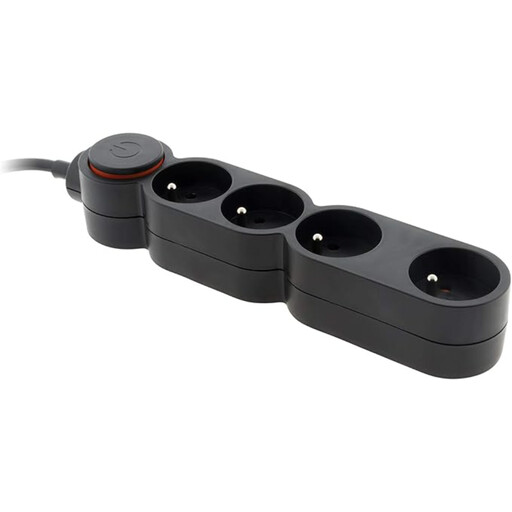
Why this model? It's the ideal solution for organising cables behind a TV stand or desk. Simple and effective, it gets the job done without any frills.
Its extra-flat plug (approx. 8 mm) solves the problem of limited space behind furniture—a flaw that makes many power strips unusable in tight corners.
Flat power strip design for maximum space-saving. Compliant with NF and CE standards and includes child safety features for complete peace of mind.
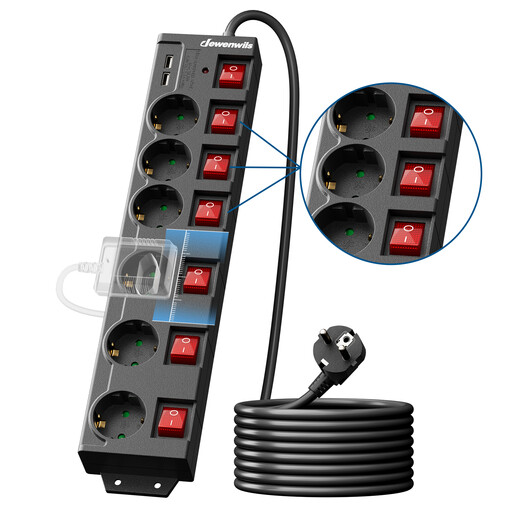
Why this model? Perfect for tech enthusiasts and remote workers who juggle multiple peripherals. It centralises power, charging, and protection for an entire workstation.
It avoids the three classic pitfalls : its overload and lightning protection is clearly specified, the 90° outlets prevent conflicts between chargers, and the USB ports deliver up to 2.1 A, ensuring a decent charging speed.
Individual switches for precise power management, a 5-metre cable for maximum flexibility, and integrated USB ports to declutter your desk.
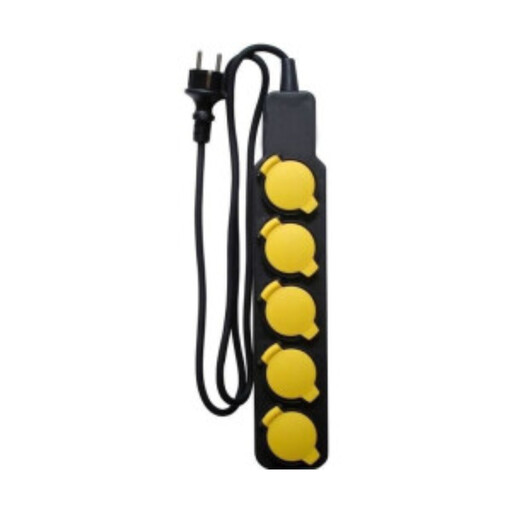
Why this model? Designed for demanding environments. Whether in a garage, workshop, or covered patio, its robustness and weatherproofing make it reliable where a standard model would fail.
There are no vague promises of durability here. Its IP44 rating is a verifiable standard that guarantees resistance to water splashes and dust, qualifying it for use in damp environments.
IP44 protection rating (splash-proof). Spring-loaded covers on each socket provide a perfect seal against moisture and debris.
We have put together a complete selection of products that meet these quality criteria and French safety standards.
1. What is the difference between a surge protector and a standard power strip? A standard power strip simply multiplies the number of available outlets. A surge protector (or surge suppressor) integrates components (varistors, gas discharge tubes) that can detect and neutralise sudden voltage spikes from the electrical grid. It acts as a shield to protect the fragile circuits of your electronic devices.
2. Can you plug multiple power strips together in a series (daisy-chaining)? No, this is strongly discouraged and dangerous. Daisy-chaining power strips increases the risk of overloading the first strip (the one plugged into the wall) and its cable, which can cause overheating and a fire. A power strip should always be plugged directly into a wall outlet.
3. How can I tell if a power strip is overloaded? The most obvious sign is the circuit breaker in your electrical panel tripping. If your power strip has its own overload protector, it may activate (usually a small button will pop out). Other warning signs include?: abnormal heat from the plug or cable, a smell of burning plastic, or a buzzing sound. If you notice any of these signs, unplug the power strip immediately and stop using it.