
Livraison le jour même ou le lendemain

Qualité garantie

Débloquez vos offres de bienvenue: Livraison GRATUITE | Jusqu'à -80 % | 30 jours d'essai gratuits à JoyPlus
Téléchargez l'application
A shortage of electrical outlets is a headache in most homes and offices. While a power strip is the obvious solution, the wrong choice can be frustrating, or even dangerous for your devices and your safety. To avoid falling into common traps, it's crucial to know what pitfalls to avoid and which features truly make a difference.
Here’s a rundown of the most common mistakes to avoid:
To get a clearer picture, let's review the technical specifications that guarantee safety and user-friendliness.
In Europe, a standard home installation typically delivers an intensity of 16 Amps (A) at a voltage of 230 Volts (V). The calculation is simple: the maximum power your power strip must be able to handle is 16 A x 230 V = 3680 Watts (W).
Not all power strips are created equal. The format and features should be chosen based on your specific use case.
Sometimes, your needs go beyond a simple extension cord.
Here are a few options that meet specific needs, taking into account safety and practicality criteria.
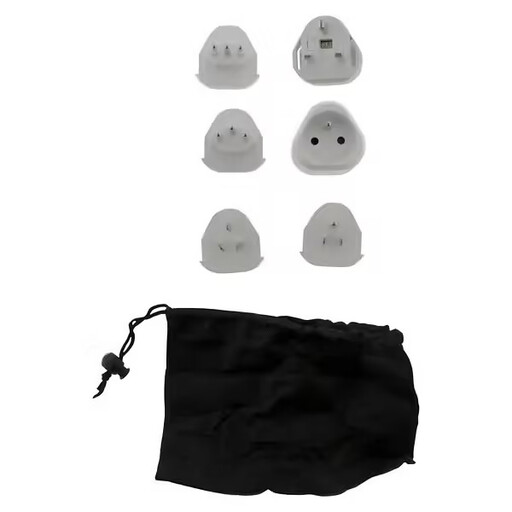
Why we chose it: This is the perfect solution for frequent travellers. This kit covers over 100 destinations (UK, USA, Oceania, Italy...) and stores away in a handy pouch so you don't lose anything.
No more collecting last-minute adapters at the airport! This kit centralises everything into a single, cost-effective, and perfectly organised solution.
Its near-global coverage (over 100 countries) and its storage pouch mean you'll never have to search for the right plug again.
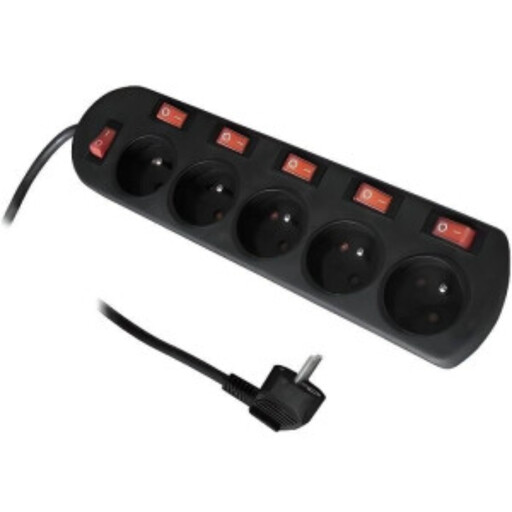
Why we chose it: This is the perfect companion for a well-equipped home office (PC, monitor, printer, etc.). Individual control over each outlet helps you hunt down standby power consumption and stay in control.
Unlike a standard strip, its dedicated switches let you power only the devices you need. No more wasted energy or the daily chore of unplugging everything.
Total control thanks to 5 individual switches plus 1 master switch, all secured with overload protection.
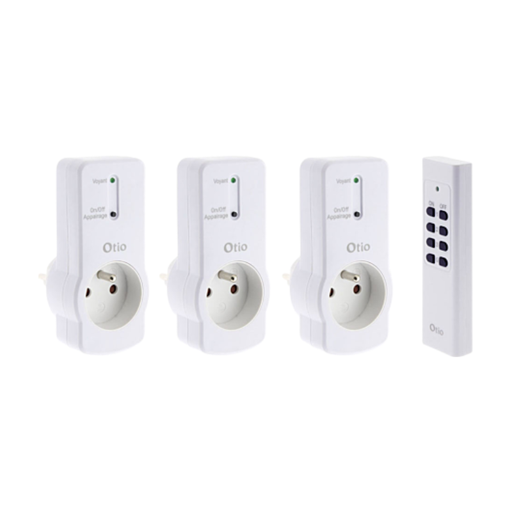
Why we chose it: The perfect solution for remotely controlling a light or a small appliance without breaking the bank on a full smart home ecosystem. Ideal for that hard-to-reach outlet behind the sofa.
It offers a touch of the "smart home" experience without the complex installation, compatibility issues, or hefty price tag of advanced home automation systems.
A pack of 3 outlets controlled by a single, ultra-simple remote, with a convenient 25-metre range.
Discover our full selection of products that meet our safety criteria and French standards.
There's no expiration date, but a power strip should be discarded without hesitation at the first sign of wear and tear: yellowed or cracked plastic, plugs that feel loose in the outlets, a fickle switch... A quality model can last for years, but a regular visual inspection is essential, especially if valuable devices are plugged into it.
Absolutely not! Plugging power strips into each other, a practice sometimes called "daisy-chaining," is strictly forbidden. It drastically increases the risk of overload and overheating, which is a common cause of electrical fires. A power strip must always, without exception, be plugged directly into a wall outlet.
For a USB power strip, the key criterion is the output power of the ports, expressed in amps (A) or watts (W). To efficiently charge a smartphone or tablet, aim for at least 2.4 A (about 12 W) per port. If you plan to charge multiple devices at once, check that the total USB power output is sufficient to power all your devices without the charging speed dropping.