
Livraison le jour même ou le lendemain

Qualité garantie

Débloquez vos offres de bienvenue: Livraison GRATUITE | Jusqu'à -80 % | 30 jours d'essai gratuits à JoyPlus
Téléchargez l'application
Our homes are overflowing with electrical and electronic devices, but wall outlets don't magically multiply. From the home office to the living room TV corner and the kitchen countertop, plugging in multiple devices at once has become a real daily challenge. However, choosing a power strip is about more than just counting the number of ports you need. Safety, ergonomics, and even managing power consumption are equally essential criteria.
This guide is here to break down the different options on the market and help you find the model that perfectly meets your needs, combining performance with home electrical safety.
Before diving into our selection, let's review the key points for making an informed choice that respects both your needs and safety standards.
When it comes to protection, not all power strips are created equal. A surge protector power strip is essential for protecting your sensitive electronic devices (computers, TVs, game consoles) from power surges and spikes, often caused by lightning or grid fluctuations. For homes with young children, safety shutters are a non-negotiable feature to prevent any risk of foreign objects being inserted. Finally, ensure the product bears the CE marking, which guarantees its compliance with European standards.
Beyond just plugging things in, a modern power strip can genuinely simplify your life. A power strip with a master switch allows you to cut power to all devices with a single press, effectively combating phantom loads from devices on standby. Some models take this concept further with individual switches. The inclusion of USB ports has become almost standard, and for good reason: a power strip with USB saves you from cluttering outlets with a myriad of phone or tablet chargers. For a custom setup, a wall-mounted socket rail offers unparalleled flexibility.
For those looking to take their first step into home automation, a Wi-Fi smart plug is the ideal entry point. Plugged in between the wall outlet and your appliance, it makes the device remotely controllable via a smartphone app. You can schedule operating times, turn it on or off from anywhere, and even monitor its real-time power consumption. It's a simple and incredibly effective way to make your home smarter and more energy-efficient.
To help you see things more clearly, here are three products that stand out in their respective categories, from an ultra-versatile solution to a stylish, connected model.
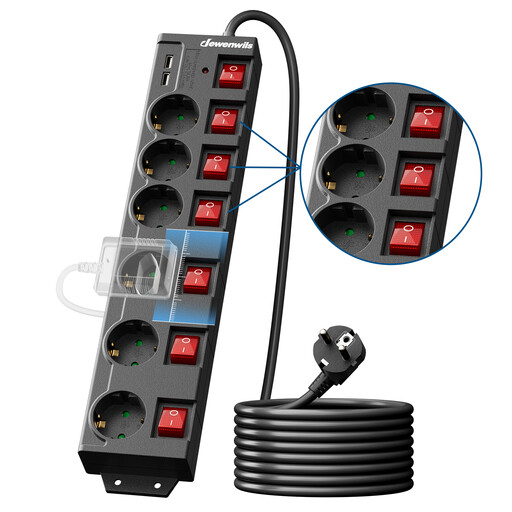
What sets it apart
The Swiss Army knife of power strips. This model is an all-in-one solution that meets most needs, combining high capacity, precise power management, charging ports, and maximum security.
Pros:
Who is it for? For well-equipped home offices, complex home theatre setups, or any situation requiring length, flexibility, and precise control over each device.

What sets it apart
More than just a power strip, the Goneo socket rail is a truly modular and stylish power system. It replaces a standard flush-mounted outlet to offer a clean aesthetic and maximum flexibility, perfect for a contemporary interior.
Pros:
Who is it for? The ideal solution for renovation projects or for those who demand a power supply that is discreet, customisable, and decidedly high-end for a kitchen, office, or living room.
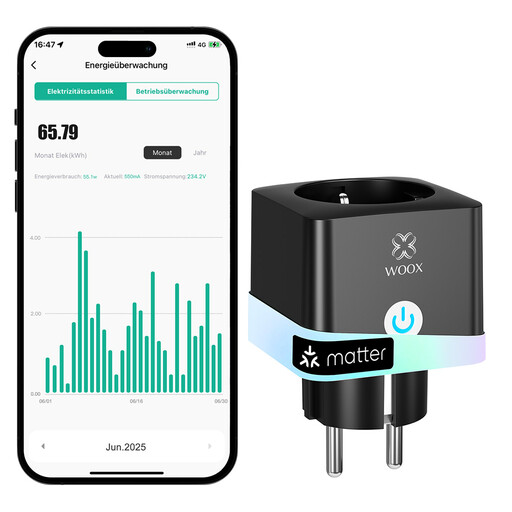
What sets it apart
This Wi-Fi smart plug is the easiest way to make any electrical appliance smart and controllable. Easy to install and set up, it opens the door to automation, voice control, and energy monitoring.
Pros:
Who is it for? For the tech-curious, those looking to get started with a smart home without breaking the bank, or simply anyone who wants to monitor their consumption and reduce their electricity bill.
Our selection highlights targeted solutions, but the world of power strips is vast. If you're looking for a different number of outlets, a specific design, or other features, feel free to explore our full category of black power tool to find the perfect model.
1. What is the difference between a basic power strip and a surge protector power strip? A standard power strip only multiplies the number of available outlets. A surge protector power strip goes further: it integrates components (like varistors) capable of absorbing voltage spikes. It acts as a true shield to protect your valuable electronic devices from damage.
2. Can you plug a power strip into another power strip? This is a classic example of a bad idea. Daisy-chaining power strips dangerously increases the risk of overloading the circuit, the first power strip, and the wall outlet. This can lead to overheating and even a fire hazard. Each wall outlet is designed to handle a maximum load (typically 3680 W in France for 16 A), a limit that can easily be exceeded by connecting strips in series.
3. How do I know if my power strip is overloaded? To avoid an overload, the calculation is simple: add up the power (in watts, W) of all devices plugged into the same power strip. The total must never exceed the maximum power rating of the strip, which is always indicated on its label (usually 3680 W). Some models, like the Dewenwils power strip in our selection, include overload protection that automatically cuts the power if the limit is exceeded.